
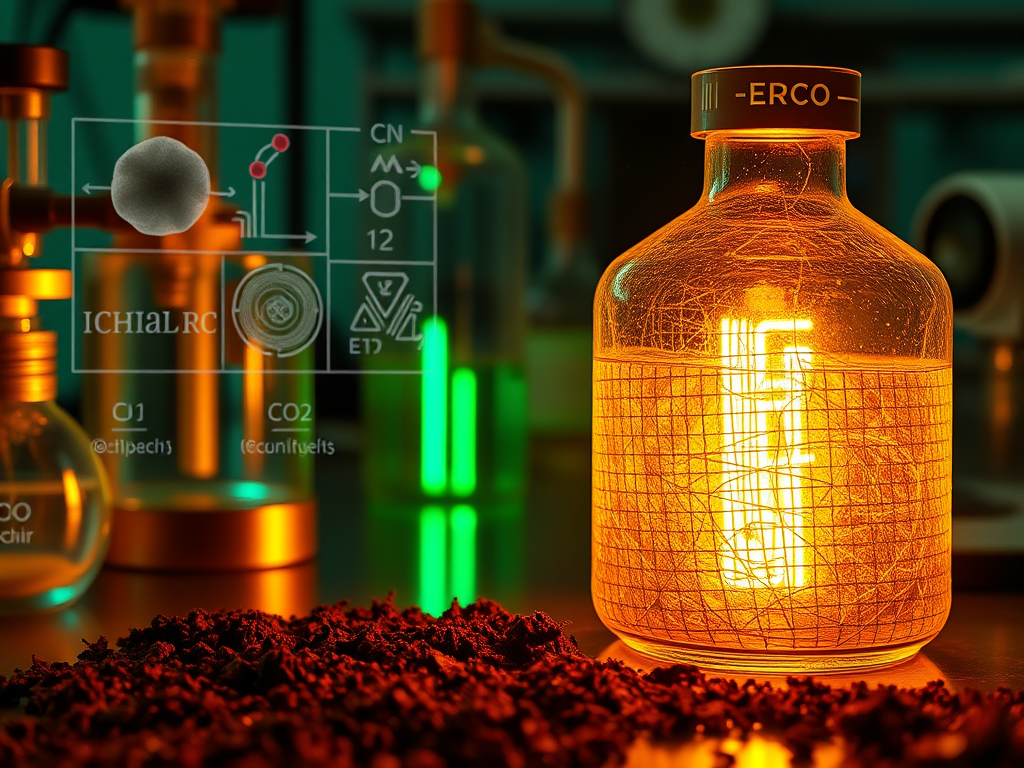
In a significant study in ChemElectroChem, researchers led by Shabnam Pouresmaeil investigated the potential of biocharBiochar is a carbon-rich material created from biomass decomposition in low-oxygen conditions. It has important applications in environmental remediation, soil improvement, agriculture, carbon sequestration, energy storage, and sustainable materials, promoting efficiency and reducing waste in various contexts while addressing climate change challenges. More as a sustainable and effective cathode for bioelectrochemical systems (BES). These systems are designed to convert carbon dioxide (CO2) into valuable products, a process that relies on the hydrogen evolution reaction (HER). The study’s key finding is that a specific type of biochar, derived from beechwood, performs exceptionally well due to its unique material properties. This material could be a game-changer, offering a more sustainable and efficient alternative to conventional materials like granular graphite.
The researchers compared granular biochar (GB) from two different wood types, beechwood (BEW740) and birchwood (BIW700), with granular graphite (GG). They discovered significant performance variations, particularly within the beechwood biochar, which led them to classify it into three groups based on electrical conductivity. The most conductive class, BEW740-class1, stood out with its superior electrocatalytic activity. At a current density of −1m˜Ac˜m−2, BEW740-class1 had a low overpotential . In comparison, the overpotentials for the birchwood biochar and granular graphite were 503.5±4.9m˜V and 608.3±19.5m˜V, respectively. This low overpotential demonstrates that BEW740-class1 requires significantly less energy to drive the HER, making it a highly efficient cathode material for BES applications.
The study attributed the superior performance of BEW740-class1 to a combination of favorable properties. Its high electrical conductivity ( 162.50±45.00S˜m˜−1) is a result of a high degree of carbonization, leading to a low H/C atomic ratio of 0.07±0.01. Incomplete carbonization was observed in less effective samples, which had higher H/C ratios. The study also found that BEW740-class1 had a higher degree of disorder in its carbonaceous structure, which enhances its electrocatalytic activity. In addition, BEW740-class1 had the highest mass-specific surface area (307.6±79.5m˜2g−1) and micropore volume (0.115±0.035c˜m3g−1), which provide more active sites for the reaction and facilitate proton accumulation.
The heterogeneity observed in the industrial-scale biochar, even within a single production batch, is likely due to uneven temperature distribution during the pyrolysisPyrolysis is a thermochemical process that converts waste biomass into bio-char, bio-oil, and pyro-gas. It offers significant advantages in waste valorization, turning low-value materials into economically valuable resources. Its versatility allows for tailored products based on operational conditions, presenting itself as a cost-effective and efficient More process. These findings highlight the importance of optimizing biochar production to achieve a more uniform and high-performing material. By understanding the key properties—such as the degree of carbonization, microporosity, and electrical conductivity—that influence performance, future research can focus on refining feedstockFeedstock refers to the raw organic material used to produce biochar. This can include a wide range of materials, such as wood chips, agricultural residues, and animal manure. More selection and pyrolysis conditionsThe conditions under which pyrolysis takes place, such as temperature, heating rate, and residence time, can significantly affect the properties of the biochar produced. More to create consistently effective biochar for sustainable energy applications.
Source: Pouresmaeil, S., Schliermann, T., Schmidt, M., Harnisch, F., & Kretzschmar, J. (2025). Biochar Cathodes for Bioelectrochemical Systems: Understanding the Effect of Material Heterogeneity on Performance for Abiotic Hydrogen Evolution Reaction. ChemElectroChem, 00, e202500008.



Leave a Reply