
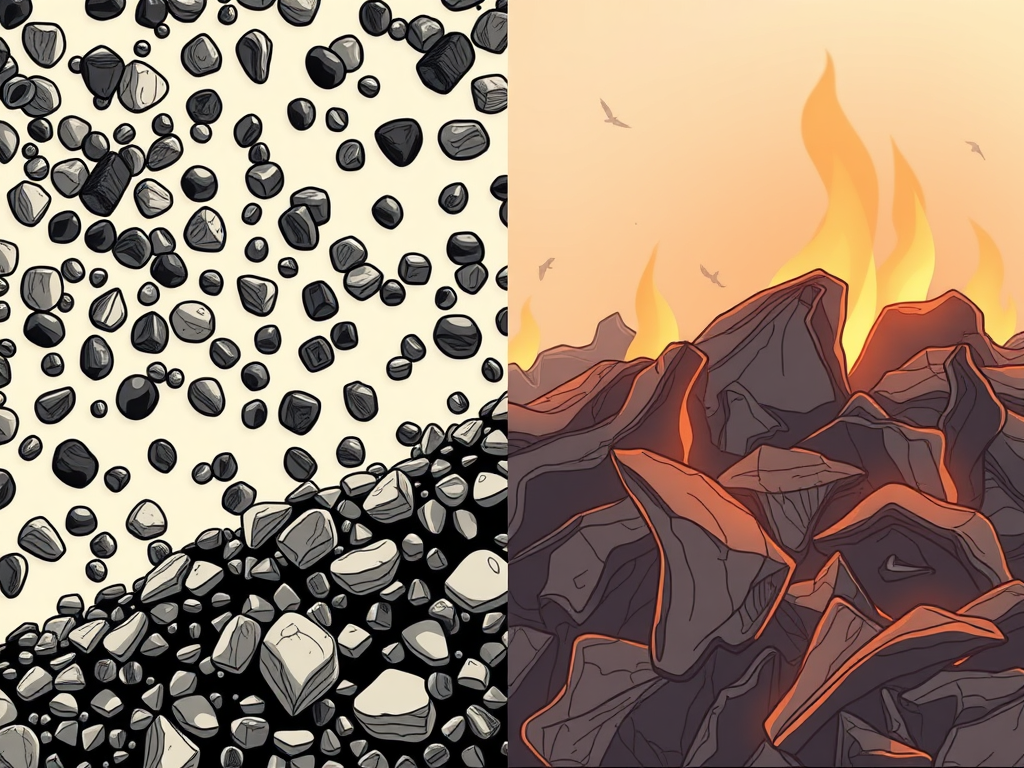
In a study published in the International Journal of Coal Geology, H.I. Petersen, M.R. Stokes, P.C. Hackley, A. Rudra, Z. Zhou, and H. Sanei compared biochar’s structure to naturally formed charcoalCharcoal is a black, brittle, and porous material produced by heating wood or other organic substances in a low-oxygen environment. It is primarily used as a fuel source for cooking and heating. More. The research indicates biocharBiochar is a carbon-rich material created from biomass decomposition in low-oxygen conditions. It has important applications in environmental remediation, soil improvement, agriculture, carbon sequestration, energy storage, and sustainable materials, promoting efficiency and reducing waste in various contexts while addressing climate change challenges. More shares structural similarities with semifusinite and fusinite, which are created by wildfires. This similarity suggests biochar has the potential for long-term carbon storage, similar to these natural substances.
Biochar is produced through biomassBiomass is a complex biological organic or non-organic solid product derived from living or recently living organism and available naturally. Various types of wastes such as animal manure, waste paper, sludge and many industrial wastes are also treated as biomass because like natural biomass these More pyrolysisPyrolysis is a thermochemical process that converts waste biomass into bio-char, bio-oil, and pyro-gas. It offers significant advantages in waste valorization, turning low-value materials into economically valuable resources. Its versatility allows for tailored products based on operational conditions, presenting itself as a cost-effective and efficient More, heating organic material without oxygen. This process is similar to natural charring in wildfires, which also creates stable carbon forms like fusinite and semifusinite.
The researchers used micro-Raman spectroscopy to analyze 16 biochar samples made at 326 to 825 degrees Celsius and compared them to natural semifusinite. The study found biochar’s structural evolution mirrors that of semifusinite and fusinite, indicating that biochar production mimics natural wildfire charring.
This similarity supports biochar’s potential for long-term carbon storage, helping to mitigate climate change. The study also suggests new micro-Raman benchmarks to assess biochar stability, enhancing our ability to evaluate its carbon sequestration potential.
SOURCE: Petersen, H.I., Stokes, M.R., Hackley, P.C., Rudra, A., Zhou, Z., & Sanei, H. (2025). Micro-Raman indicates biochar has similar stability and structural features as natural fusinite and semifusinite. International Journal of Coal Geology, 2024.



Leave a Reply