
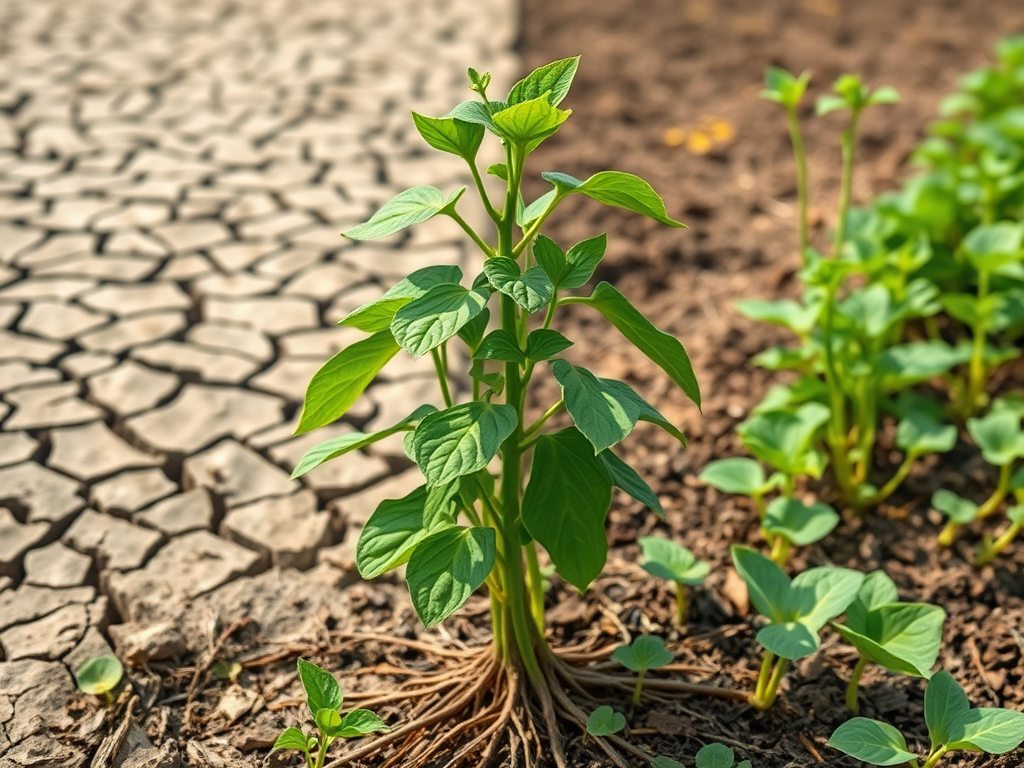
In a world increasingly impacted by climate change, finding ways to sustain agriculture under challenging conditions is crucial. A recent study published in the IOP Conference Series: Earth and Environmental Science by Andriatsitohaina et al. explores the potential of biocharBiochar is a carbon-rich material created from biomass decomposition in low-oxygen conditions. It has important applications in environmental remediation, soil improvement, agriculture, carbon sequestration, energy storage, and sustainable materials, promoting efficiency and reducing waste in various contexts while addressing climate change challenges. More to help cowpea plants withstand drought and salinity stress. The researchers investigated the physiological responses of cowpea, a drought-tolerant legume, to different levels of water and salt stress with and without the addition of biochar.
The study found that cowpea plants exhibited remarkable resilience to both drought and salinity stress. Under drought conditions, leaf area was not significantly affected until water availability dropped to 22% of the optimal level. Similarly, under salinity stress, cowpea plants could tolerate salt concentrations up to 450 mM. The addition of biochar further enhanced the plants’ tolerance to these stresses, particularly in terms of maintaining leaf area and fresh biomassBiomass is a complex biological organic or non-organic solid product derived from living or recently living organism and available naturally. Various types of wastes such as animal manure, waste paper, sludge and many industrial wastes are also treated as biomass because like natural biomass these More.
The researchers attributed the positive effects of biochar to its ability to improve soil properties, such as water retention and nutrient availability. This creates a more favorable environment for plant growth, even under stressful conditions. The study also highlighted the importance of understanding the specific responses of different crops to environmental stresses and the role of biochar in mitigating these effects.
This research underscores the potential of biochar as a valuable tool for sustainable agriculture in the face of climate change. By enhancing the resilience of crops like cowpea to drought and salinity stress, biochar can contribute to food security in regions vulnerable to these challenges.
SOURCE:Andriatsitohaina, R., Sumalan, R., & Rasolomampianina, R. (2025). Effects of biochar use on drought and salinity stresses for cowpea production. In IOP Conference Series: Earth and Environmental Science (Vol. 1455, No. 1, p. 012007). IOP Publishing. /doi:10.1088/1755-1315/1455/1/012007




Leave a Reply