
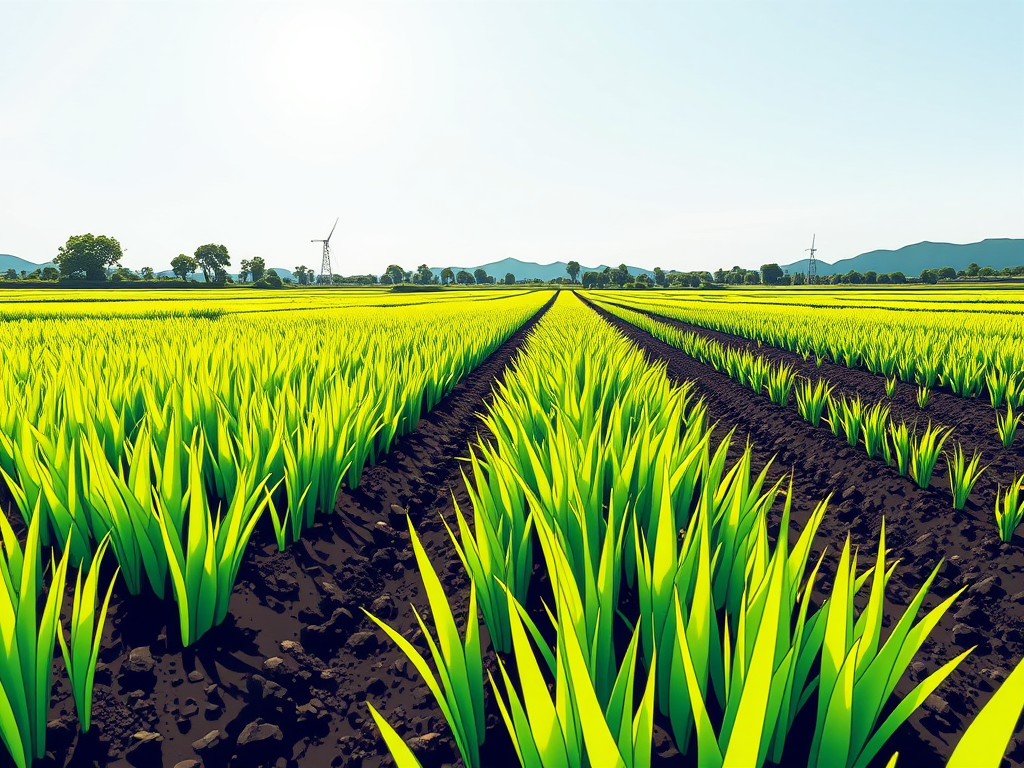
In a recent study published in Environmental Technology & Innovation, Chang Liu and colleagues explored the impact of engineered biocharBiochar is a carbon-rich material created from biomass decomposition in low-oxygen conditions. It has important applications in environmental remediation, soil improvement, agriculture, carbon sequestration, energy storage, and sustainable materials, promoting efficiency and reducing waste in various contexts while addressing climate change challenges. More on methane emissions and rice yield in paddy soils under alternate wetting and drying conditions. This research sheds light on the potential of biochar to mitigate greenhouse gas emissions while simultaneously enhancing agricultural productivity.
The authors investigated how different types of engineered biochar affect methane emissions, soil properties, and rice growth in paddy fields. The study demonstrates that specific biochar applications can significantly reduce methane emissions, a potent greenhouse gas, from paddy soils. This reduction is attributed to biochar’s influence on soil properties and microbial activities that are critical to methane production.
Moreover, the research highlights that certain engineered biochar treatments can enhance rice yield. The application of biochar improved soil conditions, promoting better rice growth and productivity. The study carefully analyzed the complex interactions between biochar, soil dynamics, methane emissions, and rice yield, providing valuable insights into sustainable agricultural practices.
This research offers promising implications for climate change mitigation and sustainable agriculture. By strategically using engineered biochar, it may be possible to decrease greenhouse gas emissions from rice cultivation while ensuring or even improving crop yields. The findings contribute to the growing body of evidence supporting biochar as a versatile tool in environmentally conscious agricultural management.
SOURCE: Liu, C., Chen, T., Zhang, F., Han, H., Yi, B., Meng, J., Chi, D., & Ok, Y. S. (2025). Engineered biochar effects on methane emissions and rice yield under alternate wetting and drying in paddy soils. Environmental Technology & Innovation, 38, 104133.


Leave a Reply