
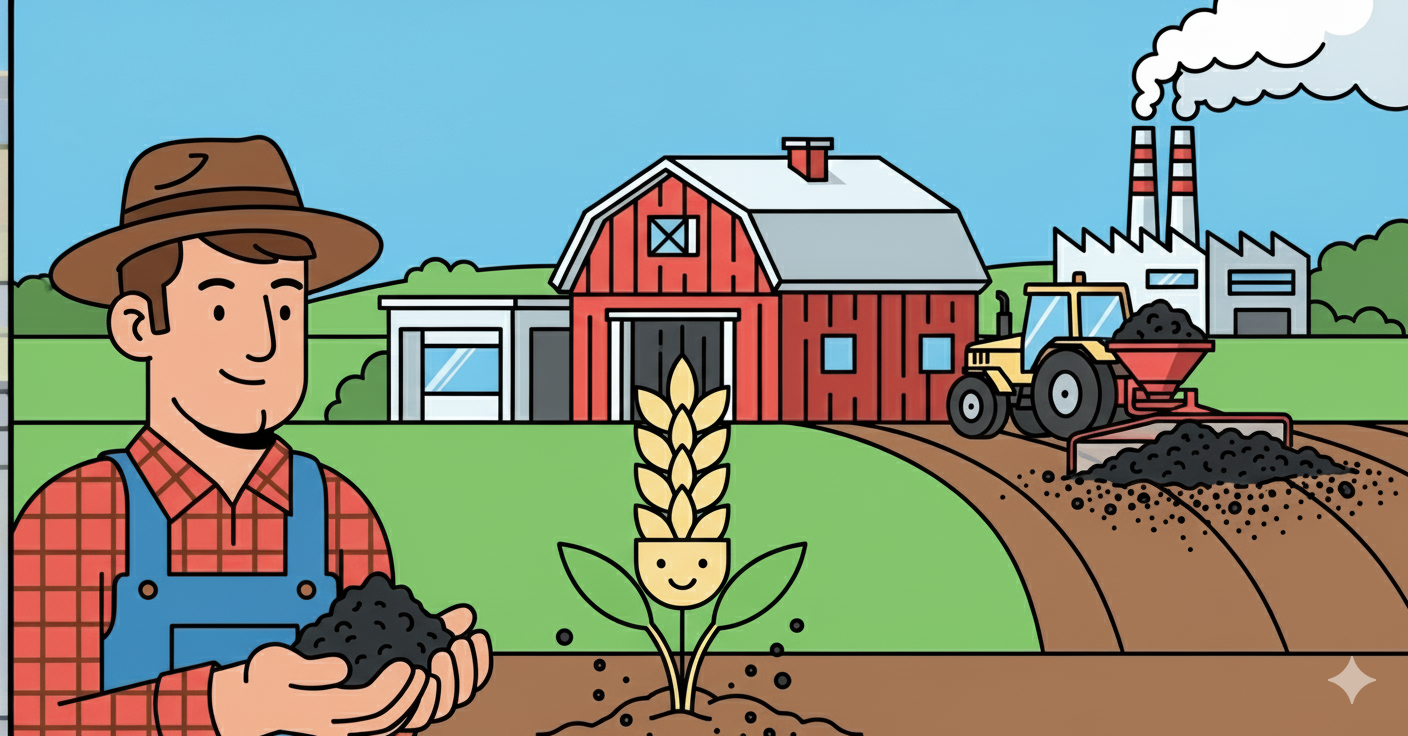
A recent panel at the 48th Expointer event in Brazil brought together specialists to discuss the practical applications of biocharBiochar is a carbon-rich material created from biomass decomposition in low-oxygen conditions. It has important applications in environmental remediation, soil improvement, agriculture, carbon sequestration, energy storage, and sustainable materials, promoting efficiency and reducing waste in various contexts while addressing climate change challenges. More, a material gaining attention for its role in sustainable agriculture. The session, titled “Biochar na Cultura dos Grãos,” focused on how this technology can be used to improve soil quality and manage agricultural waste.
Biochar is produced through a process called pyrolysisPyrolysis is a thermochemical process that converts waste biomass into bio-char, bio-oil, and pyro-gas. It offers significant advantages in waste valorization, turning low-value materials into economically valuable resources. Its versatility allows for tailored products based on operational conditions, presenting itself as a cost-effective and efficient More, which involves heating biomassBiomass is a complex biological organic or non-organic solid product derived from living or recently living organism and available naturally. Various types of wastes such as animal manure, waste paper, sludge and many industrial wastes are also treated as biomass because like natural biomass these More such as rice husks in an oxygen-free environment. The resulting substance is a stable form of carbon that, when added to soil, acts as a conditioner. Panelists explained that biochar can enhance soil’s ability to retain water and nutrients, improve aeration, and support a healthier microbial ecosystem.
Beyond its benefits for soil health, biochar also contributes to environmental goals. By locking carbon into the ground, it offers a method for long-term carbon sequestration, addressing concerns related to climate change. The discussion noted that the state of Rio Grande do Sul possesses a significant amount of raw material for biochar production, particularly from its abundant rice industry.
One of the featured speakers was a representative from NetZero, a company that produces biochar on a large scale. The company’s work has shown promising results, with some field experiments demonstrating at least a 20% increase in crop yield during the first harvest. The representative also mentioned the potential for using biochar to restore degraded land, including soils impacted by mining and recent floods in the region. The company is actively looking for partnerships to expand the application of this technology, showcasing its potential for addressing both agricultural and environmental challenges. Further research is necessary to fully quantify the economic benefits and develop financing models for farmers.
SOURCE: Biochar é destaque na Expointer como alternativa sustentável para solos e resíduos agrícolas




Leave a Reply