
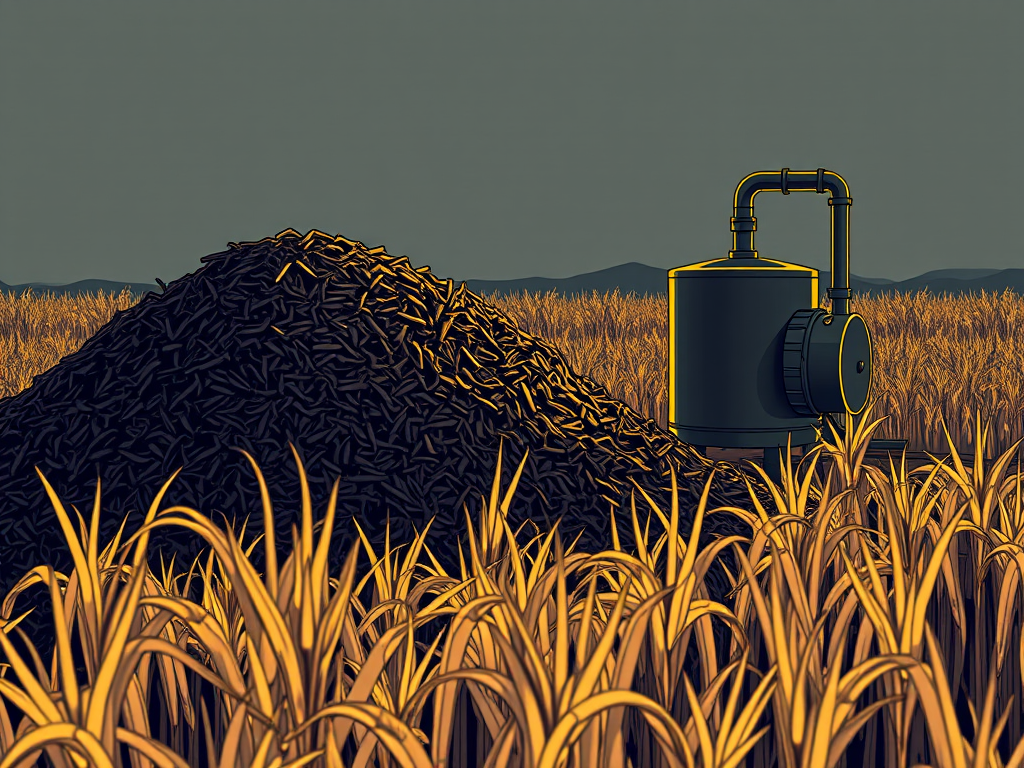
In a study published in Case Studies in Chemical and Environmental Engineering, Nathawat Unsomsri and colleagues explored using biocharBiochar is a carbon-rich material created from biomass decomposition in low-oxygen conditions. It has important applications in environmental remediation, soil improvement, agriculture, carbon sequestration, energy storage, and sustainable materials, promoting efficiency and reducing waste in various contexts while addressing climate change challenges. More, the carbon-rich byproduct of rice straw pyrolysisPyrolysis is a thermochemical process that converts waste biomass into bio-char, bio-oil, and pyro-gas. It offers significant advantages in waste valorization, turning low-value materials into economically valuable resources. Its versatility allows for tailored products based on operational conditions, presenting itself as a cost-effective and efficient More, as a sustainable alternative to open-field burning.
Open-field burning of rice straw is a common practice in Thailand, a major rice producer. However, this practice causes significant environmental problems, including air pollution and soil degradation.
Biochar production offers a promising solution. The process involves heating agricultural residues like rice straw in an oxygen-limited environment, converting the biomassBiomass is a complex biological organic or non-organic solid product derived from living or recently living organism and available naturally. Various types of wastes such as animal manure, waste paper, sludge and many industrial wastes are also treated as biomass because like natural biomass these More into a stable, carbon-rich material. This not only reduces emissions but also enhances carbon sequestration.
Unsomsri and colleagues optimized biochar production at 550°C for 4 hours, achieving a biochar with 61% carbon content and a 0.92 stability factor. Their biomass gasifier and burner (BGB) system reduced greenhouse gas emissions by 65% and total suspended particulates by 89%, meeting environmental standards. This research highlights biochar’s potential to mitigate climate change and provide a cleaner alternative for farmers.
SOURCE: Unsomsri, N., Koedthong, P., Tawkaew, S., Wiriyasart, S., & Kaewluan, S. (2025). Mitigating dust and air pollution from open-field rice straw burning through biochar production using an integrated biomass gasifier and burner. Case Studies in Chemical and Environmental Engineering, 11, 101222.





Leave a Reply