
Key Takeaways
- Agricultural canola waste turned into biocharBiochar is a carbon-rich material created from biomass decomposition in low-oxygen conditions. It has important applications in environmental remediation, soil improvement, agriculture, carbon sequestration, energy storage, and sustainable materials, promoting efficiency and reducing waste in various contexts while addressing climate change challenges. More effectively filters out toxic metals like cadmium, cobalt, nickel, and zinc from industrial oil sands wastewater.
- Biochar filters display a clear selective preference when capturing metals, trapping cadmium most efficiently while struggling with negatively charged elements.
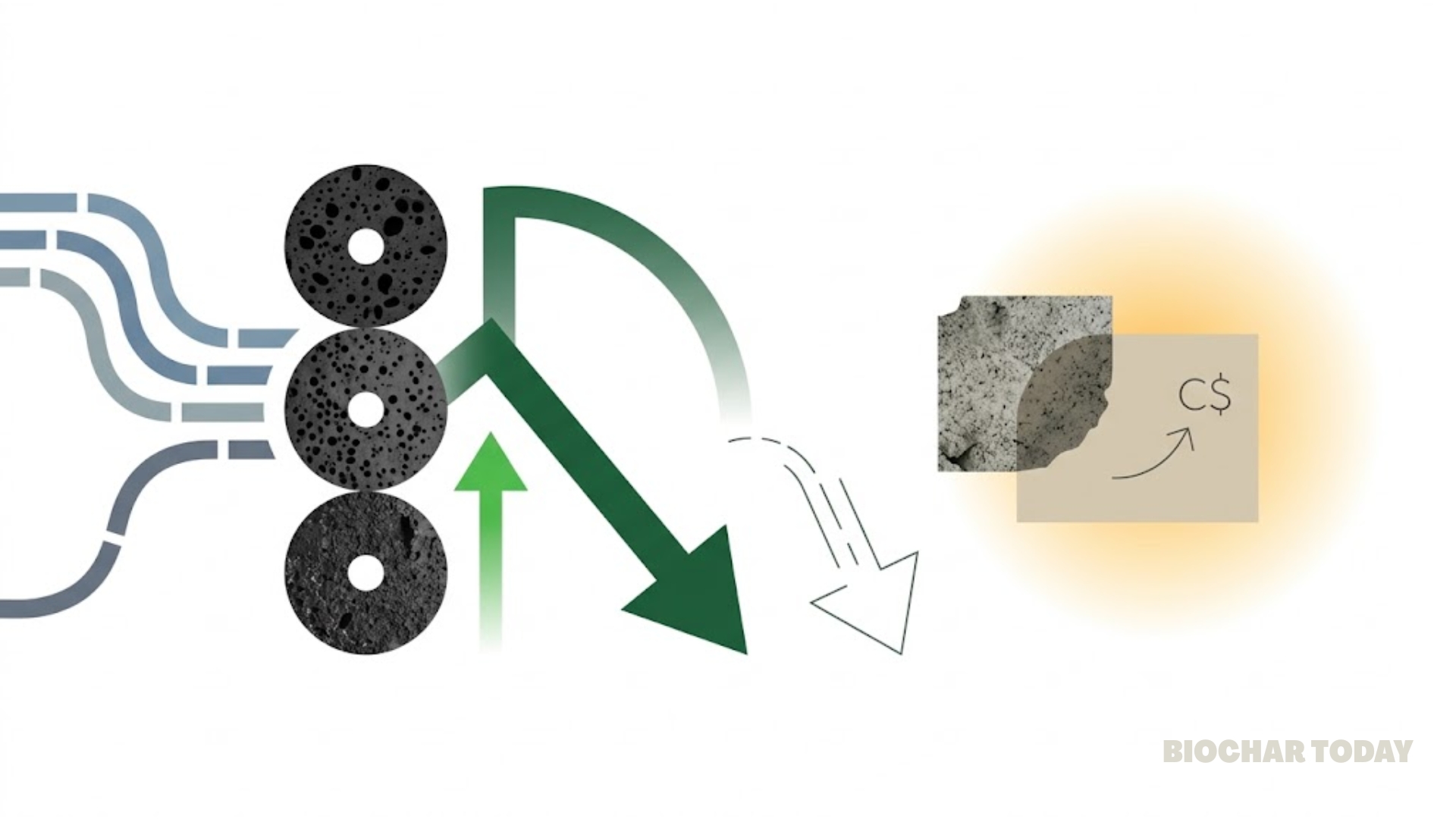
- Running continuous biochar treatment systems over time reduces overall water cleaning costs by 84 percent per liter as initial setup expenses amortize.
- Used metal-laden biochar can be safely recycled by mixing it into construction cement without leaking most captured toxic elements back into the environment.
- Recycling used biochar into concrete products creates economic savings by avoiding hazardous waste landfill fees and replacing raw cement materials.
Petroleum extraction from Canadian oil sands generates vast volumes of process-affected water stored in tailings ponds. This wastewater carries persistent toxic elements including cadmium, cobalt, nickel, zinc, copper, arsenic, chromium, and selenium. Native crop residues, such as canola straw, offer an abundant agricultural byproduct that can be pyrolyzed into carbonaceous biochar for large-scale water treatment. Testing biochar performance under continuous flow conditions mimics real engineering filtration setups and provides actionable scale-up insights.
Continuous column filtration using canola straw biochar demonstrates clear selectivity among co-occurring toxic elements in alkaline wastewater. Under optimal flow rates and bed depths, the biochar achieves maximum adsorption capacities for cadmium, cobalt, nickel, and zinc, following a distinct performance hierarchy. Conversely, negatively charged elements like arsenic, chromium, and selenium undergo electrostatic repulsion from the biochar surface, yielding negligible uptake. Copper removal remains suppressed due to complexation with dissolved organic matter present in the industrial wastewater matrix.
Mathematical kinetic modeling further clarifies how continuous fixed-bed biochar columns operate over extended periods. Standard breakthrough models accurately capture the removal dynamics of cationic metals like cadmium, cobalt, and nickel. Establishing target empty bed contact times provides a reliable design parameter for sizing full-scale treatment columns and predicting operational service lifespans. These findings show that biochar filters deliver reproducible metal capture when sized to accommodate fluid residence times.
Managing metal-laden spent biochar after wastewater treatment presents a secondary environmental challenge. Incorporating used biochar into general limestone cement pastes at low concentrations effectively encapsulates the material. LeachingLeaching is the process where nutrients are dissolved and carried away from the soil by water. This can lead to nutrient depletion and environmental pollution. Biochar can help reduce leaching by improving nutrient retention in the soil. More tests across acidic, neutral, and alkaline conditions confirm that the cement matrix successfully traps cadmium, cobalt, copper, nickel, arsenic, and zinc. Minor chromium detected in leachates originates from the raw cement clinker itself rather than the spent biochar.
Techno-economic evaluations confirm the financial viability of scaling up canola straw biochar systems for industrial remediation. Although initial setup costs dominate early operations, repeated column usage drives per-liter water treatment expenses down dramatically over consecutive runs. Furthermore, reusing spent biochar in cement eliminates hazardous waste disposal fees while earning supplementary material credits. This circular approach turns waste biochar into a valuable construction additive, supporting sustainable water treatment and low-carbon building materials.
Source: Pathy, A., Chang, S. X., & Naeth, M. A. (2026). Scaling up biochar based remediation: Continuous column adsorption of toxic elements from oil sands wastewater and sequential valorization of spent biochar in cement. Journal of Hazardous Materials, 516, Article 143293.



Leave a Reply