
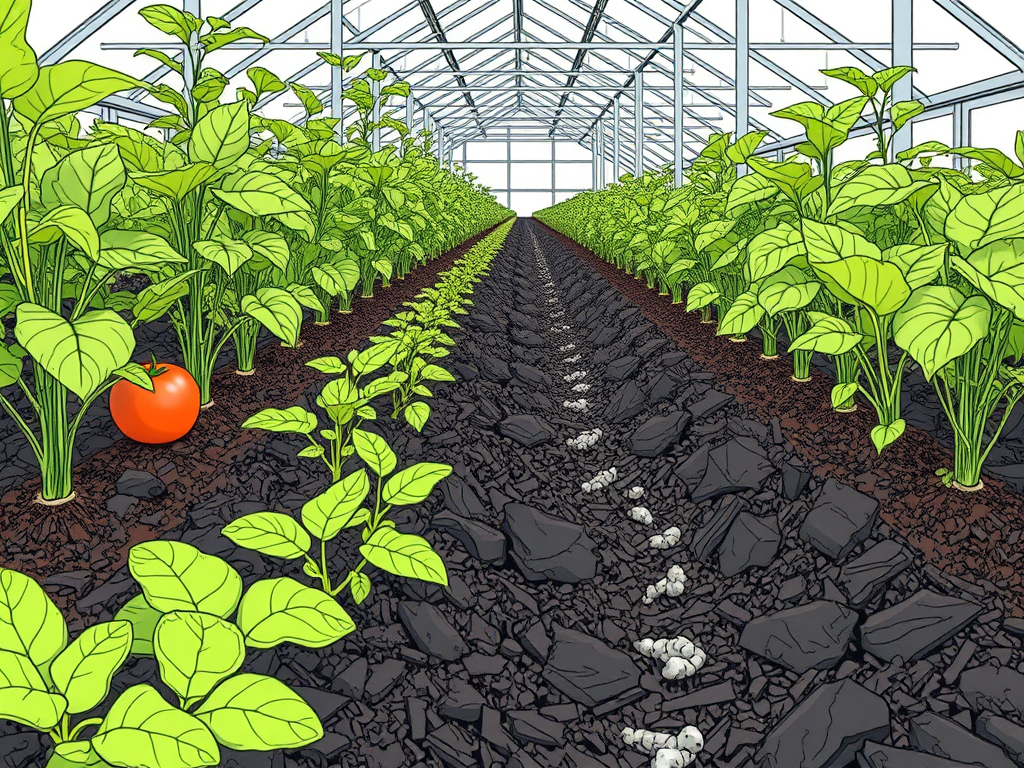
A recent study published in Scientific Reports by Sun, M., Fan, S.X., & Zhang, N. explores how biocharBiochar is a carbon-rich material created from biomass decomposition in low-oxygen conditions. It has important applications in environmental remediation, soil improvement, agriculture, carbon sequestration, energy storage, and sustainable materials, promoting efficiency and reducing waste in various contexts while addressing climate change challenges. More, plant ashAsh is the non-combustible inorganic residue that remains after organic matter, like wood or biomass, is completely burned. It consists mainly of minerals and is different from biochar, which is produced through incomplete combustion. Ash Ash is the residue that remains after the complete More, and Effective Microorganisms (EM) affect the quality of soil used in facility agriculture. Facility agriculture, particularly for vegetables, is vital, but faces challenges like soil degradation. This research investigates a combined soil amendmentA soil amendment is any material added to the soil to enhance its physical or chemical properties, improving its suitability for plant growth. Biochar is considered a soil amendment as it can improve soil structure, water retention, nutrient availability, and microbial activity. More approach to address these issues.
The combined application of biochar, plant ash, and EM significantly improved soil properties. Soil pHpH is a measure of how acidic or alkaline a substance is. A pH of 7 is neutral, while lower pH values indicate acidity and higher values indicate alkalinity. Biochars are normally alkaline and can influence soil pH, often increasing it, which can be beneficial More, bulk density, and nutrient levels all saw positive changes. The greatest improvement was seen with the T4 treatment (plant ash 3030 kg/hm2 + biochar 6060 kg/hm2 + EM bacteria 37.5:1).
The study details how continuous cropping and conventional practices degrade soil in facility agriculture, causing nutrient imbalance and disease. The combined amendment aims to counteract this. Biochar improves soil structure and water retention, plant ash provides nutrients, and EM bacteria enhance the soil’s microbial environment. The research measured key soil parameters to evaluate the effectiveness of different amendment dosages.
The results indicate that the combined amendment, especially at the T4 dosage, can mitigate soil problems in facility vegetable cultivation. This approach offers a promising way to sustain and improve vegetable production in these facilities. Sources and related content
Source: Sun, M., Fan, S.X., & Zhang, N. (2025). Effects of biochar combined with the application of plant ash and effective microorganisms on the soil in the vegetable facility. Scientific Reports, 15, 15824.





Leave a Reply