
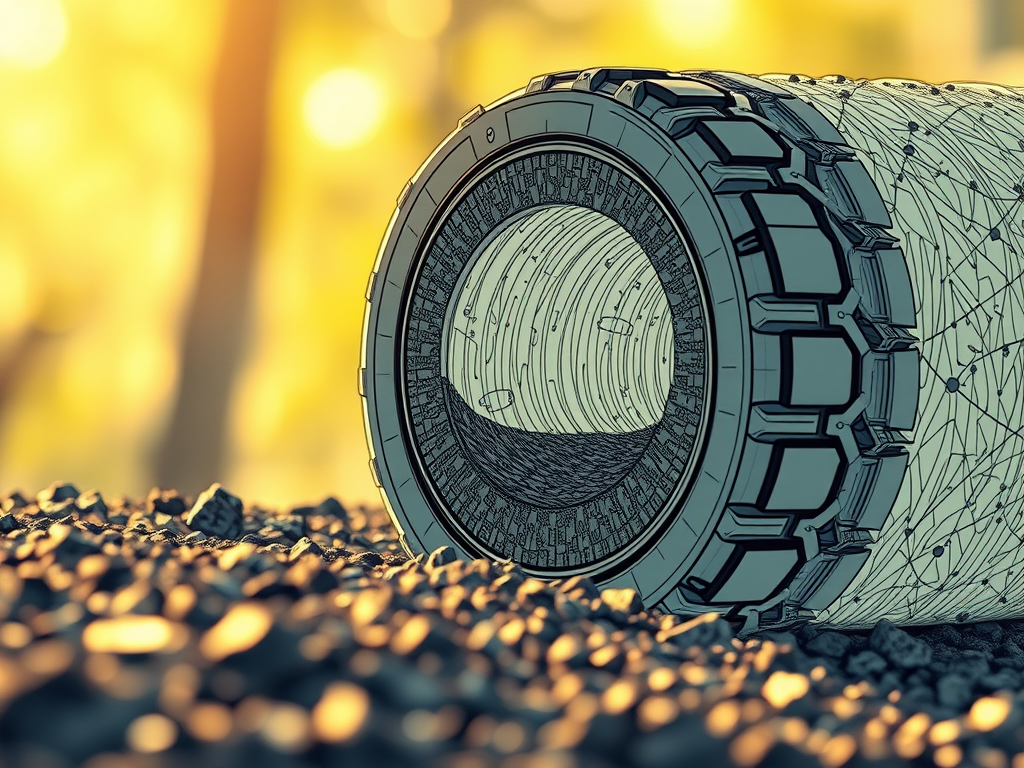
In a recent review published in BiocharBiochar is a carbon-rich material created from biomass decomposition in low-oxygen conditions. It has important applications in environmental remediation, soil improvement, agriculture, carbon sequestration, energy storage, and sustainable materials, promoting efficiency and reducing waste in various contexts while addressing climate change challenges. More, Karunanayake et al., explore the potential of biochar (BC) as a sustainable alternative to carbon black (CB) in rubber composites. Carbon black has been the traditional reinforcing filler in rubber, prized for its ability to enhance mechanical properties like wear resistance and strength. However, the production of CB is energy-intensive and environmentally detrimental, releasing significant amounts of CO2. This has led to a growing interest in finding more sustainable and eco-friendly alternatives.
Biochar, a carbon-rich material produced from biomassBiomass is a complex biological organic or non-organic solid product derived from living or recently living organism and available naturally. Various types of wastes such as animal manure, waste paper, sludge and many industrial wastes are also treated as biomass because like natural biomass these More pyrolysisPyrolysis is a thermochemical process that converts waste biomass into bio-char, bio-oil, and pyro-gas. It offers significant advantages in waste valorization, turning low-value materials into economically valuable resources. Its versatility allows for tailored products based on operational conditions, presenting itself as a cost-effective and efficient More, has emerged as a promising alternative. Biochar can be derived from various biomass materials, including agricultural residues, wood, and even waste materials, offering a sustainable way to utilize resources. The review emphasizes that while biochar shows potential, its effectiveness as a reinforcing filler varies depending on the source material and production process.
The authors highlight several studies that have investigated biochar’s use in different types of rubber composites. Notably, biochar has been shown to partially replace carbon black, enhancing certain mechanical properties of rubber. For instance, incorporating biochar can lead to improvements in toughness and elongation, crucial for applications requiring flexible materials.
However, the review also points out that biochar’s properties, such as particle size and surface area, often differ from those of carbon black. These differences can affect biochar’s reinforcing ability. To address these limitations, researchers have explored various modification techniques to enhance biochar’s properties. These modifications aim to optimize biochar’s particle size, surface characteristics, and compatibility with rubber matrices.
The review concludes that while biochar holds promise as a sustainable alternative to carbon black, further research is needed. This research should focus on optimizing biochar production and modification techniques to achieve comparable or superior performance to carbon black in rubber composites.
SOURCE:Karunanayake, L., Etampawala, T., de Silva, D. J., Bandara, J., Rajapaksha, A. U., & Vithanage, M. (2025). Role and potential of biochar as a sustainable alternative reinforcing filler to carbon black in rubber composites. Biochar, 7(1), 1–26.



Leave a Reply