
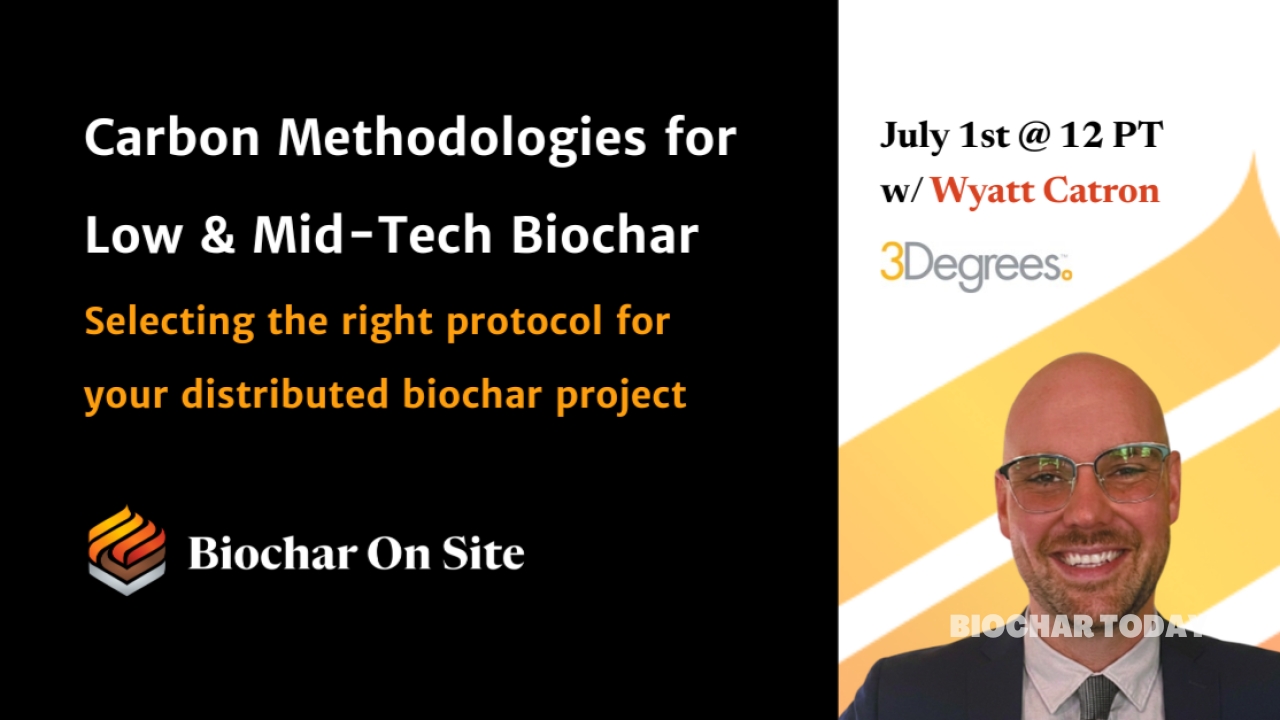
BiocharBiochar is a carbon-rich material created from biomass decomposition in low-oxygen conditions. It has important applications in environmental remediation, soil improvement, agriculture, carbon sequestration, energy storage, and sustainable materials, promoting efficiency and reducing waste in various contexts while addressing climate change challenges. More On Site, an organization dedicated to managing biomassBiomass is a complex biological organic or non-organic solid product derived from living or recently living organism and available naturally. Various types of wastes such as animal manure, waste paper, sludge and many industrial wastes are also treated as biomass because like natural biomass these More in wild lands, is hosting a webinar on July 1st featuring Wyatt Catron of 3Degrees Group, Inc., alongside representatives from CHARR APP and Ring of Fire Biochar Kiln. The event focuses on integrating place-based, distributed biochar production into existing carbon credit frameworks. Production methods highlighted include flame cap kilns and mobile carbonizers, which are designed to process localized waste material. The discussion centers on navigating available methodologies from established registries like Verra and the Climate Action Reserve to establish viable revenue pathways for small-scale operators.
The primary challenge addressed by these organizations is the financial and operational hurdle small-scale and mobile biochar projects face when trying to access the carbon market. In regions like the Southwestern United States, dense slash piles and stranded biomass aggravate wildfire risks and threaten local water systems. While processing this material on-site mitigates ecological hazards, the costly transportation and dumping fees associated with traditional biomass disposal often make localized management economically unfeasible. Historically, strict Measurement, Reporting, and Verification (MRV) protocols have excluded low- and mid-tech, distributed operations from carbon credit revenue, leaving them without financial support.
To resolve these barriers, Biochar On Site and 3Degrees Group are analyzing how distributed biochar approaches can fit into current carbon crediting methodologies. By evaluating the specific criteria of registries like the Climate Action Reserve and Verra, the presenters aim to align low- and mid-tech systems with standardized carbon accounting rules. This solution involves educating practitioners on selecting the best methodologies and leveraging mobile applications, such as CHARR APP, alongside specialized equipment like the Ring of Fire Biochar Kiln. This structured alignment helps small-scale operations satisfy MRV requirements directly on-site.
The outcome of aligning distributed production with established protocols is the creation of a distinct revenue pathway that makes localized biochar projects economically viable. By securing carbon credit revenue, operators can offset operational costs and avoid expensive disposal fees while actively reducing wildfire fuel loads in the wildland-urban interface. Ultimately, this framework enables decentralized practitioners to protect local ecosystems, scale up place-based biochar adoption, and successfully sequester carbon within regional soils.



Leave a Reply