
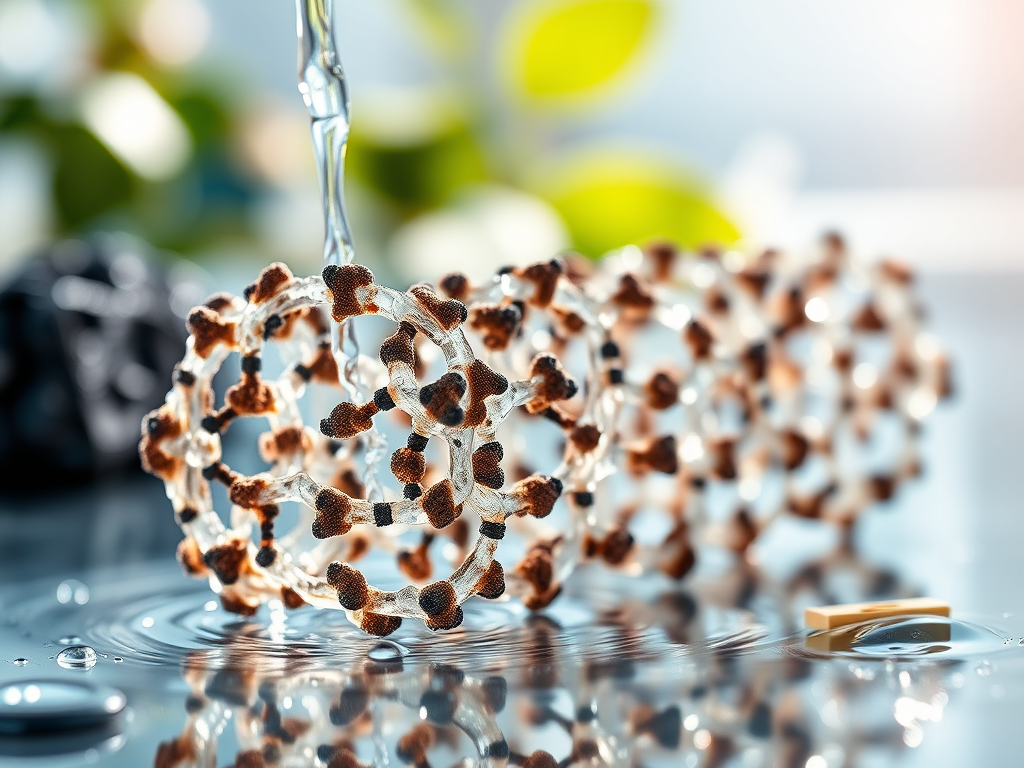
In a study published in Scientific Reports, Kumari et al., developed a ternary nanocomposite of SnO2 /Fly AshAsh is the non-combustible inorganic residue that remains after organic matter, like wood or biomass, is completely burned. It consists mainly of minerals and is different from biochar, which is produced through incomplete combustion. Ash Ash is the residue that remains after the complete More/Biochar to degrade Ofloxacin and Rose Bengal, two common water pollutants. The nanocomposite, synthesized using the sol-gel method, combines tin oxide (SnO2), fly ash, and biocharBiochar is a carbon-rich material created from biomass decomposition in low-oxygen conditions. It has important applications in environmental remediation, soil improvement, agriculture, carbon sequestration, energy storage, and sustainable materials, promoting efficiency and reducing waste in various contexts while addressing climate change challenges. More to address the growing issue of water contamination from dyes and pharmaceuticals.
Water contamination is an increasing environmental concern, with pollutants like dyes and pharmaceuticals infiltrating water systems from industrial, agricultural, and medical sources. These pollutants pose significant risks to both the environment and human health. To combat this, researchers are exploring advanced oxidation processes (AOPs), with photocatalysis emerging as a promising technique.
Researchers synthesized a SnO2/Fly Ash/Biochar nanocomposite and characterized it using various techniques, including transmission electron microscopy and X-ray diffraction. The nanocomposite demonstrated effective photocatalytic activity, degrading 99.12% of Rose Bengal and 88.08% of Ofloxacin under sunlight irradiation within 60 minutes. The enhanced performance is attributed to the nanocomposite’s structural and optical properties, including a reduced band gap of 2.3 eV, which allows for better visible light absorption.
This study highlights the potential of using a SnO2/Fly Ash/Biochar nanocomposite as an environmentally sustainable solution for water treatment, effectively removing organic pollutants like dyes and pharmaceuticals.
SOURCE: Kumari, K., Moyon, N. S., & Ahmaruzzaman, M. (2025). Environmentally sustainable fabrication of SnO2/fly ash/biochar nanocomposite for enhanced photocatalytic performance for degradation of Ofloxacin and Rose Bengal. Scientific Reports, 15(1), 11965.



Leave a Reply