
Key Takeaways
- Persistent Organic Pollutants (POPs), like pesticides and hydrocarbons, are toxic and resist natural breakdown, posing serious environmental and health risks.
- A new, sustainable method uses biochar-supported microbial systems that combine the physical trapping power of biocharBiochar is a carbon-rich material created from biomass decomposition in low-oxygen conditions. It has important applications in environmental remediation, soil improvement, agriculture, carbon sequestration, energy storage, and sustainable materials, promoting efficiency and reducing waste in various contexts while addressing climate change challenges. More with the biological cleanup power of microbes.
- Biochar acts as a protective “shelter“ for microbes, helping them survive harsh conditions and concentrating pollutants and nutrients right next to them to boost cleanup efficiency.
- Case studies show this combined approach can achieve impressive results, such as over 99% removal of atrazine within 48 hours and boosting degradation efficiency by 20% to 40% compared to free microbes alone.
- While still facing challenges in large-scale application, this green technology represents a major step toward sustainable and energy-efficient environmental cleanup
The persistent presence of highly toxic organic pollutants, such as polycyclic aromatic hydrocarbons (PAHs), pesticides like atrazine, and chlorinated solvents, is one of the most urgent environmental issues of our time. These Persistent Organic Pollutants (POPs) resist natural degradation and pose significant threats to both ecosystems and human health due to their ability to bioaccumulate and cause neurotoxicity, endocrine disruption, and cancer. While traditional cleanup methods—like chemical oxidation or soil washing—are often expensive, energy-intensive, and risk causing secondary pollution, the biological approach, known as bioremediation, frequently struggles with low microbial survival rates and environmental sensitivity.
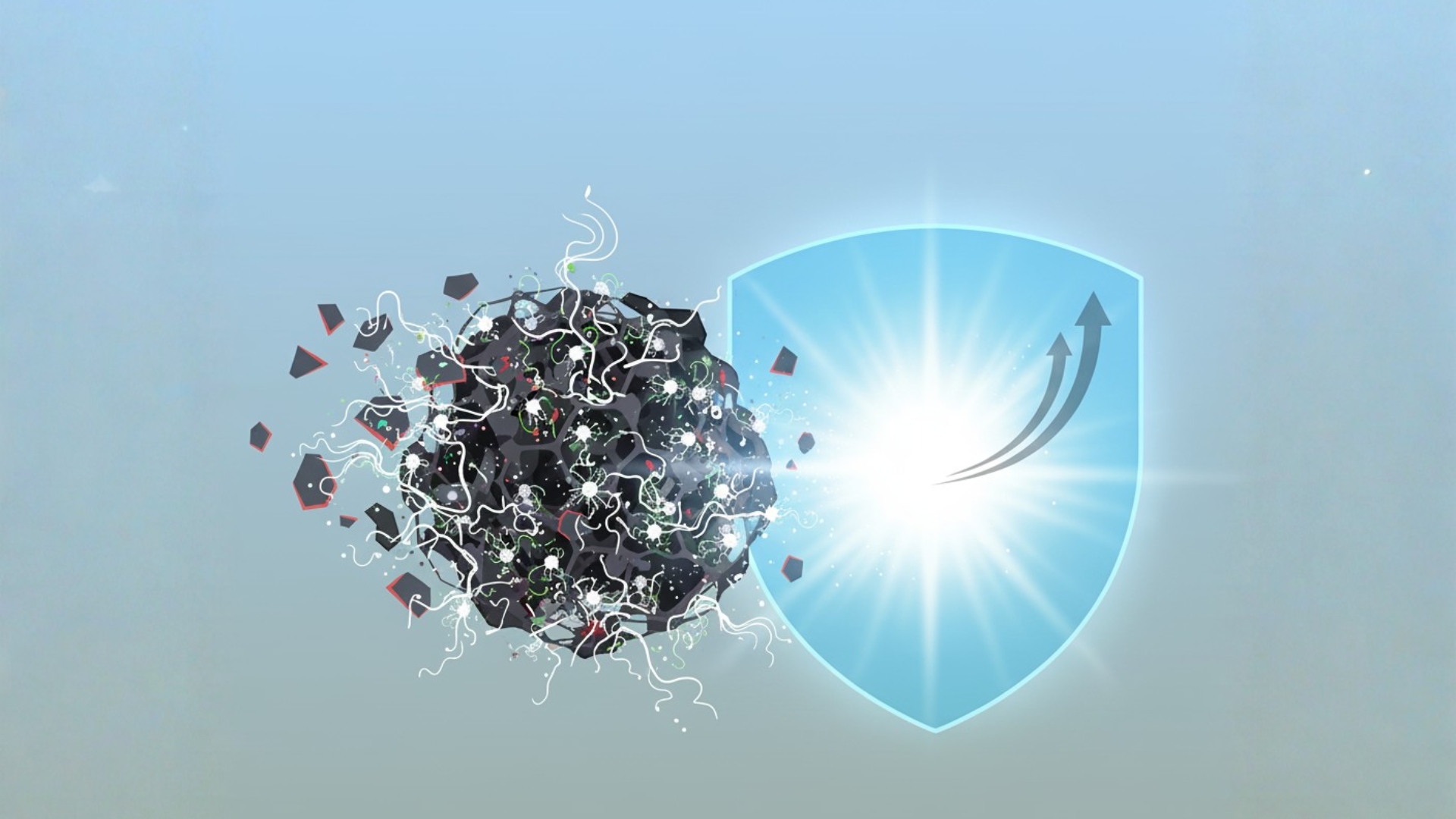
However, a groundbreaking solution is emerging: the biochar-supported microbial system. This innovative strategy synergizes the physical advantages of biochar with the catalytic power of specialized microbial communities. Biochar, a carbonaceous material made by pyrolyzing biomassBiomass is a complex biological organic or non-organic solid product derived from living or recently living organism and available naturally. Various types of wastes such as animal manure, waste paper, sludge and many industrial wastes are also treated as biomass because like natural biomass these More, offers a high surface area and a porous structure that physically immobilizes pollutants. Crucially, it creates an ideal microhabitat, or “shelter,” for pollutant-degrading microbes (like Pseudomonas or Sphingomonas) to colonize and thrive.
The core benefit of this synergy is enhanced performance. The biochar first acts as an adsorbent, concentrating the pollutants near the microbial cells. Simultaneously, it protects microbes from environmental stressors such as drastic pHpH is a measure of how acidic or alkaline a substance is. A pH of 7 is neutral, while lower pH values indicate acidity and higher values indicate alkalinity. Biochars are normally alkaline and can influence soil pH, often increasing it, which can be beneficial More fluctuations, desiccation, and even the toxicity of high pollutant concentrations. This protection allows microorganisms to efficiently use their metabolic capabilities to break down complex organic compounds into harmless end products, such as CO₂.
Impressive quantitative results in controlled studies support the effectiveness of this integrated approach. In the cleanup of the herbicide atrazine, for instance, biochar loaded with functional bacteria formed stable biofilms, resulting in the removal of over 99% of atrazine within 48 hours. The removal efficiency in this case was 1.23- to 1.48-fold higher than using single- and mixed-strain biofilms alone. Other studies corroborate this performance boost, showing that immobilizing strains such as Acinetobacter lwoffii on biochar improved atrazine degradation efficiency compared with free-degrading strains. Furthermore, biochar-supported systems have shown remarkable durability and reusability: one system maintained an over 80% removal efficiency for a pesticide even after five reuse cycles, and the removal rate remained high after 210 days of storage, far surpassing the stability of free microbial cells.
To maximize this efficiency, researchers employ various immobilization techniques. The most common is adsorption, which is low-cost, straightforward, and relies on the natural affinity between the biochar surface and microbes. However, for high-toxicity or continuous-flow systems, more secure methods are used: covalent bonding offers strong stability, and entrapment within polymers like sodium alginate provides maximum protection, achieving, for example, a PAH removal rate of over 87% in simulated wastewater. The formation of biofilms—natural microbial communities embedded in extracellular polymeric substances (EPS)—is another highly efficient, self-forming method that enhances stress resistance.
Despite the promising results, challenges persist in scaling this technology up for real-world application. Concerns include ensuring long-term microbial viability under fluctuating field conditions, understanding the effects of biochar aging, and clarifying the economic feasibility relative to existing technologies. Future research is focused on engineering biochar with tailored properties (e.g., metal doping to enhance catalytic activity) and on genetically modifying microbial strains to improve tolerance to environmental stress, while rigorously assessing potential ecological risks. By addressing these gaps, the biochar-supported microbial system holds the potential to become a sustainable, scalable, and environmentally friendly platform for rehabilitating polluted environments, aligning closely with circular economic goals.
Source: Wu, H., Huo, Y., Qi, F., Zhang, Y., Li, R., & Qiao, M. (2025). Biochar-supported microbial systems: a strategy for remediation of persistent organic pollutants. Biochar, 7(1), 11



Leave a Reply