
Key Takeaways
- Combining biocharBiochar is a carbon-rich material created from biomass decomposition in low-oxygen conditions. It has important applications in environmental remediation, soil improvement, agriculture, carbon sequestration, energy storage, and sustainable materials, promoting efficiency and reducing waste in various contexts while addressing climate change challenges. More with specific microbes creates a powerful system to break down stubborn pollutants.
- Biochar acts like a protective habitat, shielding microbes from toxins and environmental stress while also acting as a sponge to trap pollutants.
- This synergistic approach is highly effective. One system removed over 99% of the pesticide atrazine in 48 hours.
- In another case, the biochar-microbe combo was 83% more effective at removing flame retardants than free-floating bacteria.
- While promising, challenges like long-term stability in the field and the cost of large-scale applications still need to be solved.
Our environment faces a stubborn problem: persistent organic pollutants, or POPs. These industrial chemicals, pesticides, and solvents are widespread, toxic, and, as their name suggests, incredibly persistent. They resist breaking down and can harm human health and ecosystems. A new review by Haowei Wu and colleagues, published in the journal Biochar, examines a powerful and sustainable strategy to fight these contaminants by combining two natural processes: the absorptive power of biochar and the metabolic hunger of microbes.
Traditional cleanup methods for POPs are often a difficult choice. Physicochemical treatments can be expensive, energy-intensive, and inefficient. A greener alternative is bioremediation, which uses microorganisms to eat and degrade pollutants. The problem is that these microbes are sensitive. When put into a contaminated site, they often struggle to survive the harsh conditions, high toxin levels, or swings in pHpH is a measure of how acidic or alkaline a substance is. A pH of 7 is neutral, while lower pH values indicate acidity and higher values indicate alkalinity. Biochars are normally alkaline and can influence soil pH, often increasing it, which can be beneficial More and temperature.
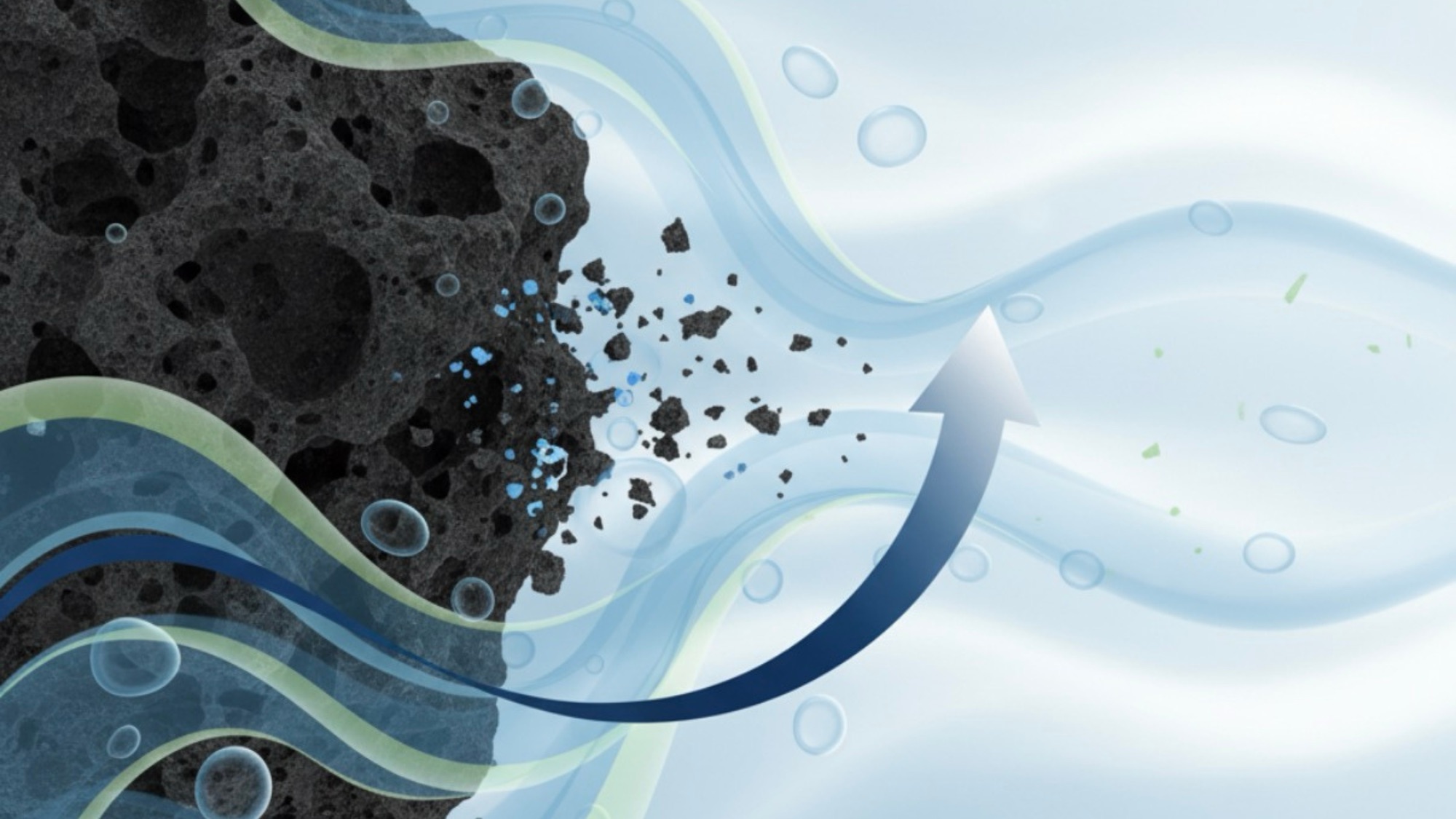
This is where biochar comes in. Researchers have found that biochar isn’t just a passive filter; it’s an ideal partner for bioremediation. The true innovation lies in the synergy between the material and the microbes. The biochar acts as both a “sponge” and a “safe house.” First, its porous structure and surface chemistry allow it to physically trap, or adsorb, pollutants from the water or soil. This effectively concentrates the “food” (the pollutant) in one place. Second, this same porous structure provides a perfect habitat for microbes to colonize and form communities known as biofilms.
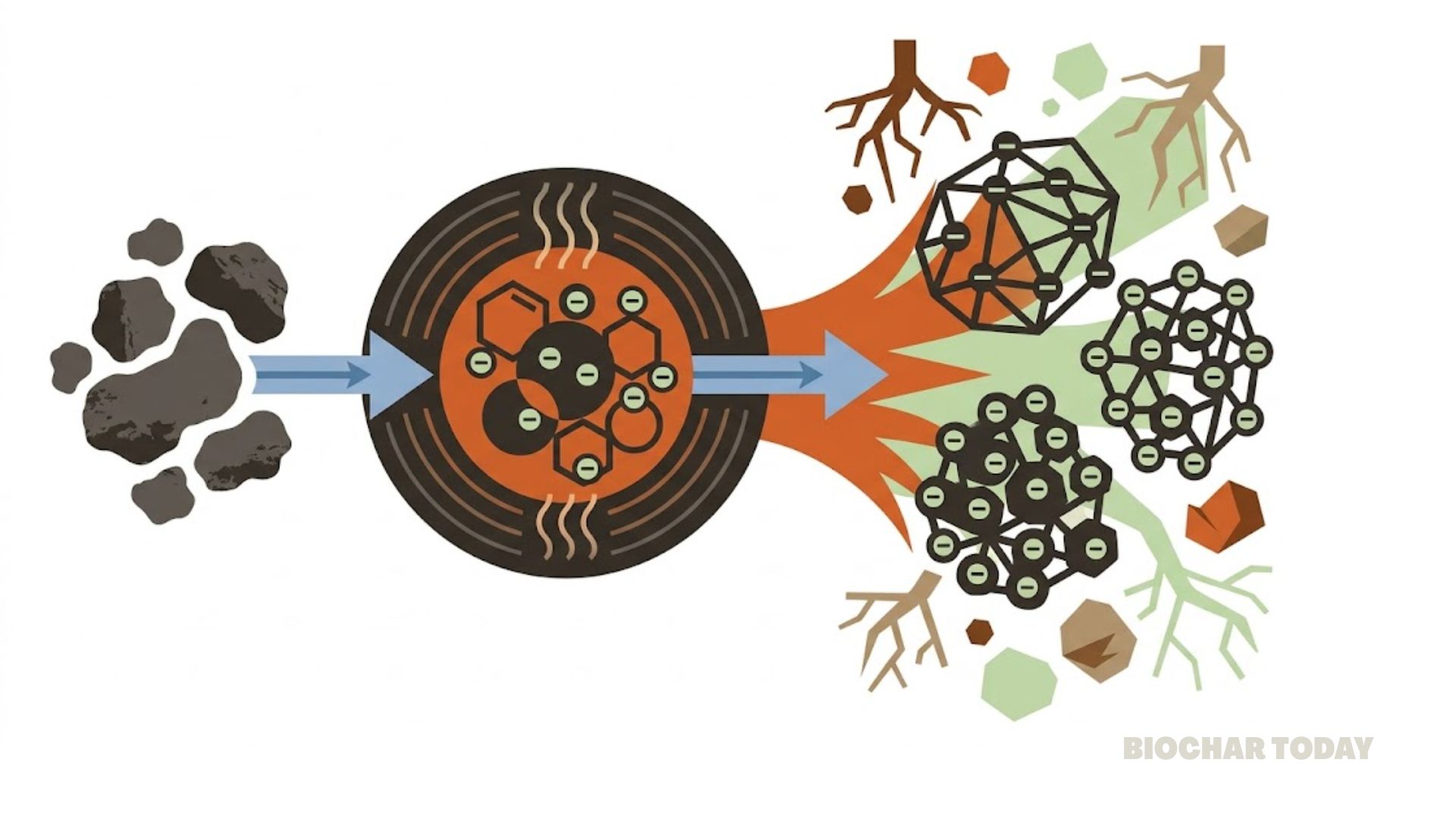
Inside this biochar habitat, the microbes are protected. The biochar structure shields them from predators and environmental stress. It can buffer the soil or water pH, creating a stable microenvironment , and it holds onto water, preventing the microbes from drying out. Biochar can even act as an electron shuttle, a critical function that helps microbes exchange electrons to boost their metabolic processes, allowing them to break down even the most recalcitrant chemicals.
The review highlights several compelling examples of this system in action. When tackling the common pesticide atrazine, researchers found that immobilizing bacteria on biochar improved the degradation efficiency by 20–40% compared to using the free-floating bacteria alone. An even more striking study on atrazine found that a biochar-biofilm system removed over 99% of the pollutant in just 48 hours.
This success extends to other stubborn pollutants. For polybrominated diphenyl ethers (toxic flame retardants), one biochar-microbe system was found to be 63% more effective than biochar alone and 83% more effective than the bacteria alone. Other studies showed high removal rates for the pesticide chlorpyrifos (82.18% in 40 days) and industrial chemicals like 2,4-dichlorophenol (77% absorbed in 36 hours). A key advantage is durability. One system designed for an herbicide maintained over 80% removal efficiency even after five reuses, far surpassing the lifespan of free cells.
Despite this clear potential, the authors note that the technology is not a silver bullet. More research is needed to understand the long-term viability of these microbial communities in real-world settings. Scientists also need to study “biochar aging”—how the material itself changes physically and chemically after years in the soil—and ensure the process is economically feasible for cleaning up large-scale sites.
By addressing these gaps, biochar-supported microbial systems offer a sustainable and scalable path forward. This approach brilliantly combines material science and microbiology, aligning with circular economy goals by turning potential waste (biomassBiomass is a complex biological organic or non-organic solid product derived from living or recently living organism and available naturally. Various types of wastes such as animal manure, waste paper, sludge and many industrial wastes are also treated as biomass because like natural biomass these More) into a high-value tool for environmental rehabilitation.
Source: Wu, H., Huo, Y., Qi, F., Zhang, Y., Li, R., & Qiao, M. (2025). Biochar-supported microbial systems: a strategy for remediation of persistent organic pollutants. Biochar, 7(113).

Leave a Reply