
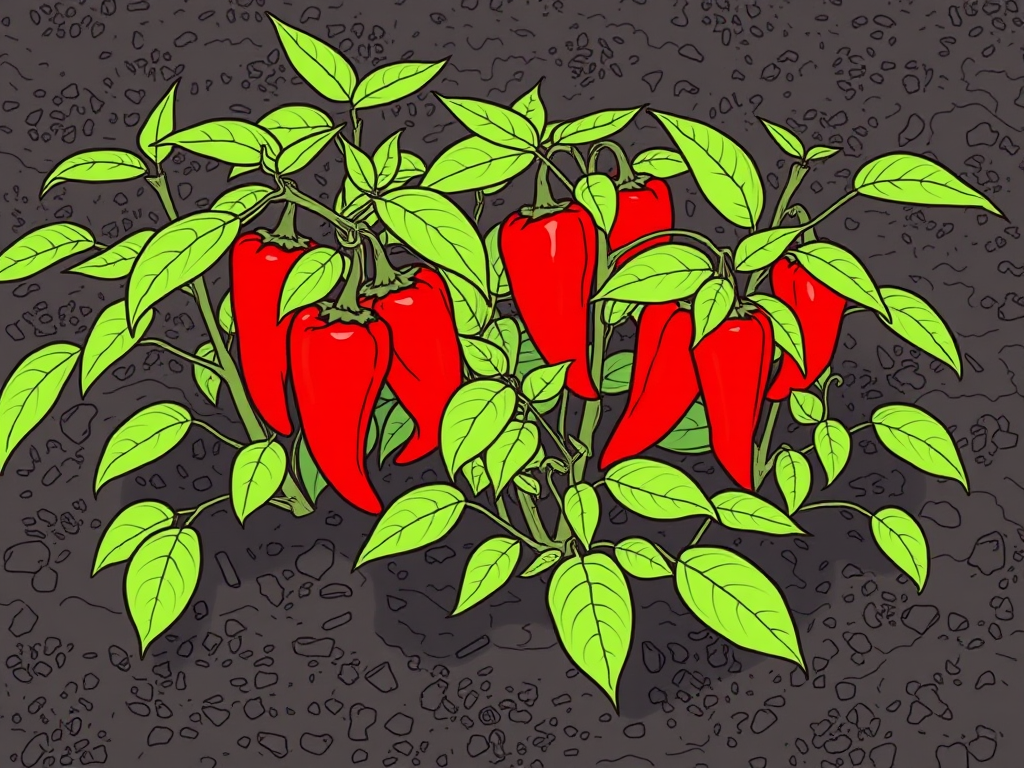
In a study published in the Asia-Pacific Journal of Science and Technology, authors Pearaksa, Hanpattanakit, Jampasri, Chaivisuthangkura, and Saeng-ngam investigated the effects of corn cob biocharBiochar is a carbon-rich material created from biomass decomposition in low-oxygen conditions. It has important applications in environmental remediation, soil improvement, agriculture, carbon sequestration, energy storage, and sustainable materials, promoting efficiency and reducing waste in various contexts while addressing climate change challenges. More (CCB) on chili peppers grown in acidic soil. Acidic soils pose a significant challenge to agriculture, but this research demonstrates how biochar can be used to improve soil conditions and enhance chili pepper production.
The study, conducted over 91 days, examined chili peppers grown in soil with a pHpH is a measure of how acidic or alkaline a substance is. A pH of 7 is neutral, while lower pH values indicate acidity and higher values indicate alkalinity. Biochars are normally alkaline and can influence soil pH, often increasing it, which can be beneficial More of 4.3, comparing the effects of CCB-treated soil with untreated control soil. The application of 37.5 t/ha of CCB significantly increased soil pH to 5.8, showing biochar’s effectiveness in reducing soil acidity.
This amendment led to several positive outcomes for the chili peppers. Notably, the CCB treatment significantly enhanced the performance index (Pi) and chlorophyll fluorescence (Fv/Fm) in chili pepper leaves. While the total chlorophyll content was not affected, the sugar content in leaves increased significantly after 63-84 days of amendment.
Furthermore, the application of CCB had a substantial impact on plant growth and yield. Shoot length increased from 66.0 cm to 82.5 cm, and shoot dry weight more than doubled from 31.4 g/plant to 66.9 g/plant. Fruit yield also saw a significant rise, with fresh weight increasing from 93.6 g/plant to 141.9 g/plant and dry weight increasing from 24.9 g/plant to 33.9 g/plant.
In conclusion, the study demonstrates that corn cob biochar is a valuable tool for improving acidic soil and enhancing chili pepper growth, photosynthetic efficiency, and yield. The quantitative data provides strong evidence for biochar’s potential in sustainable agriculture and soil reclamation.
SOURCE: Pearaksa, P., Hanpattanakit, P., Jampasri, K., Chaivisuthangkura, P., & Saeng-ngam, S. (2024). Effects of corn cob biochar on physiological responses and yield of chili peppers. Asia-Pacific Journal of Science and Technology, 30(02), APST-30-02-07.



Leave a Reply