
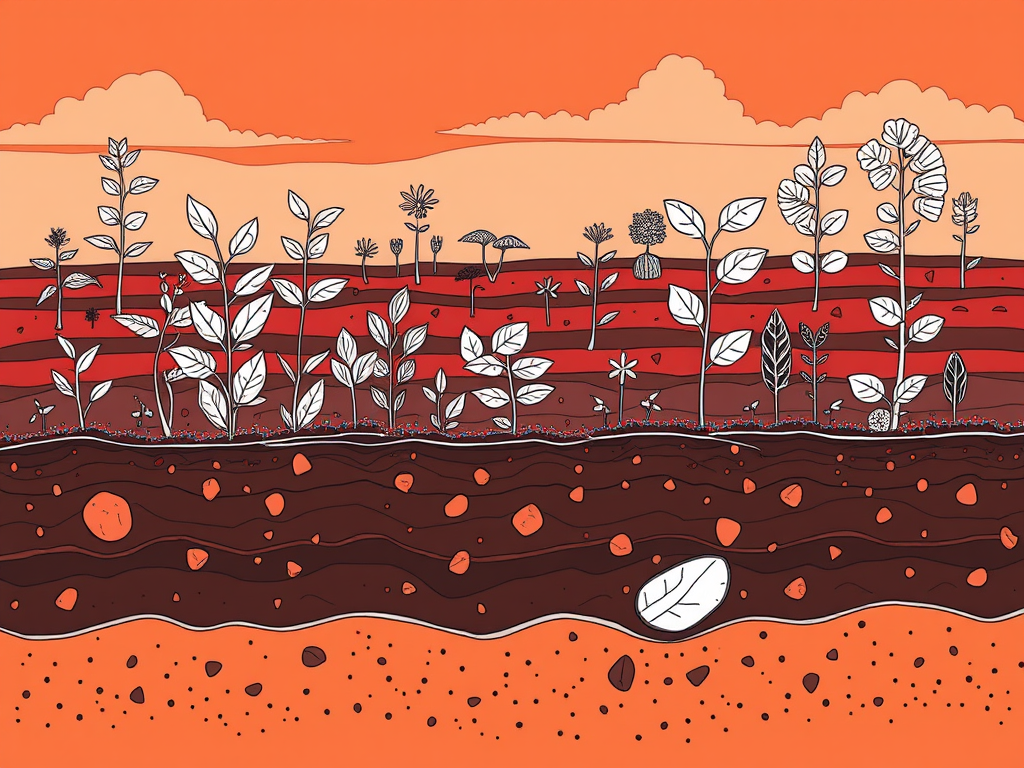
In a recent opinion article published in Frontiers in Microbiology, researchers Hanfeng Jiang, Jiangyan Wu, Jialu Guan, Fangzhou Zhao, Linghua Tan, and Haoming Chen explore how biocharBiochar is a carbon-rich material created from biomass decomposition in low-oxygen conditions. It has important applications in environmental remediation, soil improvement, agriculture, carbon sequestration, energy storage, and sustainable materials, promoting efficiency and reducing waste in various contexts while addressing climate change challenges. More can revolutionize the health and productivity of acidic red soils. Their work, “Biochar is an innovative strategy for reconstructing microbial communities and enhancing nutrient utilization efficiency in acidic red soils,” highlights biochar’s potential to address a widespread environmental challenge.
Red soils, prevalent in tropical and subtropical regions like southern China, Southeast Asia, South America, and Africa, span approximately 64 million square kilometers. Soil acidification has significantly impacted agricultural productivity worldwide, leading to reduced yields on about 50% of arable land, with some areas experiencing crop losses as high as 43.8%. This acidification is a complex issue, stemming from natural processes such as the leachingLeaching is the process where nutrients are dissolved and carried away from the soil by water. This can lead to nutrient depletion and environmental pollution. Biochar can help reduce leaching by improving nutrient retention in the soil. More of base cations by heavy rainfall and mineral weathering, as well as human activities like excessive chemical fertilizer application and acid deposition. These factors contribute to an accumulation of hydrogen ions and the activation of reactive aluminum, which are detrimental to soil health.
One of the most severe consequences of soil acidification is its impact on rhizosphere microbial communities. Essential microbes that support plant growth, including nitrogen-fixing, phosphate-solubilizing, and carbon-fixing bacteria, show significant declines in abundance and function in acidic red soils. This not only impairs nutrient cycling but also intensifies greenhouse gas emissions. Acidification also weakens the ability of beneficial microbes to colonize and perform their functions, making it harder for plants to acquire nutrients and resist pathogens. For example, the antagonistic effect of rhizosphere microbial communities against the plant pathogen Fusarium spp. in acidic red soils has reportedly decreased by 20.6% to 50.7%.
Traditional methods for mitigating red soil acidification often involve applying organic or inorganic soil amendments like lime and organic wastes. However, biochar, a carbon-rich material created through the pyrolysisPyrolysis is a thermochemical process that converts waste biomass into bio-char, bio-oil, and pyro-gas. It offers significant advantages in waste valorization, turning low-value materials into economically valuable resources. Its versatility allows for tailored products based on operational conditions, presenting itself as a cost-effective and efficient More of biomassBiomass is a complex biological organic or non-organic solid product derived from living or recently living organism and available naturally. Various types of wastes such as animal manure, waste paper, sludge and many industrial wastes are also treated as biomass because like natural biomass these More, stands out as a superior alternative. Biochar boasts alkaline properties, a porous structure, chemical stability, and a low environmental risk. Its stable carbon structure also enables long-term carbon sequestration, enhancing soil carbon sink capacity and reducing greenhouse gas emissions such as CO2 and N2O. This makes biochar a dual-purpose solution for both soil remediation and agricultural carbon sequestration.
Biochar directly improves the physicochemical properties of acidic red soils. Rich in alkaline components, it neutralizes active acids and exchangeable aluminum ions, raising the soil pHpH is a measure of how acidic or alkaline a substance is. A pH of 7 is neutral, while lower pH values indicate acidity and higher values indicate alkalinity. Biochars are normally alkaline and can influence soil pH, often increasing it, which can be beneficial More to a range suitable for crop growth. Studies have demonstrated that biochar derived from spent mushroom substrate can increase the pH of acidic red soils by 43%. Furthermore, its porous structure and high surface area enhance cation exchange capacity and soil organic matter content, displacing acidic cations and reducing the leaching of base cations. The oxygen-containing functional groups and organic anions in biochar also anchor iron and aluminum oxides, significantly boosting the soil’s acid buffering capacity and reducing the risk of secondary acidification.
Beyond its direct effects on soil chemistry, biochar plays a crucial role in restoring microbial communities. It provides a protective microenvironment against acid stress and offers organic carbon and mineral nutrients, promoting the growth of beneficial microorganisms. For instance, pig manure-derived biochar has been shown to increase microbial diversity by 30.08% (Shannon index) and richness by 3.69% (Chaol index) in red soils. By raising soil pH and reducing reactive aluminum, biochar alleviates the inhibition of acid-sensitive bacteria and enhances the activity of acid-tolerant functional microbes, optimizing nitrogen and phosphorus cycling. It also fosters synergistic relationships between functional microbial groups, like arbuscular mycorrhizal fungiThese are friendly fungi that form a partnership with plant roots. They act like an extension of the root system, helping plants access water and nutrients more effectively. Biochar can create a cozy habitat for these helpful fungi, boosting their growth and improving plant health. More and plants, improving stress resistance and nutrient use efficiencyNutrient use efficiency refers to how effectively plants can take up and utilize nutrients from the soil. Biochar can improve nutrient use efficiency by enhancing nutrient availability and retention in the soil. More.
Biochar also contributes significantly to carbon sequestration and greenhouse gas mitigation. Rice straw-derived biochar, for example, has been shown to decrease CO2 emission rates and cumulative emissions from red soils by 28.0% and 27.5%, respectively. This is achieved through direct carbon fixation and indirect mechanisms such as suppressing microbial respiration. Biochar also inhibits key enzymes in the nitrogen cycle, reducing N2O production during nitrification and denitrification. Its redox-active components can even stimulate anaerobic bacteria, further reducing CH4 and N2O emissions.
While the benefits are clear, the efficacy of biochar can vary based on factors like initial soil properties, biomass feedstockFeedstock refers to the raw organic material used to produce biochar. This can include a wide range of materials, such as wood chips, agricultural residues, and animal manure. More, pyrolysis processes, and application methods. Long-term stability can also be affected by regional climate and agricultural practices, as intense rainfall may leach alkaline substances and continuous fertilization could alter biochar’s surface charge properties. Additionally, some biochars, particularly those from manure, may contain heavy metals that could accumulate over time. Future research needs to focus on designing targeted functionalized biochars and assessing their long-term ecological impacts to ensure sustainable improvement of red soils.
Source: Jiang, H., Wu, J., Guan, J., Zhao, F., Tan, L., & Chen, H. (2025). Biochar is an innovative strategy for reconstructing microbial communities and enhancing nutrient utilization efficiency in acidic red soils. Frontiers in Microbiology, 16, 1622408. doi: 10.3389/fmicb.2025.1622408 Sources




Leave a Reply