
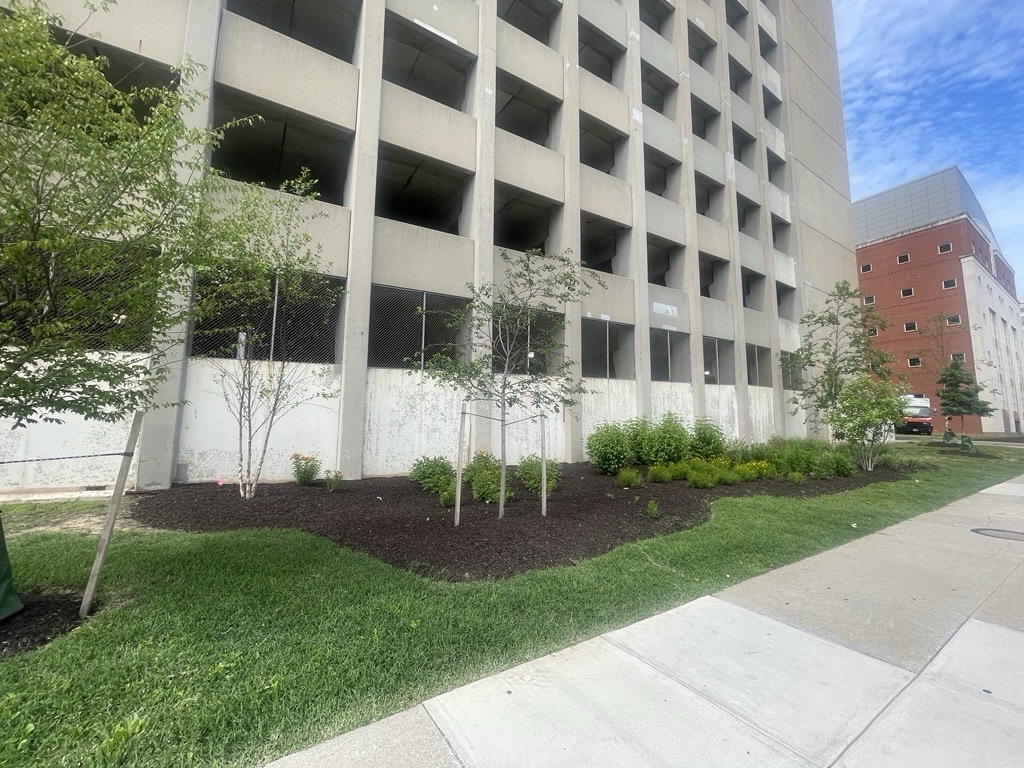
In summer 2024, the University of Maryland, Baltimore (UMB) began incorporating biocharBiochar is a carbon-rich material created from biomass decomposition in low-oxygen conditions. It has important applications in environmental remediation, soil improvement, agriculture, carbon sequestration, energy storage, and sustainable materials, promoting efficiency and reducing waste in various contexts while addressing climate change challenges. More into its landscaping as part of an ongoing commitment to sustainable land management. Through a partnership with BrightView, UMB applied 3,350 pounds of Mirimichi Green CarbonizPN-G—a blend of biochar and compost—across 25 planting areas on campus.
This amendment enhances soil structure by retaining moisture, reducing compaction, and promoting deeper root systems. It’s especially useful in urban environments where soils tend to be degraded or nutrient-poor. Sites benefiting from the application include the south side of the Pratt Street Garage, the School of Nursing, the Health Sciences and Human Services Library, and the SMC Campus Center, among others.
The south side of Pratt Street Garage illustrates the value of this approach, transforming a heavily compacted area into a thriving planting bed with native species and a clover-meadow mix. These changes reduce the need for traditional lawns and high-maintenance vegetation while improving ecosystem resilience.
Beyond landscaping, BrightView’s sustainability practices extend to the handling of green waste. Materials collected during maintenance are mulched or composted at their facility, minimizing landfill contributions and returning nutrients to the soil cycle.
UMB’s use of biochar represents just one element of a broader shift toward regenerative landscaping practices that emphasize long-term soil health, water efficiency, and carbon management. With annual applications planned, biochar is poised to remain a cornerstone of the university’s ecological stewardship strategy.





Leave a Reply