
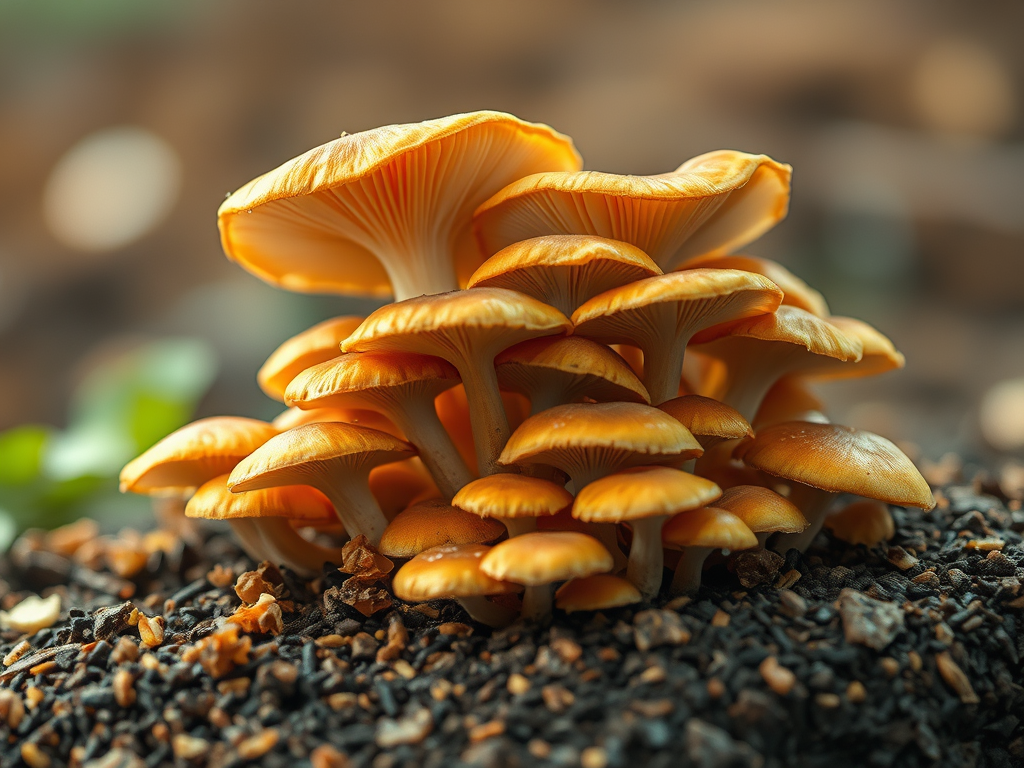
Karlsson et al., in Science of the Total Environment, investigated the impact of biocharBiochar is a carbon-rich material created from biomass decomposition in low-oxygen conditions. It has important applications in environmental remediation, soil improvement, agriculture, carbon sequestration, energy storage, and sustainable materials, promoting efficiency and reducing waste in various contexts while addressing climate change challenges. More on oyster mushroom production, quality, and the microbial communities of the substrates. Two different biochars produced from local feedstocks, plant- or sludge-based, were evaluated at two concentrations (5% and 10%). The results showed that the inclusion of biochar in the substrate negatively impacted fruiting body production. The elemental composition of the fruiting body was also affected by the inclusion of biochar and partly reflected the elemental composition of the biochar.
The metagenomics revealed that the inclusion of biochar in the substrate altered the microbial community structure. The bacterial diversity based on Shannon indices was higher in the substrate wherein no biochar was added. Bacterial community richness (Chao 1) was higher in samples with biochar compared to the control with no added biochar. Fungal community richness based on Chao 1 indices displayed an increase in samples with the inclusion of biochar. Overall, this study provides novel insights into the impact of biochar in mushroom production regarding its concentration and the effect of the origin material of the biochar.
SOURCE: Karlsson, M., Jonsson, H. L., & Hultberg, M. (2025). Inclusion of biochar in mushroom substrate influences microbial community composition of the substrate and elemental composition of the fruiting bodies. Science of the Total Environment, 968, 178914. https://doi.org/10.1016/j.scitotenv.2025.178914



Leave a Reply