
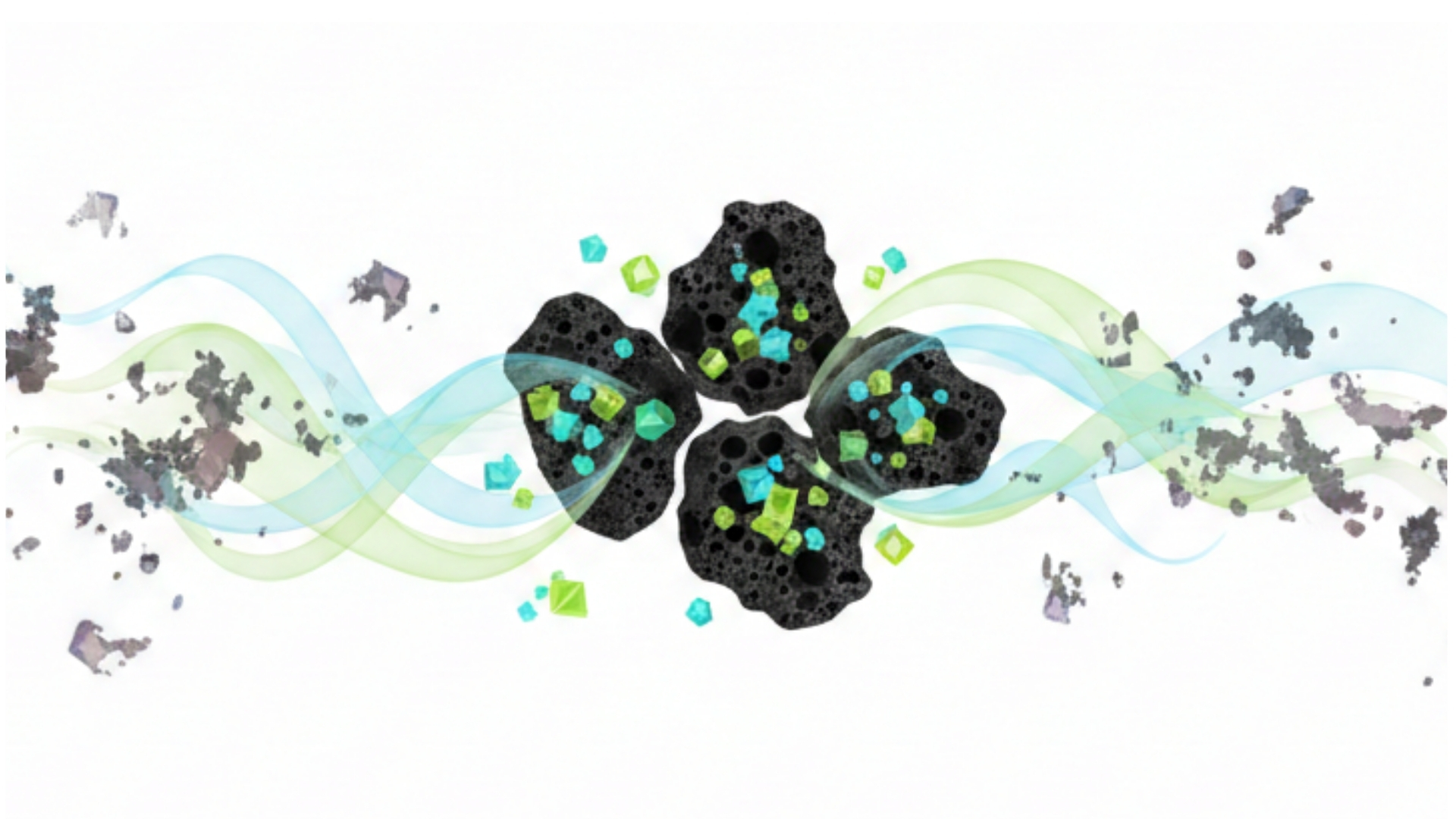
The field of environmental remediation is undergoing a significant shift as researchers move away from traditional chemical treatments toward more sustainable, bio-based technologies. A comprehensive review published in the journal BiocharBiochar is a carbon-rich material created from biomass decomposition in low-oxygen conditions. It has important applications in environmental remediation, soil improvement, agriculture, carbon sequestration, energy storage, and sustainable materials, promoting efficiency and reducing waste in various contexts while addressing climate change challenges. More by Sinan Zhang, Chenhao Cui, Sheng Huang, Zejian Wang, and Shiyong Wu highlights how the immobilization of enzymes on biochar carriers provides a high-efficiency solution for global water and soil pollution. By combining the natural filtering power of charcoal-like materials with the specialized catalytic abilities of enzymes, this approach effectively neutralizes various toxins that pose severe threats to ecosystems and human health. The researchers found that these biochar-enzyme composites are not only cost-effective but also remarkably environmentally friendly compared to conventional waste treatment methods like landfilling or incineration.
One of the most compelling findings in this study is the sheer speed and thoroughness with which these materials can clean contaminated water. For example, when specific enzymes were attached to biochar made from antibiotic fermentation waste, the resulting composite was able to remove 99.84% of penicillin G sodium from water in just 20 minutes. This represents a major breakthrough for treating medical and agricultural wastewater, which is often a primary source for the spread of antibiotic resistance in the environment. The study also notes that the system is effective against other persistent pharmaceutical residues, such as diclofenac, achieving near-complete removal within a matter of hours. This level of efficiency is attributed to a synergistic effect where the biochar first traps the pollutants on its surface, allowing the enzymes to break them down more effectively through concentrated interaction.
The application of this technology extends beyond water to the complex problem of soil contamination. The researchers documented cases where biochar-immobilized enzymes were used to treat soils contaminated with industrial chemicals and microplastics. In one instance, a composite material reduced chloroform levels in soil by nearly 89% in only one hour. Furthermore, the technology showed promise in degrading microplastics through a tiered process of adsorption and metabolic breakdown, essentially turning non-toxic byproducts over to soil microbes for final processing. Beyond just cleaning, the biochar serves as a soil amendmentA soil amendment is any material added to the soil to enhance its physical or chemical properties, improving its suitability for plant growth. Biochar is considered a soil amendment as it can improve soil structure, water retention, nutrient availability, and microbial activity. More that improves the overall health of the ecosystem. It provides physical refuges for beneficial microbes and increases the soil’s ability to hold water, while simultaneously locking away carbon to help mitigate climate change.
Sustainability and reusability are key factors that distinguish this method from others. One of the greatest challenges with using free enzymes in the field is that they are fragile and difficult to recover once the cleaning is done. However, by anchoring them to a sturdy biochar base, they become far more stable and can be reused for many cycles. The study found that some of these composites could be reused up to ten times while still maintaining significant cleaning power. This reusability drastically lowers the operational costs and makes the technology more viable for large-scale industrial use. Additionally, the researchers explored how different ways of attaching the enzymes, such as covalent bonding, can prevent them from leachingLeaching is the process where nutrients are dissolved and carried away from the soil by water. This can lead to nutrient depletion and environmental pollution. Biochar can help reduce leaching by improving nutrient retention in the soil. More into the environment, ensuring that the treatment remains localized and effective over long periods.
The researchers also emphasize the role of advanced technology in perfecting these environmental tools. They found that using machine learning and molecular simulations allows scientists to predict exactly how different enzymes will behave when paired with various types of biochar. This intelligent design process means that instead of relying on trial and error, materials can be custom-made to target specific types of pollution, such as heavy metals or textile dyes. For instance, modified biochar has been shown to achieve over 92% removal of industrial dyes and toxic compounds like trichloroethylene. By precisely controlling the size of the pores in the biochar and the chemical groups on its surface, the researchers can ensure the highest possible activity and longevity for the cleaning proteins.
Looking toward the future, the study presents a vision for a circular economy where waste materials are used to create the very tools needed to clean the environment. By pyrolyzing agricultural and forestry waste into biochar, industries can reduce raw material costs by up to 50%. This “waste-to-wealth” model not only addresses the immediate problem of pollution but also creates a carbon-neutral industrial chain. The review concludes that while laboratory results are already exceptional, moving these innovations into the field will require continued focus on reactor design and long-term safety assessments. Ultimately, biochar-immobilized enzymes stand as a powerful, versatile, and green technology capable of tackling the most difficult environmental challenges of the twenty-first century.
Source: Zhang, S., Cui, C., Huang, S., Wang, Z., & Wu, S. (2026). Application and mechanisms of biochar-immobilized enzymes in environmental remediation: a review. Biochar, 8(4).


Leave a Reply