
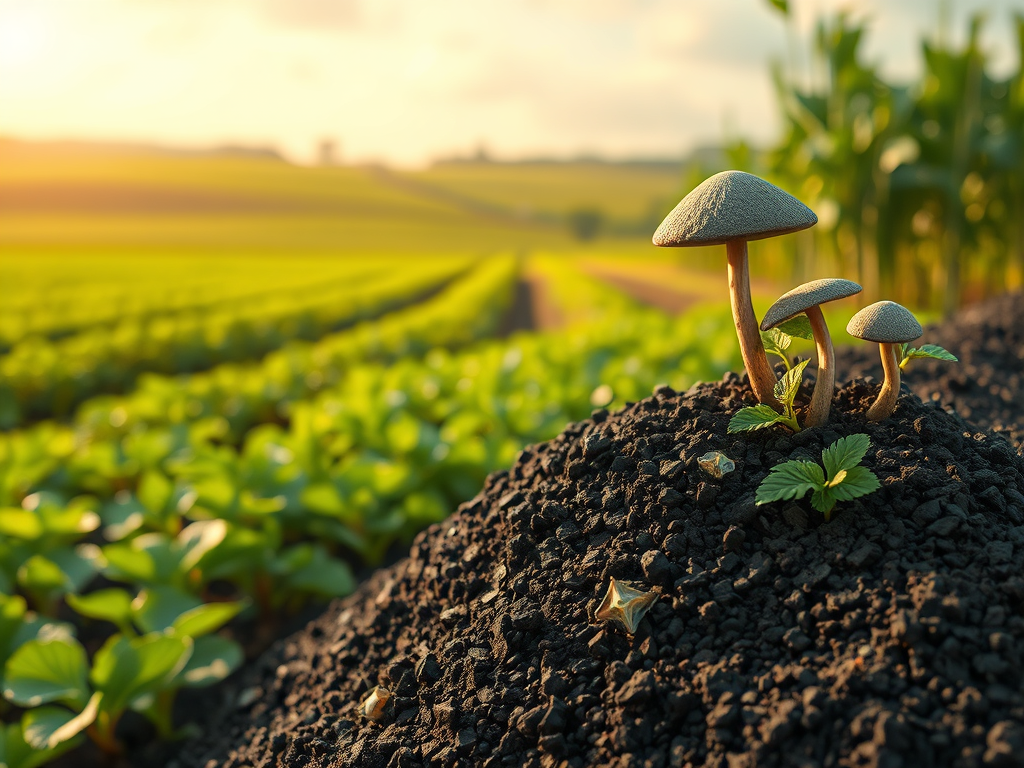
Aiduang et al., in the journal Life, provided an extensive overview of spent mushroom substrate (SMS)-derived biocharBiochar is a carbon-rich material created from biomass decomposition in low-oxygen conditions. It has important applications in environmental remediation, soil improvement, agriculture, carbon sequestration, energy storage, and sustainable materials, promoting efficiency and reducing waste in various contexts while addressing climate change challenges. More and its applications in modern agricultural systems. SMS is a byproduct of mushroom cultivation that has emerged as a promising feedstockFeedstock refers to the raw organic material used to produce biochar. This can include a wide range of materials, such as wood chips, agricultural residues, and animal manure. More for biochar production. Due to its lignocellulosic structure, high organic matter content, and essential nutrients, SMS is ideal for pyrolysisPyrolysis is a thermochemical process that converts waste biomass into bio-char, bio-oil, and pyro-gas. It offers significant advantages in waste valorization, turning low-value materials into economically valuable resources. Its versatility allows for tailored products based on operational conditions, presenting itself as a cost-effective and efficient More, a process that enhances biochar’s porosityPorosity of biochar is a key factor in its effectiveness as a soil amendment and its ability to retain water and nutrients. Biochar’s porosity is influenced by feedstock type and pyrolysis temperature, and it plays a crucial role in microbial activity and overall soil health. Biochar More, nutrient retention, and carbon stability. These properties improve soil fertility, water retention, microbial activity, and plant growth while also contributing to climate change mitigation through carbon sequestration.
SMS-derived biochar stands out for its superior benefits, including a balanced pHpH is a measure of how acidic or alkaline a substance is. A pH of 7 is neutral, while lower pH values indicate acidity and higher values indicate alkalinity. Biochars are normally alkaline and can influence soil pH, often increasing it, which can be beneficial More, a rich nutrient profile, and the ability to adsorb heavy metals, which mitigates soil and water contamination and minimizes toxic risks in the food chain. By enhancing soil structure, nutrient cycling, and moisture retention, SMS-derived biochar supports sustainable farming practices that reduce chemical fertilizer use and boost climate resilience. Beyond soil applications, SMS-derived biochar is effective in wastewater treatment, mitigating plant diseases, and improving mushroom cultivation substrates, thereby enhancing mycelial growth and productivity.
Economically, SMS-derived biochar is a cost-effective alternative due to the abundant availability and inexpensive nature of SMS. However, challenges still exist, particularly in optimizing production methods and ensuring consistency in biochar properties, influenced by variations in pyrolysis conditionsThe conditions under which pyrolysis takes place, such as temperature, heating rate, and residence time, can significantly affect the properties of the biochar produced. More and SMS types. Advances in production technology and sustainable practices are vital for scaling up SMS-derived biochar production. This paper emphasizes the transformative potential of SMS-derived biochar, advocating for its integration into circular economy frameworks and sustainable agricultural systems. Recommendations for future research and policy support are provided to maximize the ecological and economic benefits of SMS-derived biochar, fostering its widespread adoption in global agricultural and environmental strategies.
SOURCE: Aiduang, W., Jatuwong, K., Kiatsiriroat, T., Kamopas, W., Tiyayon, P., Jawana, R., Xayyavong, O., & Lumyong, S. (2025). Spent Mushroom Substrate-Derived Biochar and Its Applications in Modern Agricultural Systems: An Extensive Overview. Life, 15(2), 317. https://doi.org/10.3390/life15020317



Leave a Reply