
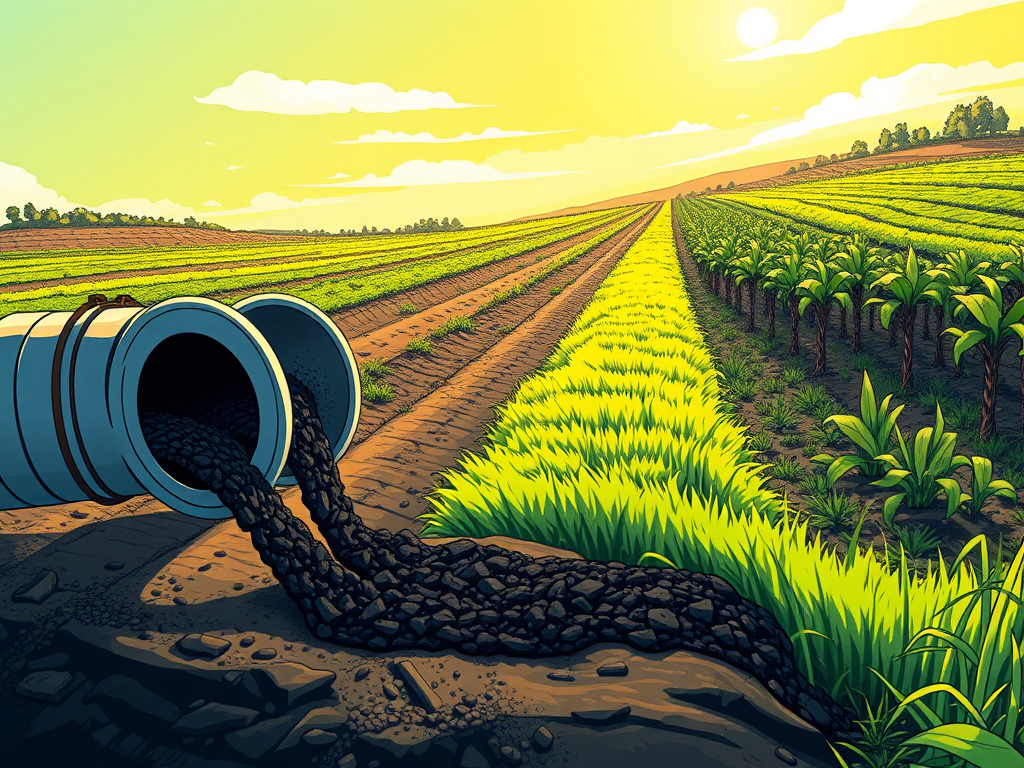
A new study suggests that biocharBiochar is a carbon-rich material created from biomass decomposition in low-oxygen conditions. It has important applications in environmental remediation, soil improvement, agriculture, carbon sequestration, energy storage, and sustainable materials, promoting efficiency and reducing waste in various contexts while addressing climate change challenges. More produced from human waste could provide a significant portion of the world’s annual fertilizer needs, while simultaneously offering a more sustainable and environmentally friendly alternative to traditional fertilizers. The research, published in a leading science journal, highlights the potential for a circular economy model where waste is transformed into a valuable agricultural resource.
The study estimates that biochar created from solid human excrement could supply up to 7% of the world’s annual phosphorus demand. If nutrients from urine were also captured and integrated, this could rise to a remarkable 15% of phosphorus, 17% of nitrogen, and 25% of potassium. This represents a major opportunity to reduce global reliance on synthetic fertilizers, which are often produced through energy-intensive and environmentally damaging processes. The shift could also improve food security and environmental justice by empowering countries to produce their own fertilizer rather than relying on imports.
One of the key advantages of this new approach is its ability to overcome the challenges associated with using treated sewage sludge on farmland. Traditional sludge can contain contaminants such as microplastics and heavy metals. The biochar process, however, is designed to separate waste at the source, effectively mitigating these risks. Bio-solids offer a nutrient profile, that once treated with heat, can be extremely beneficial for soil health, so the idea of turning it into biochar seems optimal. The high-heat treatment involved in creating biochar also reduces the weight and volume of the solid waste by up to 90%, making it significantly more efficient to transport and use.
The findings underscore the importance of innovative waste management solutions in the transition to a greener economy. By repurposing human waste, the study’s authors propose a method that not only addresses global fertilizer shortages but also contributes to a more sustainable and resilient agricultural system. This research marks a significant step forward in our understanding of how to close nutrient loops and create a truly circular economy.
SOURCE: Biochar from human waste could solve global fertiliser shortages, study finds



Leave a Reply