
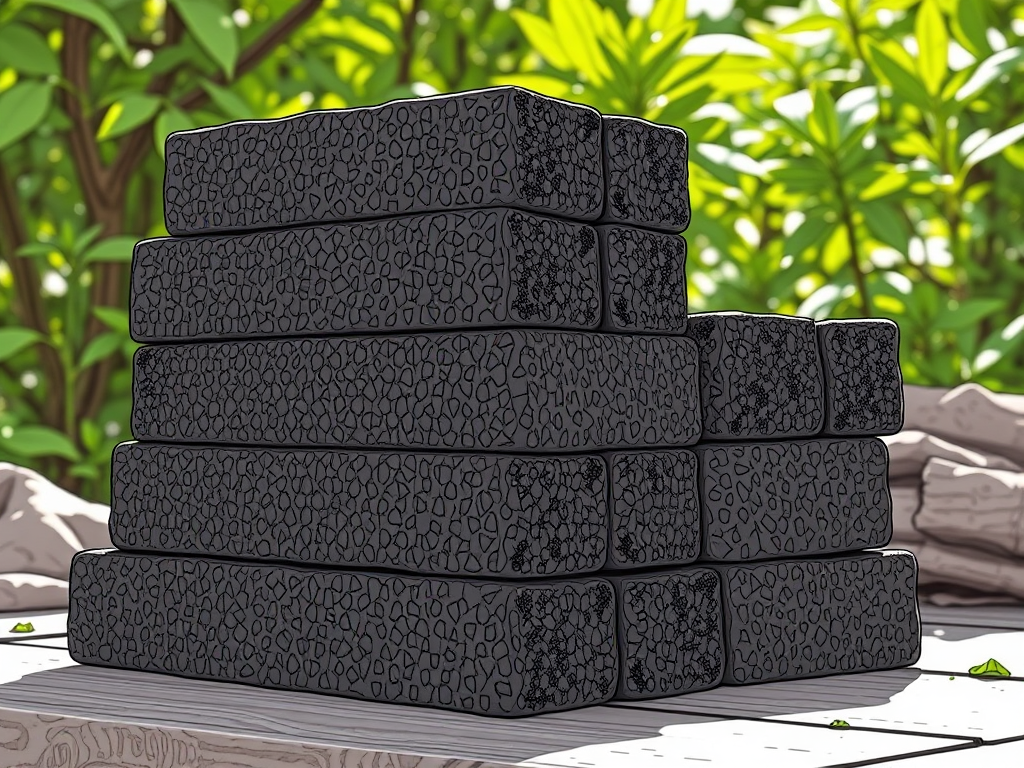
A recent study published in Waste and BiomassBiomass is a complex biological organic or non-organic solid product derived from living or recently living organism and available naturally. Various types of wastes such as animal manure, waste paper, sludge and many industrial wastes are also treated as biomass because like natural biomass these More Valorization by Fildah Ayaa et al., has explored the production of biomass briquettes using an innovative nanocomposite binder. The research highlights the potential of these briquettes as a sustainable energy source, particularly in developing nations where access to clean cooking solutions is limited.
The core of the research focused on fabricating a novel nanocomposite briquette composed of biocharBiochar is a carbon-rich material created from biomass decomposition in low-oxygen conditions. It has important applications in environmental remediation, soil improvement, agriculture, carbon sequestration, energy storage, and sustainable materials, promoting efficiency and reducing waste in various contexts while addressing climate change challenges. More, cellulose nanocrystals (CNC), and polyvinyl alcohol (PVA). Biochar offers a carbon-rich base. CNC, derived from cellulose, provides structural reinforcement, while PVA acts as a binding agent. The researchers employed the solution casting method to create briquettes with varying biochar-to-binder ratios, allowing for a systematic analysis of their properties.
The results of the study are compelling. The produced briquettes exhibited favorable combustion characteristics, making them a promising energy source. Notably, the ashAsh is the non-combustible inorganic residue that remains after organic matter, like wood or biomass, is completely burned. It consists mainly of minerals and is different from biochar, which is produced through incomplete combustion. Ash Ash is the residue that remains after the complete More content was consistently low, measuring less than 2% across different formulations. Low ash content is desirable as it reduces the need for frequent cleaning of combustion devices. Furthermore, the study revealed a critical finding regarding the calorific value of the briquettes. The briquettes with a 90:10 biochar-to-binder ratio demonstrated the highest calorific value, registering an impressive 27 MJ/kg. Calorific value is a measure of the energy content of a fuel, and a higher value indicates that more energy is released during combustion. This high energy output underscores the potential of these briquettes to compete with or even surpass traditional fuels.
Another significant outcome of the research was the determination of the optimal binder content. This flexibility in composition is crucial for tailoring the briquettes to specific applications and optimizing their cost-effectiveness. The ability to use a substantial amount of binder without compromising performance opens avenues for utilizing different biomass sources and binder formulations.
In conclusion, this research strongly suggests that biochar-PVA-CNC nanocomposite briquettes represent a viable and sustainable biofuel option. Their high calorific value, low ash content, and favorable combustion characteristics make them suitable for both industrial and household energy applications. This innovation offers a pathway towards reducing reliance on polluting fuels, mitigating deforestation, and promoting access to cleaner energy, particularly in regions where it is most needed.
SOURCE: Ayaa, F., Oyedotun, K., Lubwama, M., Iwarere, S. A., Daramola, M. O., & Kirabira, J. B. (2025). Production and Characterization of Densified Briquettes From Nanocomposite Biochar-Cellulose Nanocrystal (Biochar-CNC) Reinforced with Polyvinyl Alcohol (PVA). Waste and Biomass Valorization.




Leave a Reply