

Key Takeaways
- BiocharBiochar is a carbon-rich material created from biomass decomposition in low-oxygen conditions. It has important applications in environmental remediation, soil improvement, agriculture, carbon sequestration, energy storage, and sustainable materials, promoting efficiency and reducing waste in various contexts while addressing climate change challenges. More can remove up to 90–95% of pollutants from water
- Waste materials can be turned into useful carbon-based catalysts
- Biochar helps store carbon for hundreds of years
- It supports cleaner energy production and reduces emissions
- One material can solve water, energy, and climate challenges together
A recent review published in the journal Catalysts by Hossam A. Nabwey and Maha A. Tony explores how biochar-based catalysts are emerging as a practical solution to interconnected environmental challenges. The study focuses on how waste materials can be converted into functional carbon materials that simultaneously support water treatment, energy production, and carbon management.
The findings show that biochar, produced by heating biomassBiomass is a complex biological organic or non-organic solid product derived from living or recently living organism and available naturally. Various types of wastes such as animal manure, waste paper, sludge and many industrial wastes are also treated as biomass because like natural biomass these More in low-oxygen conditions, offers multiple benefits beyond traditional uses. When engineered as a catalyst, biochar demonstrates strong performance in removing contaminants from water. In several cases, pollutant removal efficiencies exceed 90%, particularly for dyes, pharmaceuticals, and organic compounds. This high performance is due to its porous structure and reactive surface, which allow it to both trap and break down harmful substances.
Beyond water treatment, the study highlights biochar’s growing role in energy systems. Biochar-based catalysts are being used in processes such as hydrogen production, fuel cells, and carbon dioxide conversion. These materials can replace more expensive and less sustainable catalysts, offering a cost-effective alternative. Their ability to support chemical reactions efficiently while maintaining stability makes them suitable for long-term use in energy applications.
A key insight from the study is the importance of using waste as a resource. Agricultural residues, industrial by-products, and municipal waste can all be converted into biochar. This approach not only reduces landfill use but also prevents emissions that would otherwise result from waste decomposition. In some cases, converting waste into biochar can reduce lifecycle greenhouse gas emissions by up to 40–60%, particularly when it avoids methane release from landfills.
The study also emphasizes the role of biochar in carbon sequestration. A portion of the carbon in biomass is transformed into stable structures during production, allowing it to remain stored for decades or even centuries. This makes biochar a valuable tool for long-term carbon management. Estimates suggest that biochar systems could contribute significantly to climate mitigation, with global sequestration potential reaching several gigatons of carbon dioxide equivalent per year.
Another important finding is the versatility of biochar-based catalysts. By modifying their structure and composition, researchers can tailor them for specific applications. For example, adding certain elements or metals can improve their performance in chemical reactions or pollutant degradation. This flexibility allows biochar to be adapted across industries, from environmental remediation to clean energy technologies.
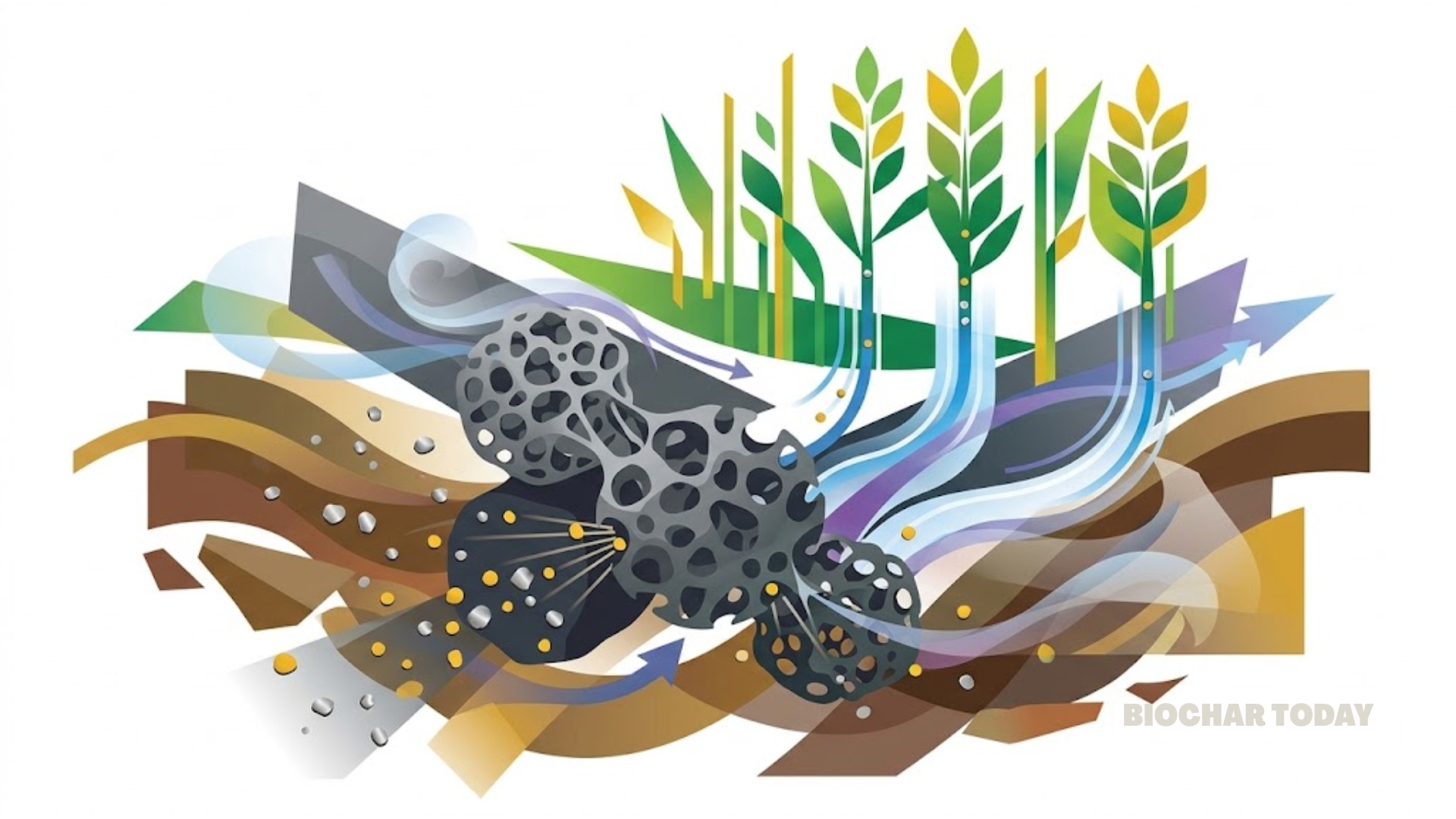
The study also places biochar within a broader systems framework known as the water–energy–carbon nexus. This approach highlights how solutions should address multiple challenges at once rather than in isolation. Biochar-based catalysts align well with this concept, as they reduce energy use in water treatment, support renewable energy processes, and store carbon simultaneously.
Despite these advantages, the study notes that challenges remain. Scaling production, ensuring consistent quality, and improving long-term performance are key areas for future research. There is also a need to balance performance improvements with environmental costs, particularly when using chemical treatments to enhance biochar properties.
Overall, the research demonstrates that biochar-based catalysts offer a practical and scalable pathway toward more sustainable systems. By linking waste valorization with environmental and energy applications, these materials provide a clear example of how circular economy principles can be applied to real-world challenges.
Source: Nabwey, H. A., & Tony, M. A. (2026). Water–Energy–Carbon Nexus: Biochar-Based Catalysts via Waste Valorization for Sustainable Catalysis. Catalysts, 16(267).



Leave a Reply