
Key Takeaways
- BiomassBiomass is a complex biological organic or non-organic solid product derived from living or recently living organism and available naturally. Various types of wastes such as animal manure, waste paper, sludge and many industrial wastes are also treated as biomass because like natural biomass these More waste can be converted into high-value carbon nanomaterials to replace expensive precious metals in clean energy production.
- Using biocharBiochar is a carbon-rich material created from biomass decomposition in low-oxygen conditions. It has important applications in environmental remediation, soil improvement, agriculture, carbon sequestration, energy storage, and sustainable materials, promoting efficiency and reducing waste in various contexts while addressing climate change challenges. More as a catalyst dramatically boosts hydrogen generation efficiency during thermochemical water splitting and methane conversion.
- Structural modifications like chemical activation and elemental doping significantly increase active surface sites for chemical reactions.
- Biochar-derived nanomaterials offer exceptional chemical stability, high electrical conductivity, and long-lasting performance in harsh environments.
- Transforming agricultural waste into green hydrogen catalysts supports a zero-emission circular economy and reduces dependence on fossil fuels.
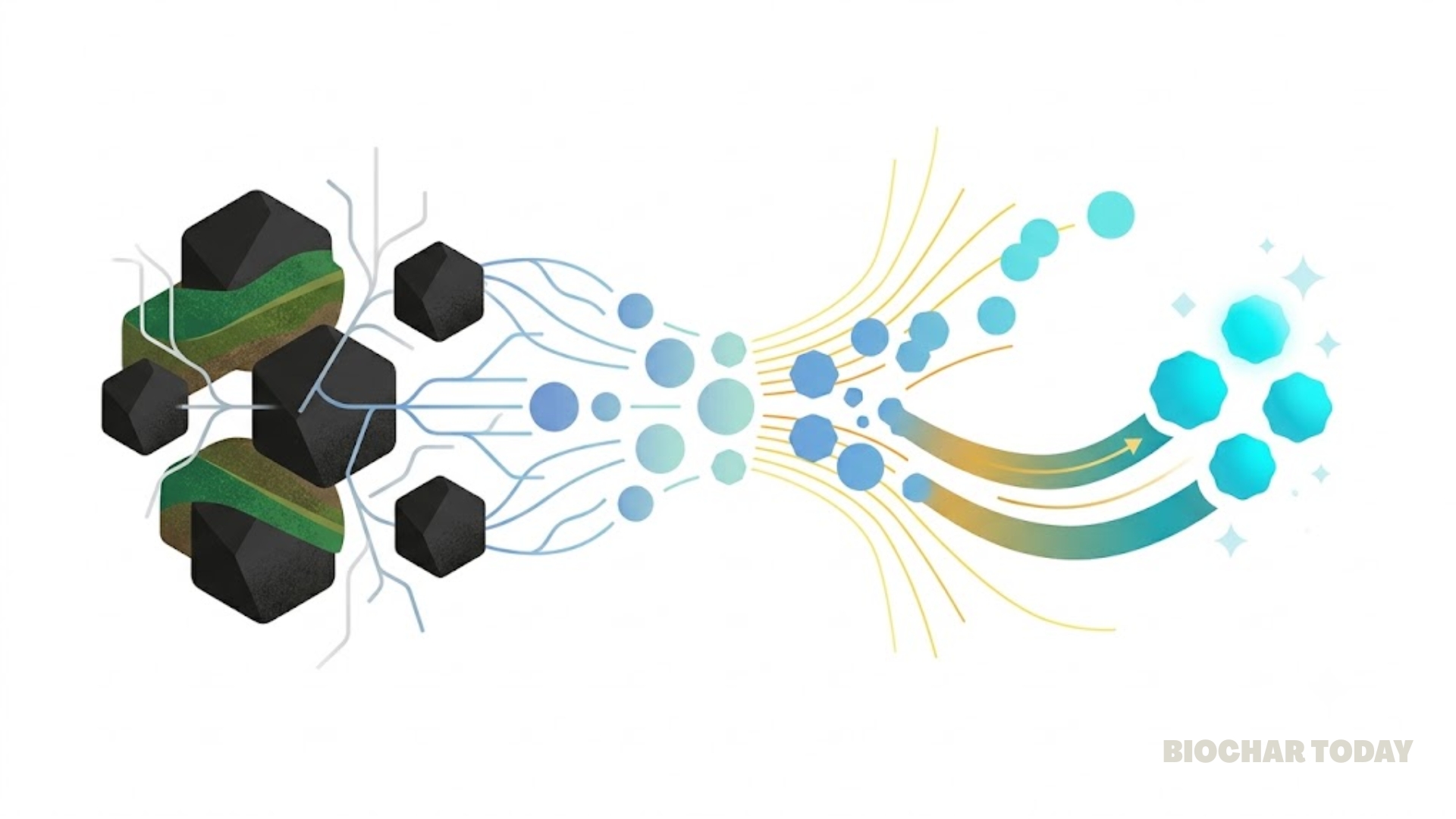
A study published in Next Energy by researchers Vishal Rajput, Manisha Nanda, Isha Saini, and Simran Parmar demonstrates the transformative potential of converting agricultural and organic biomass waste into biochar-derived carbon nanomaterials for green hydrogen production. Conventional hydrogen generation relies heavily on fossil fuel reforming processes that release massive amounts of carbon dioxide into the atmosphere. While water electrolysis powered by renewable energy offers a zero-emission alternative, its widespread industrial implementation is severely constrained by the high cost and scarcity of noble metal electrocatalysts such as platinum, ruthenium, and iridium. The authors show that engineered biochar materials, including carbon nanotubes, graphene nanosheets, carbon nanofibers, and carbon dots, serve as exceptionally effective, low-cost replacements that drive water splitting kinetics while reducing overall energy requirements.
The researchers highlight how tailoring the physical and chemical architecture of biochar through thermal treatment, activation, and heteroatom doping unlocks superior electrocatalytic performance. Incorporating elements like nitrogen, sulfur, and phosphorus alters the internal charge distribution of the carbon lattice, creating highly active catalytic sites and speeding up electron transfer during reaction pathways. Specific performance metrics reviewed in the paper reveal that biochar-based catalysts assist in achieving up to ninety percent methane conversion to hydrogen, while co-doped nanosheets and nanoflakes achieve remarkably low reaction energy barriers and small overpotentials in alkaline environments. By converting abundant agricultural, forestry, and food wastes into high-value clean energy catalysts, this strategy bridges laboratory innovation with industrial-scale green hydrogen systems, advancing circular carbon economy goals and facilitating global decarbonization efforts.
Source: Rajput, V., Nanda, M., Saini, I., & Parmar, S. (2026). Biochar-derived carbon nanomaterials for sustainable hydrogen production: Synthesis, electrocatalytic performance, and future perspective. Next Energy, 13, 100995.



Leave a Reply