
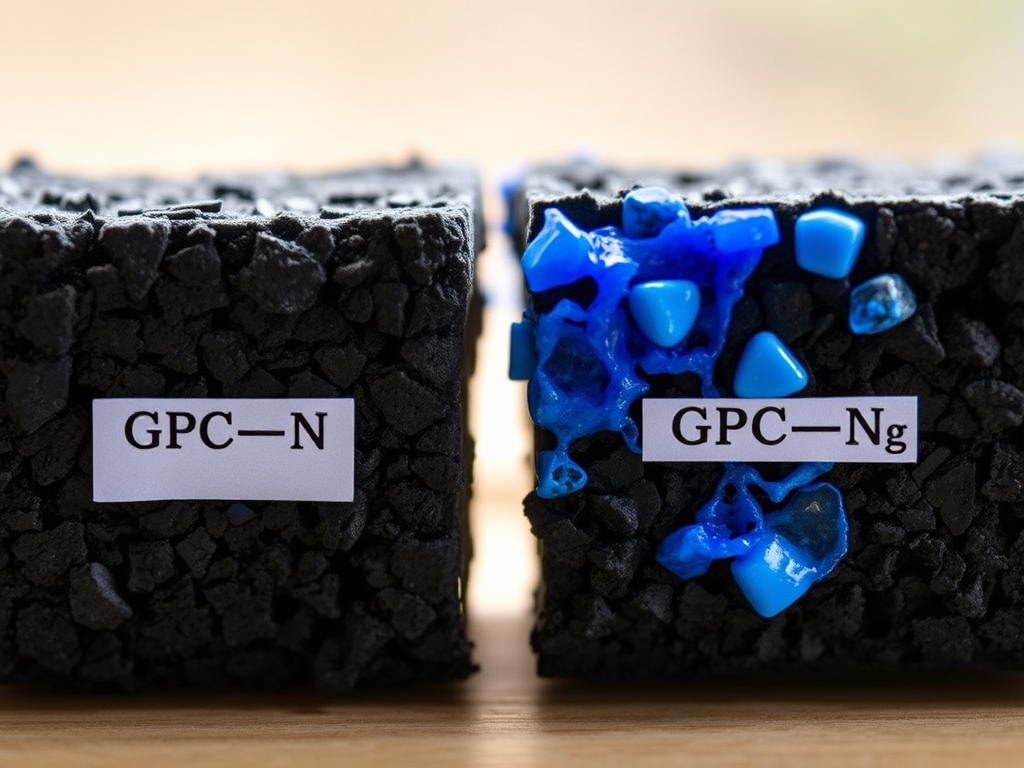
In a recent study published in ACS Omega, Yanjiao Ren, Wandong Geng, Rongsheng Xu, Ping Wang, and Huanping Zhao explored how modifying biocharBiochar is a carbon-rich material created from biomass decomposition in low-oxygen conditions. It has important applications in environmental remediation, soil improvement, agriculture, carbon sequestration, energy storage, and sustainable materials, promoting efficiency and reducing waste in various contexts while addressing climate change challenges. More with nitrogen and magnesium can dramatically improve its ability to remove methylene blue dye from wastewater. Utilizing Lycium chinensis stalks as a base material, the researchers developed two types of porous biochar: GPC-N (nitrogen-doped) and GPC-Mg (magnesium-doped). Their findings provide a theoretical and technical foundation for designing highly effective biochar adsorbents for environmental pollution control.
The study found that GPC-N exhibited a significantly higher adsorption capacity for methylene blue at 496.53 mg/g, vastly exceeding GPC-Mg’s capacity of 48.06 mg/g. This remarkable difference is primarily attributed to the in-situ nitrogen doping in GPC-N, which effectively reconstructed the electronic structure of the carbon matrix. This process led to the formation of abundant nitrogen-containing functional groups, particularly pyridinic nitrogen, which enhance the material’s surface area and chemical morphology.
Detailed characterization revealed that GPC-N boasted a specific surface area of 730.63 m²/g and a total pore volume of 0.41 cm³/g, with an average pore diameter of 4.03 nm. This expanded surface area and pore volume are critical for providing more adsorption sites. In contrast, GPC-Mg, while optimizing its pore structure through a template effect induced by magnesium ions, showed a lower density of surface active chemical sites. Nevertheless, GPC-Mg still significantly improved upon the unmodified biochar (GPC), which had a surface area of only 10.35 m²/g and a total pore volume of 0.023 cm³/g. The optimal preparation conditions involved a GPC-to-ammonium chloride mass ratio of 1:3 for GPC-N, pyrolyzed at 900°C for 1.5 hours, while GPC-Mg used a GPC-to-Mg chloride ratio of 1:0.75, pyrolyzed at 800°C for 1 hour.
The adsorption process for both modified biochars was best described by Langmuir isotherm models and pseudo-second-order kinetic models, along with intraparticle diffusion models. This indicates that chemical adsorption is the primary mechanism at play, driven by the strong interactions between the dye molecules and the newly introduced functional groups on the biochar surface. The high correlation with the pseudo-second-order kinetic model, with R² values greater than 0.99, strongly supports that the rate-determining step is a chemical reaction between methylene blue and the active sites on the adsorbent surface. The study also highlighted a synergistic effect between surface adsorption and pore diffusion, where the engineered pore structures facilitate the movement of dye molecules, and the surface chemistry promotes their binding.
Both GPC-Mg and GPC-N demonstrated good reusability over five adsorption-desorption cycles. After five cycles, the adsorption rate of GPC-Mg decreased by 13.05%, maintaining an 86.95% removal rate, while GPC-N’s rate decreased by 21.94%, retaining 78.06% of its initial removal rate. The superior cycling performance of GPC-Mg is attributed to its mesoporous structure, which is less prone to clogging by MB molecules and exhibits higher desorption efficiency compared to the micropore-rich GPC-N.
This research underscores the potential of tunable biochar materials for efficient wastewater treatment. Future work will focus on the synergistic modification mechanisms of combined nitrogen-magnesium systems to further enhance adsorption efficiency.
Source: Ren, Y., Geng, W., Xu, R., Wang, P., & Zhao, H. (2025). Tuning Electronic and Pore Structures of Biochar via Nitrogen and Magnesium Doping for Superior Methylene Blue Adsorption: Synergistic Mechanisms and Kinetic Analysis. ACS Omega. Sources




Leave a Reply