
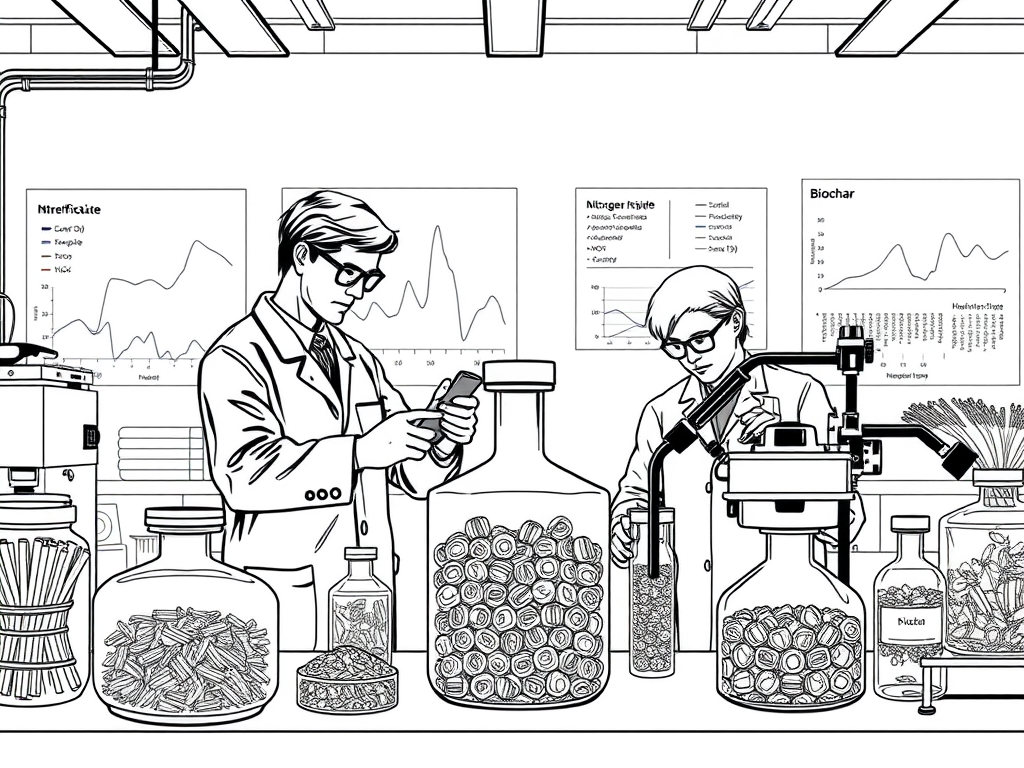
In a significant stride towards sustainable environmental solutions, a recent study published in ACS Omega by Fan Li, Junchao Xu, Yiming Xie, Qingdong Yao, Fangyue Hu, Li Lv, and Huaqiang Chu, details a novel method for rapidly synthesizing biocharBiochar is a carbon-rich material created from biomass decomposition in low-oxygen conditions. It has important applications in environmental remediation, soil improvement, agriculture, carbon sequestration, energy storage, and sustainable materials, promoting efficiency and reducing waste in various contexts while addressing climate change challenges. More with exceptional low-temperature nitrogen oxide (NOx) removal capabilities. This research addresses the critical need for efficient and eco-friendly catalysts in selective catalytic reduction (SCR) systems, offering a promising alternative to current energy-intensive and less sustainable approaches.
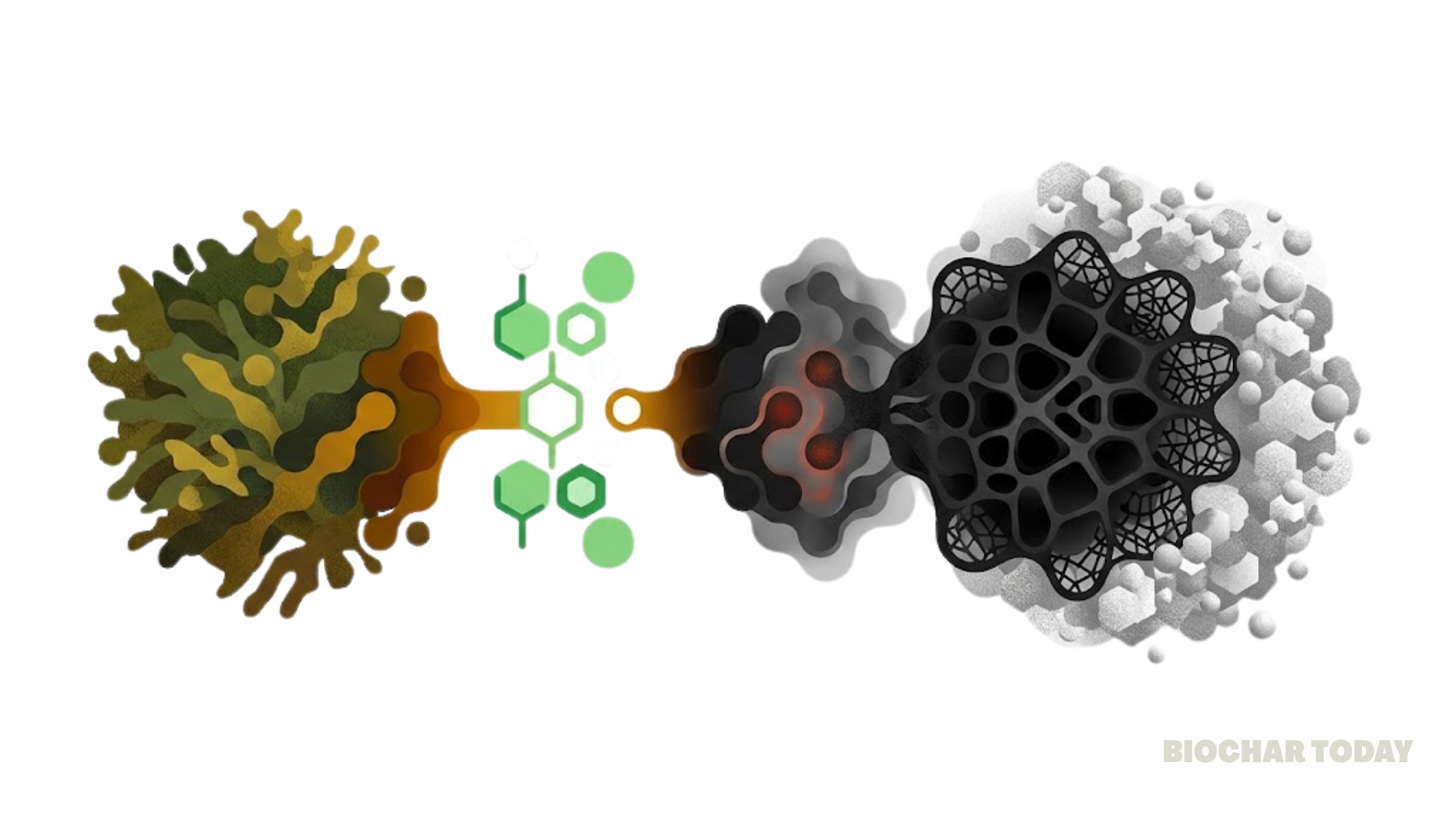
Traditional biochar synthesis, often involving high temperatures and fossil fuels, is time-consuming and environmentally taxing. This new paper introduces an acid-catalyzed hydrolysis method that produces rice husk biochar at ambient temperature and pressure, drastically reducing synthesis time to just 6 hours. This rapid production, highlighted by its efficiency compared to other methods requiring up to 9.5 hours, makes it a highly attractive option for large-scale application. Beyond speed, the process also yields a valuable silicon dioxide (SiO2) powder byproduct, which has diverse applications in electronics and optics.
The researchers developed a biochar carrier-based SCR catalyst using this rapidly synthesized biochar. The performance of this catalyst in removing NOx was remarkable, achieving a denitrification efficiency of 96.8% at a relatively low temperature of 180°C. This is a significant improvement over many commercial catalysts that operate at much higher temperatures (300-400°C) and often contain toxic vanadium. The catalyst also demonstrated a wide effective temperature range, maintaining over 90% denitrification efficiency between 160°C and 260°C.
Detailed analysis revealed key factors contributing to this impressive performance. The biochar synthesized via acid-catalyzed hydrolysis (RSC) possessed a smooth surface without a distinct pore structure, unlike the chemically activated biochar (RSCK-750) which exhibited a dense, spongy pore structure, and pyrolytic biochar (RH-750) which showed a rippled surface. The study found that the superior performance of the Mn-Ce/RSC catalyst (biochar synthesized via acid-catalyzed hydrolysis with manganese and cerium oxides loaded onto it) is linked to an increased content of Ce3+ and surface chemisorbed oxygen (Oβ). Ce3+ ions are known to enhance oxygen migration and promote NO oxidation, while Oβ exhibits strong activity and oxidation capacity, both crucial for efficient NOx reduction. Although KOH activated biochar (Mn-Ce/RSCK-750) showed higher efficiency at lower temperatures (80-120°C) due to increased surface area, the Mn-Ce/RSC demonstrated a wider and more consistent temperature window for high denitrification efficiency.
In conclusion, this research presents a compelling case for acid-catalyzed hydrolysis as a sustainable, low-energy, and efficient method for producing high-quality biochar. The resulting biochar-supported catalysts show exceptional promise for low-temperature SCR of NOx, offering a viable and environmentally friendly solution for reducing harmful emissions. This advancement not only contributes to cleaner air but also highlights the potential of waste biomassBiomass is a complex biological organic or non-organic solid product derived from living or recently living organism and available naturally. Various types of wastes such as animal manure, waste paper, sludge and many industrial wastes are also treated as biomass because like natural biomass these More, like rice husks, as a valuable resource in green technology.
Source: Li, F., Xu, J., Xie, Y., Yao, Q., Hu, F., Lv, L., & Chu, H. (2025). Fast Synthesis of Biochar by Hydrolysis with an Acid Catalyst for Efficient Low-Temperature SCR of NO. ACS Omega.


Leave a Reply