
Key Takeaways
- BiocharBiochar is a carbon-rich material created from biomass decomposition in low-oxygen conditions. It has important applications in environmental remediation, soil improvement, agriculture, carbon sequestration, energy storage, and sustainable materials, promoting efficiency and reducing waste in various contexts while addressing climate change challenges. More warms the soil. Adding biochar to the field increased the average soil temperature during winter, giving the wheat an earlier start to its growth.
- Biochar boosts yield. Under current (ambient) CO2 levels, the biochar-treated plots produced 13.4% more grain yield than untreated plots.
- Biochar does not fix the CO2 quality problem. Elevated CO2caused a 5-12% drop in grain protein. Biochar application failed to prevent this nutritional decline.
- It’s a “dilution effect.” The plants grew so much bigger and faster from the combined biochar and CO2 that the nitrogen and protein were “diluted” across a much larger grain yield.
- The grain was still good enough for pasta. Despite the protein drop, the final protein content was still above the threshold required for industrial pasta making.
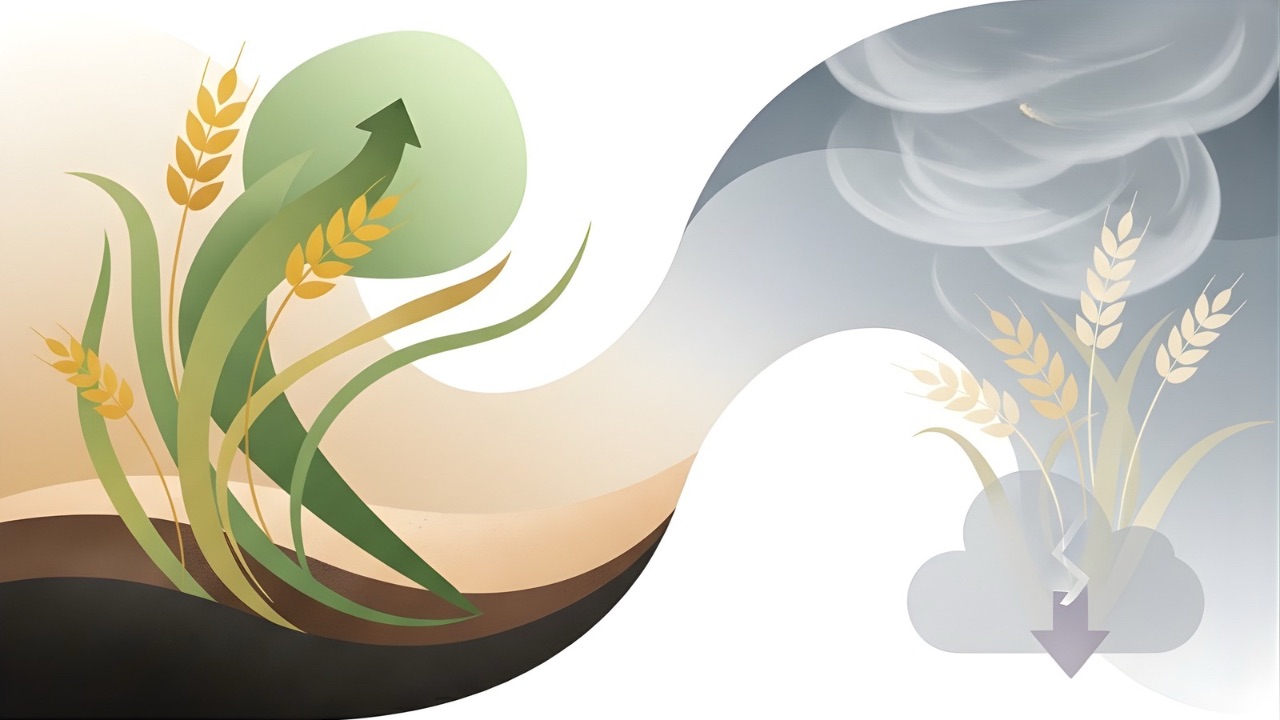
Rising atmospheric carbon dioxide (CO2) presents a strange paradox for agriculture. On one hand, CO2 is plant food. Many studies show that elevated CO2 acts like a fertilizer, boosting wheat biomassBiomass is a complex biological organic or non-organic solid product derived from living or recently living organism and available naturally. Various types of wastes such as animal manure, waste paper, sludge and many industrial wastes are also treated as biomass because like natural biomass these More and grain yield. But this good news comes with a serious catch: this faster, bigger growth often leads to a significant drop in the nutritional quality of the grain, particularly its nitrogen and protein content. For durum wheat, the staple of pasta, lower protein means lower quality. In a new study published in the Journal of Agriculture and Food Research, lead author Lorenzo Brilli and a team of researchers investigated a potential solution: biochar and the team hypothesized that adding biochar to the soil could mitigate the negative quality effects of CO2 while further enhancing yield.
The team set up an open-field experiment using a Free-Air CO2 Enrichment (FACE) system, which allows researchers to test CO2 n a real-world agricultural setting. They planted two commercial durum wheat cultivars, the high-quality ‘Aureo’ and the high-yielding ‘Claudio’, in plots with either no biochar [BO] or a heavy application of 30tha-1 [B30]. The results confirmed that biochar is a powerful growth promoter. It had an immediate physical effect, increasing the average soil temperature during the winter. This slight warming gave the biochar-treated wheat a head start, causing an earlier emergence and development (phenology). This advantage translated directly into bigger harvests. Under current CO2 levels, biochar increased grain yield by an average of 13.4%. Under CO2, biochar still added an 8.2% yield boost on top of the 30-33% yield increase from the CO2 itself. The biochar also helped the plants physiologically, increasing flag leaf chlorophyll and improving their intrinsic water use efficiency.
But the central question was about quality. Did the biochar fix the protein problem? The answer, unfortunately, was no. The study’s hypothesis was not supported. Just as feared, elevated CO2caused a significant drop in Grain Protein Content (GPC). The high-quality Aureo cultivar lost over 12% of its protein, while Claudio lost 5%. Critically, the biochar amendment did nothing to stop this decline. The grains from the CO2 plots had low protein, whether or not biochar was present.. The researchers suggest this is due to a “dilution effect. The combination of CO2 and biochar prompted the plants to grow so much larger, so quickly, that the nitrogen they absorbed from the soil was spread more thinly throughout the massive amount of biomass. The plant prioritized bulk over protein concentration. While the total amount of nitrogen taken up by the crops did increase slightly, it wasn’t enough to keep pace with the huge gain in yield.
This study shows that biochar is not a magic bullet for the nutritional challenges of climate change. It is, however, an excellent tool for boosting productivity. The researchers offer a practical takeaway: biochar could be preferentially used to increase the yield of high-quality cultivars. In this experiment, even after the CO2-driven protein drop, the GPC of both cultivars remained high enough to be suitable for industrial pasta making. Therefore, biochar can be a valuable strategy for adapting agriculture to climate change by increasing food production, but other strategies will be needed to manage the separate challenge of food quality.
Source: Brilli, L., Badeck, F. W., Genesio, L., Baronti, S., Rizza, F., Fares, C., Cattivelli, L., Miglietta, F., Maienza, A., Zaldei, A., Camin, F., Motzo, R., & Toscano, P. (2025). Biochar effects on durum wheat (Triticum durum) under ambient and elevated atmospheric CO2. Journal of Agriculture and Food Research, 19, 101719.



Leave a Reply