
In a recent study published in the Thai Environmental Engineering Journal, researchers Mujalin Pholchan, Jearanai Thassana, and Khajitmanee Muangprom explored how biocharBiochar is a carbon-rich material created from biomass decomposition in low-oxygen conditions. It has important applications in environmental remediation, soil improvement, agriculture, carbon sequestration, energy storage, and sustainable materials, promoting efficiency and reducing waste in various contexts while addressing climate change challenges. More, a carbon-rich material made from agricultural waste, can improve soil health and promote plant growth. Their research focused on how adding modified biochar affects the soil’s microbial communities and their functional roles. The team found that biochar not only increased microbial diversity but also enriched beneficial microbial populations and activated key metabolic pathways essential for soil fertility.
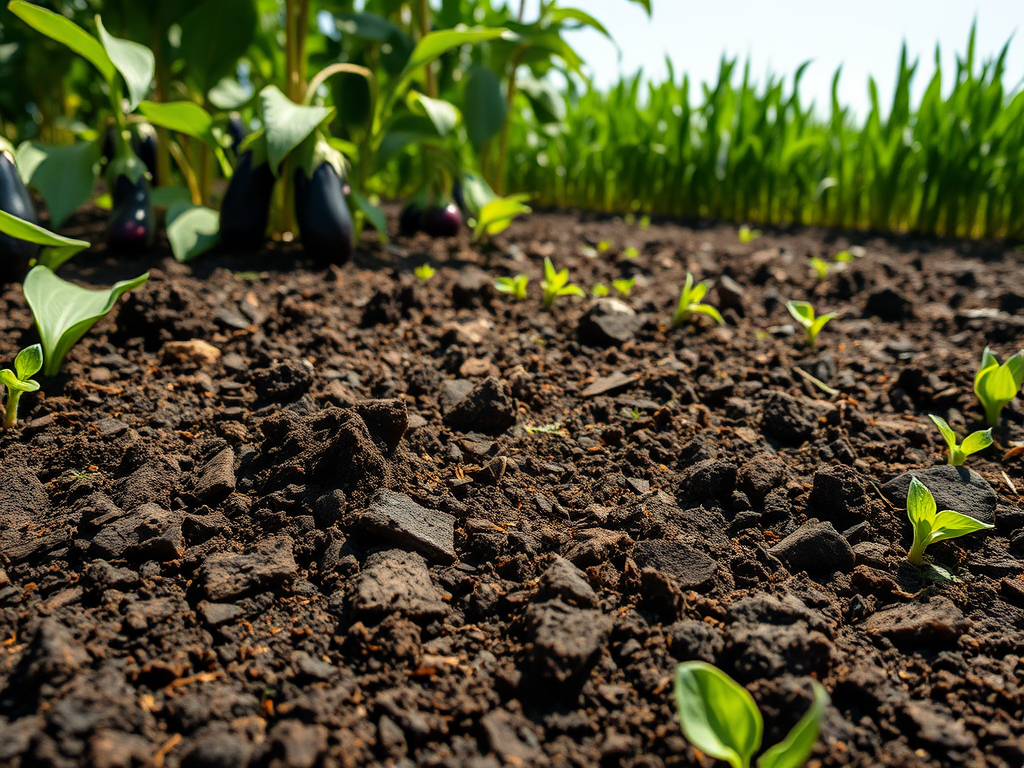
Traditional farming practices often rely heavily on chemical fertilizers, which can degrade soil health over time. Biochar presents an alternative by improving soil structure, retaining nutrients, and supporting microbial activity. This study investigated how biochar, specifically rice straw biochar enriched with a mixed culture of Bacillus sp., changed the soil environment in various agricultural fields. The researchers collected soil samples from a control plot without biochar, two paddy fields, an eggplant field, and a long yard bean field, all of which had biochar applied.
The study used metagenomic analysis to identify and quantify the microbial communities in each soil sample. A total of 371 microbial species were identified across all samples. The control sample (D1) was dominated by Proteobacteria, Acidobacteriota, and Halobacterota. In contrast, the fields with biochar (D2-D5) showed an increase in Firmicutes and Actinobacteriota populations. The study also found new microbial phyla, such as Candidatus phylum Eremiobacterota (WPS-2), in the biochar-amended plots. This suggests that biochar application can introduce and support new microbial life in the soil.
A key finding was the effect of biochar on microbial richness. The first paddy field with biochar (D2) showed the highest microbial richness with 4,887 OTUs (Operational Taxonomic Units), a 7.3% increase compared to the control plot (D1) which had 4,517 OTUs. This confirmed the ability of biochar to enhance microbial diversity. The study also specifically looked at the abundance of Bacillus sp., which was part of the modified biochar. The results showed a remarkable increase in this beneficial microorganism in the biochar-amended fields. The relative abundance of Bacillus sp. was 0.58% in the long yard bean field (D5) and 0.12% in the eggplant field (D4), which is 2,800% and 500% higher, respectively, than in the control sample (D1) where it was only 0.02%. This indicates that biochar has the potential to retain and promote beneficial microbial taxa, even under different environmental conditions.
The researchers also analyzed how biochar affected the functional roles of the soil microbes. They found that biochar application led to an increase in key enzymes and proteins associated with cellular processes and nutrient cycling. Specifically, enzymes like EC:2.7.7.7, which is responsible for DNA synthesis, were more abundant after biochar was added. This suggests that biochar is actively contributing to the growth and multiplication of microbial populations in the soil. Additionally, the study found that biochar enriched several metabolic pathways, including PWY-3781, a pathway for aerobic respiration that leads to ATP synthesis.
In conclusion, this research provides compelling evidence that biochar is a powerful tool for improving soil health. By enhancing microbial diversity, increasing the populations of beneficial microorganisms like Bacillus sp., and activating essential metabolic pathways, biochar can support healthier soil and, in turn, better plant growth and sustainable agriculture. The findings from this study lay the groundwork for future long-term research on biochar’s role in creating more resilient and productive agricultural ecosystems.
Source: Pholchan, M., Thassana, J., & Muangprom, K. (2025). The variability in soil community and its enzymatic function to plant promotion after biochar addition. Thai Environmental Engineering Journal, 39(2), 19-30.





Leave a Reply