
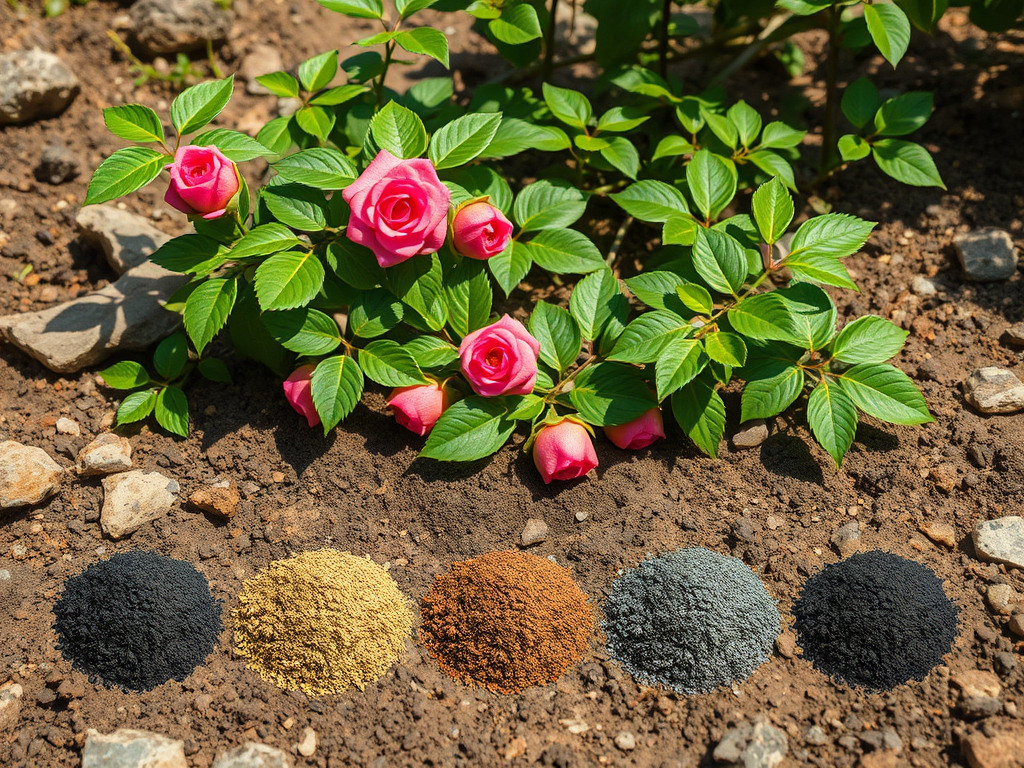
Agricultural practices in Karst regions, which cover a significant portion of the Earth’s land surface, face unique challenges due to shallow, rocky soil, poor fertility, and a high susceptibility to erosion. A new study published in the journal Food and Energy Security by Yangzhou Xiang, Jun Luo, Ying Liu, and their colleagues presents a compelling solution: using biochar-based fertilizers to improve soil properties and crop productivity in these fragile ecosystems. Focusing on the economically important Rosa roxburghii, a fruit-bearing plant known for its high vitamin C content, the researchers evaluated how biocharBiochar is a carbon-rich material created from biomass decomposition in low-oxygen conditions. It has important applications in environmental remediation, soil improvement, agriculture, carbon sequestration, energy storage, and sustainable materials, promoting efficiency and reducing waste in various contexts while addressing climate change challenges. More derived from local agricultural waste could enhance both the soil and the fruit itself. The study’s findings provide a roadmap for sustainable orchard management, demonstrating how a simple waste-to-resource approach can yield significant, measurable improvements.
The team investigated three types of biochar: R. roxburghii pomace biochar (RPB), discarded mushroom substrate biochar (DMB), and chili straw biochar (CSB). They combined these with conventional nitrogen, phosphorus, and potassium fertilizers at various rates and applied them to R. roxburghii plants in a field experiment in Guizhou, China, a province where more than 70% of the land is Karst terrain. The experiment’s design allowed for a direct comparison of the biochar treatments against a conventional control group. The results showed that these biochar amendments significantly improved the soil’s physical and chemical properties. For instance, the RPB4 treatment, which consisted of 70% biochar, led to a 61.37% increase in soil moisture content compared to the control group. This is a critical finding for areas prone to water scarcity and poor water retention. Additionally, the RPB4 treatment also enhanced soil organic matter by 22.73% and available nitrogen by 22.74%. Another treatment, RPB5, showed a significant increase in available potassium, with an improvement of 25.34%. These soil improvements highlight the ability of biochar to act as a soil ameliorant, creating a more favorable environment for plant growth. The most striking results, however, were seen in the quality of the fruit itself. Biochar-based fertilizers had a profound impact on the nutritional value of the Rosa roxburghii fruit. The RPB4 treatment emerged as the most effective overall, significantly improving key fruit quality parameters. This specific formulation led to an astounding 148.69% increase in soluble sugars and a 120.06% increase in total flavonoids. Flavonoids are a group of plant compounds known for their antioxidant properties. The DMB4 treatment also delivered a major boost, increasing the fruit’s vitamin C content by 67.94%. This remarkable improvement in fruit quality, beyond just soil health, shows the potential for biochar to enhance both the quantity and nutritional value of agricultural products.
Beyond the individual improvements, the study’s use of advanced statistical analysis, including Principal Component Analysis (PCA) and Structural Equation Modeling (SEM), provided a comprehensive understanding of the biochar’s effects. The PCA revealed that the RPB4 treatment was the optimal combination, explaining an impressive 69.328% of the total variance in soil and fruit properties. This finding provides clear, quantitative evidence for farmers and researchers, offering a data-driven approach to sustainable management in Karst agricultural systems. The success of this approach not only offers a viable solution to the agricultural limitations of Karst regions but also showcases the broader potential of converting agricultural by-products into a powerful tool for environmental and food security.
SOURCE: Xiang, Y., Luo, J., Liu, Y., Luo, Y., Bolan, N., Bhattarai, H. R., Siddique, K. H. M., Li, Y., Fan, J., & Shurpali, N. J. (2025). Enhancing Soil Physicochemical Properties and Fruit Production of Rosa roxburghii With Biochar-Based Fertilizer in Karst Agricultural Systems. Food and Energy Security, 14(7), e70138.



Leave a Reply