
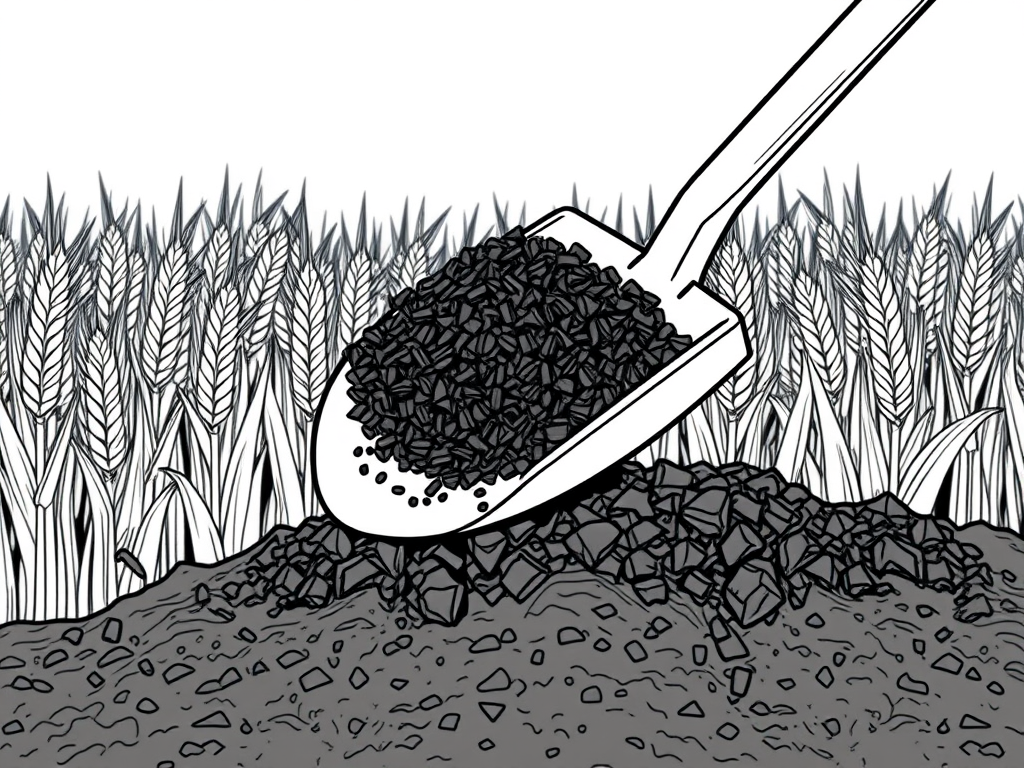
In a study published in Soil & Tillage Research, Trozzo et al., examined the effects of wood gasificationGasification is a high-temperature, thermochemical process that converts carbon-based materials into a gaseous fuel called syngas and solid by-products. It takes place in an oxygen-deficient environment at temperatures typically above 750°C. Unlike combustion, which fully burns material to produce heat and carbon dioxide (CO2), gasification More biocharBiochar is a carbon-rich material created from biomass decomposition in low-oxygen conditions. It has important applications in environmental remediation, soil improvement, agriculture, carbon sequestration, energy storage, and sustainable materials, promoting efficiency and reducing waste in various contexts while addressing climate change challenges. More on soil properties, greenhouse gas emissions, and wheat yield in sub-alkaline soil under Mediterranean conditions. The research aimed to assess biochar’s potential to enhance soil carbon sequestration, a key strategy for mitigating climate change.
The field experiment, conducted over two cropping years, compared a control group (unamended wheat) with a group treated with 60 Mg/ha of wood gasification biochar. The researchers monitored soil nitrous oxide (N2O), methane (CH4), and carbon dioxide (CO2) fluxes, as well as soil temperature and water content. They also analyzed soil physicochemical properties and measured wheat yield.
The study’s key finding is that biochar application significantly increased soil carbon stock. Specifically, soil carbon stock increased 2.2-fold in the 0-10 cm layer and 1.4-fold in the 10-40 cm layer. This increase persisted throughout the two-year study period.
Importantly, the application of biochar did not significantly affect soil N2O, CH4, and CO2 fluxes. Soil pHpH is a measure of how acidic or alkaline a substance is. A pH of 7 is neutral, while lower pH values indicate acidity and higher values indicate alkalinity. Biochars are normally alkaline and can influence soil pH, often increasing it, which can be beneficial More, total and ammoniacal nitrogen, bulk density, and cation exchange capacity also remained largely unchanged. Wheat yield was comparable between the control and biochar-treated groups, indicating that biochar did not negatively impact crop production.
In conclusion, this research suggests that wood gasification biochar can effectively enhance soil carbon sequestration without increasing greenhouse gas emissions or reducing wheat yield. These findings support the use of biochar as a valuable tool for sustainable soil management and climate change mitigation in agricultural systems.
SOURCE: Trozzo, L., D’Ottavio, P., Kishimoto-Mo, A. W., & Francioni, M. (2025). Wood gasification biochar enhances soil carbon sequestration without affecting greenhouse gas fluxes or wheat yield in sub-alkaline soil. Soil & Tillage Research, 251, 106556.



Leave a Reply