
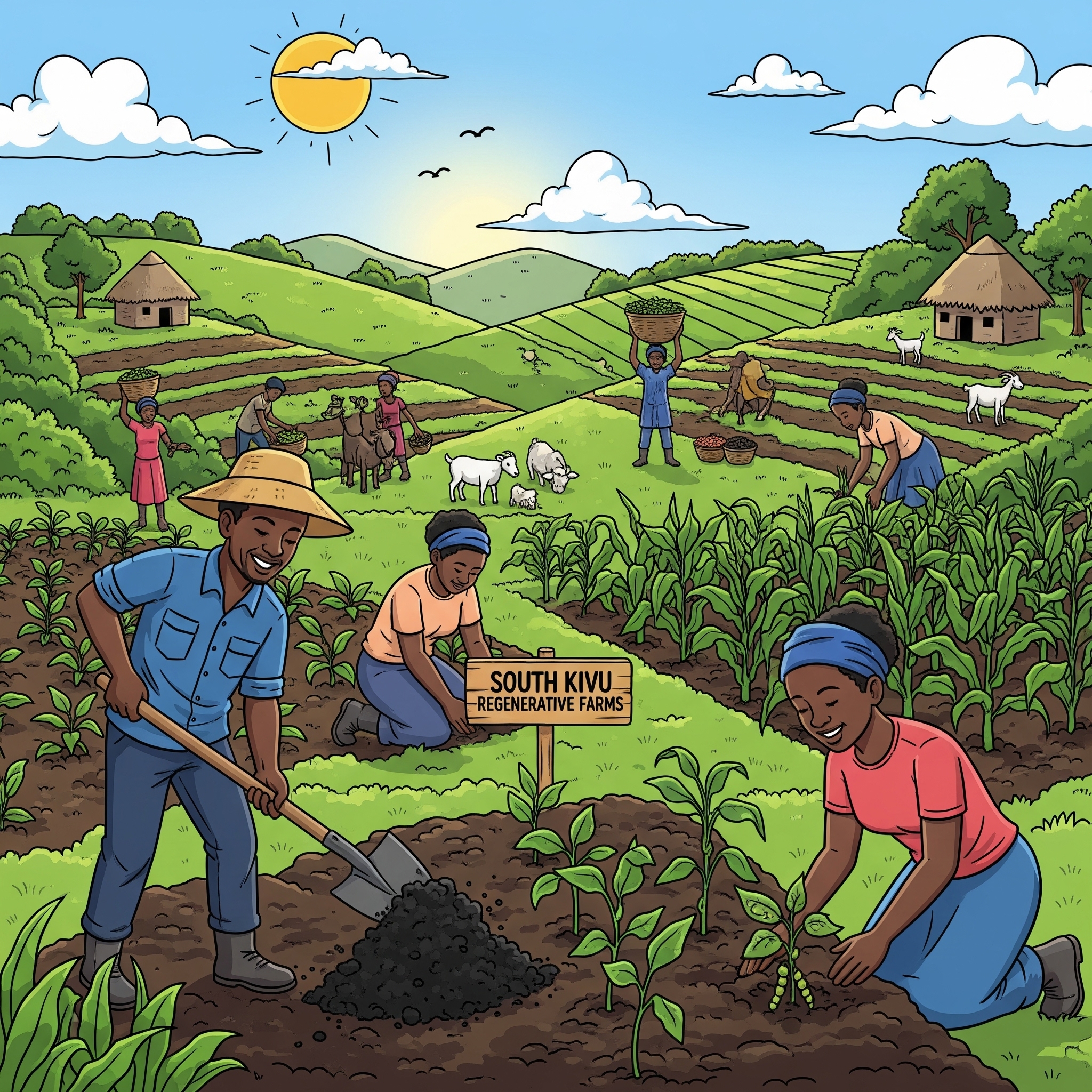
In a remarkable effort to combat poverty, food insecurity, and climate change, the Nabahya Food Institute (NFI) is championing a regenerative agriculture movement in the eastern Democratic Republic of the Congo. Operating primarily in the Uvira region of South Kivu, NFI’s work is centered on empowering smallholder farmers through sustainable practices, with biocharBiochar is a carbon-rich material created from biomass decomposition in low-oxygen conditions. It has important applications in environmental remediation, soil improvement, agriculture, carbon sequestration, energy storage, and sustainable materials, promoting efficiency and reducing waste in various contexts while addressing climate change challenges. More utilization as a key component.
NFI’s approach is holistic, focusing on building resilient communities by fostering an understanding of ecological symbiosis. The institute trains farmers on permaculture and regenerative farming techniques, including composting, manure production, and the application of biochar to enhance soil health and boost crop yields. By making quality, disease-free seeds available and providing guidance on optimal planting seasons, NFI ensures that farmers are well-equipped to maximize their food production.
The organization’s impact is significant. According to a recent snapshot of their work, NFI has produced an impressive 78,000 tonnes of biochar, which has contributed to an average agricultural yield increase of over 150% for supported farmers. This has directly benefited more than 90,000 farmers and helped to restore over 83,000 hectares of land. The use of biochar is integrated into a broader strategy that also includes reforestation, water management, and the use of renewable energy for food processing, such as solar cooking and drying.
By promoting these methods, NFI is not only addressing the immediate challenges of starvation and poverty but is also building a sustainable future where communities can produce nutritious food while restoring the local ecosystem. Their work demonstrates a powerful model for how a combination of education, technology, and community-driven initiatives can create lasting positive change.
SOURCE: Biochar & Regenerative Agriculture — Nabahya Food Institute (South Kivu)





Leave a Reply