
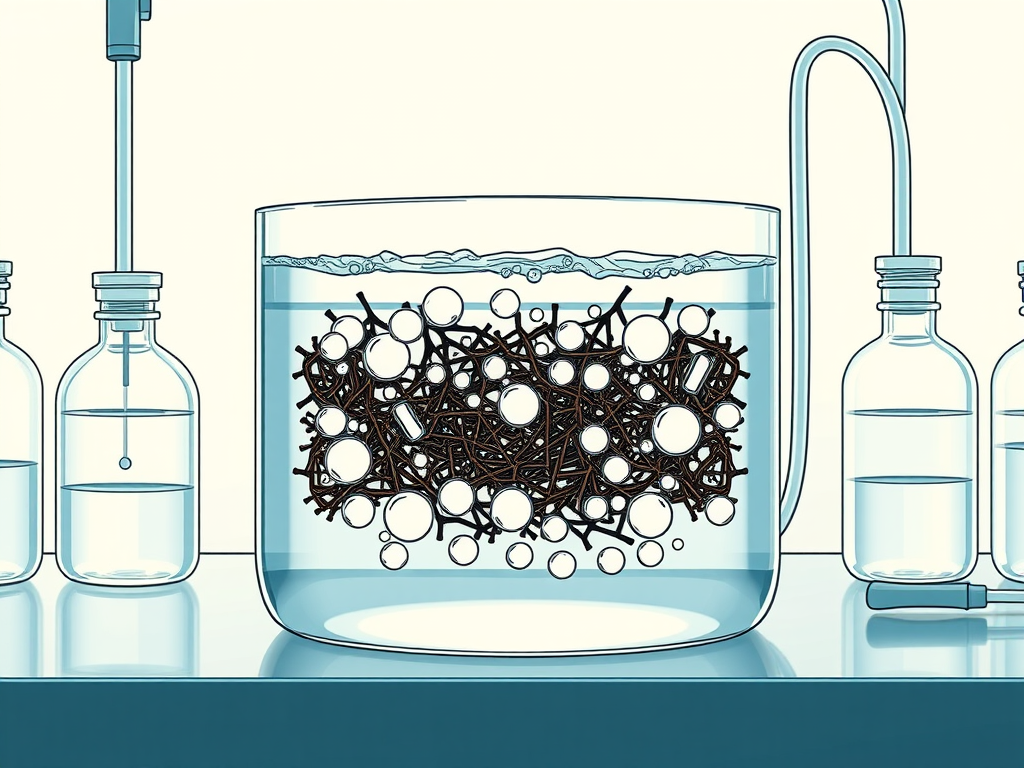
In a recent study published in Water, Castillo-Vargas et al., explored a novel approach to remove pharmaceutical pollutants from water using a biochar-based electrochemical system. The researchers developed a system that combines the adsorption capabilities of biocharBiochar is a carbon-rich material created from biomass decomposition in low-oxygen conditions. It has important applications in environmental remediation, soil improvement, agriculture, carbon sequestration, energy storage, and sustainable materials, promoting efficiency and reducing waste in various contexts while addressing climate change challenges. More with the power of electrochemical degradation.
Biochar has been shown to be effective at adsorbing various pollutants from water. Electrochemical degradation involves using electricity to break down pollutants. By combining these two processes, the researchers aimed to create a more efficient and effective wastewater treatment system. The biochar used in the study was derived from coconut fiber, a readily available and sustainable resource. The researchers tested the system’s ability to remove various pharmaceutical pollutants, including ibuprofen, acetaminophen, and tetracycline.
The results showed that the biochar-based electrochemical system was highly effective at removing pharmaceutical pollutants from water. The system achieved high removal efficiencies for all the tested pollutants. The combination of biochar adsorption and electrochemical degradation proved to be a powerful tool for water treatment. This research demonstrates the potential of biochar-based electrochemical systems as a promising solution for removing pharmaceutical pollutants from wastewater. The system is environmentally friendly, sustainable, and effective. It offers a new avenue for developing advanced wastewater treatment technologies.
Source: Castillo-Vargas, D.A.; Rodríguez-Quesada, L.; Ledezma-Espinoza, A.; Masís-Meléndez, F.; Infante-Alfaro, S.; Starbird-Perez, R. Biochar-Based Electrochemical Degradation System for Removing Pharmaceutical Pollutants from Aqueous Media as Potential Wastewater Treatment. Water 2025, 17, 722. https://doi.org/10.3390/w17050722



Leave a Reply