

The urgent need for sustainable agricultural practices to combat global climate change and soil degradation has led researchers to explore innovative soil amendments. A recent study published in Soil Use and Management by Asuman Büyükkılıç Yanardağ investigates the individual and combined effects of Nigella sativa (black cumin) residue and its biocharBiochar is a carbon-rich material created from biomass decomposition in low-oxygen conditions. It has important applications in environmental remediation, soil improvement, agriculture, carbon sequestration, energy storage, and sustainable materials, promoting efficiency and reducing waste in various contexts while addressing climate change challenges. More on soil microbial activity, carbon sequestration, and nitrogen cycling across three distinct soil types: Alfisol, Entisol, and Mollisol. This research provides valuable insights into how these organic amendments can improve soil health and carbon management.
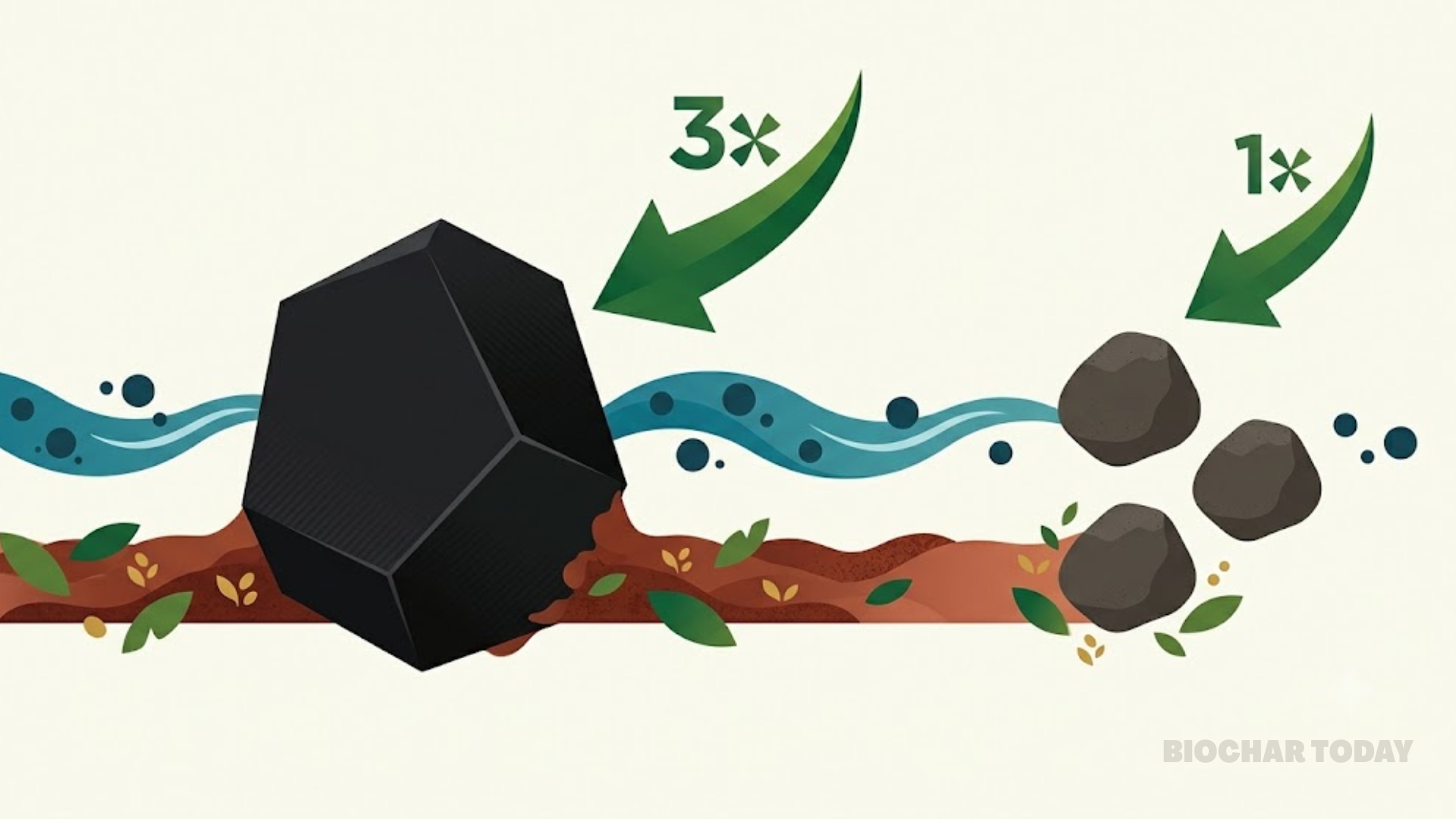
This 120-day incubation experiment revealed that while black cumin residue boosts immediate microbial activity and nutrient turnover, biochar is key to long-term carbon stabilization. Notably, in biochar treatments, soluble carbon remained stable at 419.2 mg/kg until day 120, alongside the highest microbial biomassBiomass is a complex biological organic or non-organic solid product derived from living or recently living organism and available naturally. Various types of wastes such as animal manure, waste paper, sludge and many industrial wastes are also treated as biomass because like natural biomass these More carbon (528 mg/kg) and lowest CO2 emissions, reflecting improved microbial efficiency.
One of the key findings was the contrasting roles of biochar and black cumin residue. Black cumin residue, being rich in readily decomposable organic matter, spurred an initial surge in soluble carbon and microbial activity, reflecting its role in short-term nutrient availability. This rapid decomposition, however, also leads to quicker depletion of these readily available nutrients. In contrast, biochar, a carbon-rich material produced through pyrolysisPyrolysis is a thermochemical process that converts waste biomass into bio-char, bio-oil, and pyro-gas. It offers significant advantages in waste valorization, turning low-value materials into economically valuable resources. Its versatility allows for tailored products based on operational conditions, presenting itself as a cost-effective and efficient More, demonstrated its strength in long-term carbon stabilization. Its porous structure and high surface area allow for carbon adsorption and reduced microbial degradation, leading to sustained increases in soluble carbon, particularly evident in the higher dose biochar treatments (BC2) where soluble carbon reached 419.2 mg/kg and remained stable until day 120. This highlights biochar’s capacity to act as a carbon sink, mitigating carbon loss through respiration.
The study also delved into how these amendments influenced microbial biomass carbon (MBC) and nitrogen (MBN). Black cumin residue significantly increased MBC, especially in Entisol, a soil type with low initial organic matter, due to the immediate nutrient availability. Biochar treatments, while having a positive impact on MBC, showed a more gradual and sustained increase, often creating favorable micro-habitats for microbial colonization rather than acting as a direct energy source. The most significant increases in MBC were observed when biochar and black cumin residue were combined, suggesting a synergistic effect where biochar stabilized labile organic inputs, preventing rapid mineralization and allowing for sustained microbial proliferation. This combined approach resulted in the highest MBC values across all soil types.
Nitrogen dynamics were also profoundly affected. Black cumin residue led to a rapid increase in soluble nitrogen (SN) due to immediate mineralization, but this was followed by a decline as microbes quickly utilized it. Biochar, however, showed a more stable increase in SN, likely by adsorbing ammonium and nitrate, thereby reducing leachingLeaching is the process where nutrients are dissolved and carried away from the soil by water. This can lead to nutrient depletion and environmental pollution. Biochar can help reduce leaching by improving nutrient retention in the soil. More and making nitrogen available for microbial uptake over time. The combined treatment consistently resulted in the highest and most sustained SN and MBN levels, emphasizing biochar’s role in improving nitrogen retention and facilitating microbial nitrogen cycling.
The impact on CO2 emissions, a critical indicator of microbial respiration and soil organic matter turnover, was also examined. Black cumin residue treatments led to the highest CO2 emissions, particularly in Entisol and Alfisol, indicative of rapid microbial metabolism and organic matter decomposition. In contrast, biochar treatments resulted in lower but sustained CO2 emissions, reflecting a more efficient microbial system with enhanced carbon retention. The combined application of biochar and black cumin residue produced the lowest metabolic quotient (qCO2) values, indicating greater microbial carbon use efficiency; meaning microbial communities used carbon more effectively for biomass production rather than respiration, thus reducing carbon losses.
The study revealed that the effectiveness of these amendments varied significantly across soil types. Entisol, characterized by low organic matter, showed the most pronounced increases in soluble carbon and nitrogen, and also the largest relative increase in CO2 emissions, highlighting its strong response to organic inputs. Alfisols, with moderate fertility and clay-rich subsoil, demonstrated a balanced response, with clay content potentially aiding organic carbon protection. Mollisols, naturally rich in organic matter, exhibited less dramatic changes but showed that biochar primarily contributed to carbon and nitrogen stabilization rather than immediate increases in availability or microbial activity.
These findings underscore the importance of tailored soil management strategies. Higher biochar doses are recommended for degraded soils like Entisols to improve microbial biomass efficiency and reduce carbon losses. For Alfisols, a balanced approach combining biochar and organic residues is beneficial for optimizing microbial efficiency and nutrient cycling. Mollisols, with their already rich organic matter content, primarily benefit from biochar’s stabilizing effect on carbon and nitrogen. Future research should focus on long-term field applications to further assess the persistence of biochar and its role in mitigating CO2 emissions under diverse soil conditions.
Source: Yanardağ, A. B. (2025). Effect of Nigella sativa Residue and Its Biochar on Soil Microbial Activity, Carbon Sequestration and Nitrogen Cycling Across Different Soil Types. Soil Use and Management, 41(e70097), 1-23.



Leave a Reply