

The widespread use of the herbicide fluridone has raised concerns about its persistence in soil and potential harm to non-target organisms. Its primary metabolite, fluridone acid, is even more persistent. In a new study published in the journal BiocharBiochar is a carbon-rich material created from biomass decomposition in low-oxygen conditions. It has important applications in environmental remediation, soil improvement, agriculture, carbon sequestration, energy storage, and sustainable materials, promoting efficiency and reducing waste in various contexts while addressing climate change challenges. More, authors Chi Wu, Yuzhu Wang, Jihong Liu Clarke, and others investigated whether adding biochar to soil could effectively mitigate fluridone contamination. Their findings show that amending soil with just 2% biochar significantly enhanced the degradation of fluridone and fluridone acid, reducing their half-lives by as much as 45% and 46.88%, respectively.
The research team produced biochar from rice hulls at various temperatures, finding that higher temperatures increased the material’s specific surface area and its ability to sorb, or bind to, fluridone. Biochar produced at 500°C was selected for the study. When this biochar was added to four different types of soil at a 2% concentration, the soil’s ability to sorb fluridone increased by an average of 60.16% to 183.50%. This sorption capacity was even higher for the fluridone acid metabolite, increasing by 30.92% to 274.36% with the addition of biochar.
While the research found that biochar improves sorption, it also demonstrated that biodegradation—the breakdown of the compound by living organisms—was the main driver of fluridone degradation. Under sterile conditions, fluridone’s half-life was 466 days, but in unsterilized soil, it was only 179 days. The addition of biochar further accelerated this process, with biodegradation rates reaching up to 77.67% for fluridone acid in amended soil.
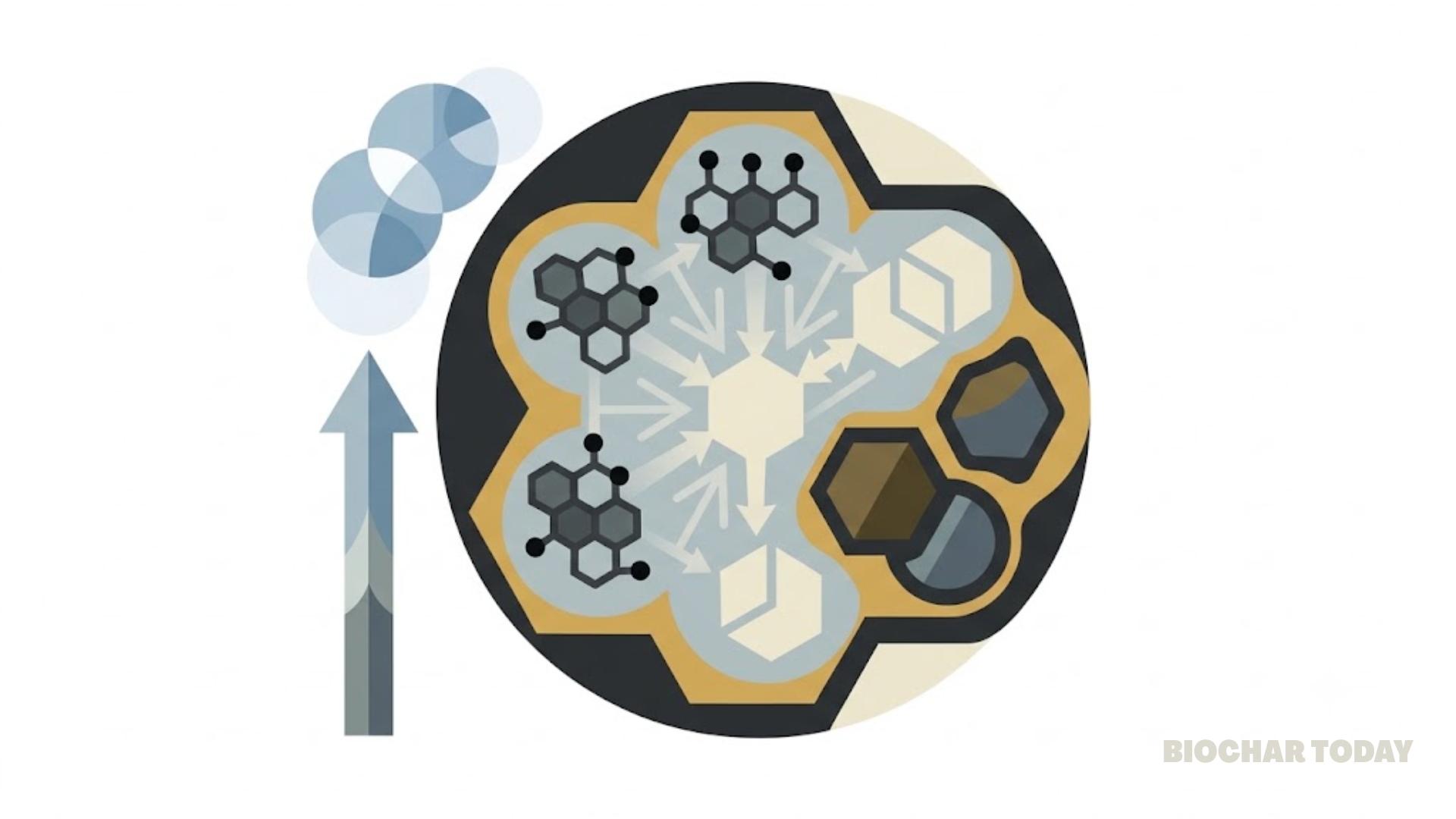
The study provides an in-depth look into the microbial communities responsible for this degradation. The presence of fluridone initially stressed the soil’s microbial community, but the addition of biochar helped alleviate this stress. The biochar’s porous structure provides a safe habitat for bacteria, and its nutrients can stimulate microbial growth. The researchers observed a significant increase in the abundance of specific bacteria known to break down pollutants, including Lysobacter, Pseudonocardia, and Sphingomonas. These microbes became the dominant species in the biochar-amended soil, actively participating in the degradation of the herbicide. This suggests that biochar not only physically removes the pesticide but also creates a more favorable environment for the very organisms that can break it down.
The practical benefits of this dual action were demonstrated in a pot experiment with maize plants. Maize grown in fluridone-contaminated soil showed significant signs of stress, including reduced plant height, root length, and fresh weight. However, when the soil was amended with 2% biochar, the plants’ health was drastically improved. Maize height increased by 146-153%, root length increased by 154-215%, and fresh weight increased by 142-167% compared to plants in contaminated soil without biochar. The biochar’s strong sorption abilities reduced the amount of fluridone absorbed by the plant roots, allowing the plants to recover and thrive. The study also showed that biochar amendment could protect the ultrastructure of maize leaves, which are typically damaged by fluridone.
In conclusion, this research highlights biochar’s potential as a sustainable and effective strategy for managing pesticide residue in agricultural soils. By both adsorbing the herbicide and stimulating the microbial communities that break it down, biochar offers a promising solution to reduce the negative impacts of fluridone, ensuring healthier soils and crops.
Source: Wu, C., Wang, Y., Liu Clarke, J., Su, H., Wang, L., Glazunova, O. A., Moiseenko, K. V., Zhang, L., Mao, L., Zhu, L., & Liu, X. (2025). Biochar enhances the sorption and degradation of fluridone and its main metabolite in soil: insights into biodegradation potential and remediation of microbial communities. Biochar, 7(1), 81.



Leave a Reply