
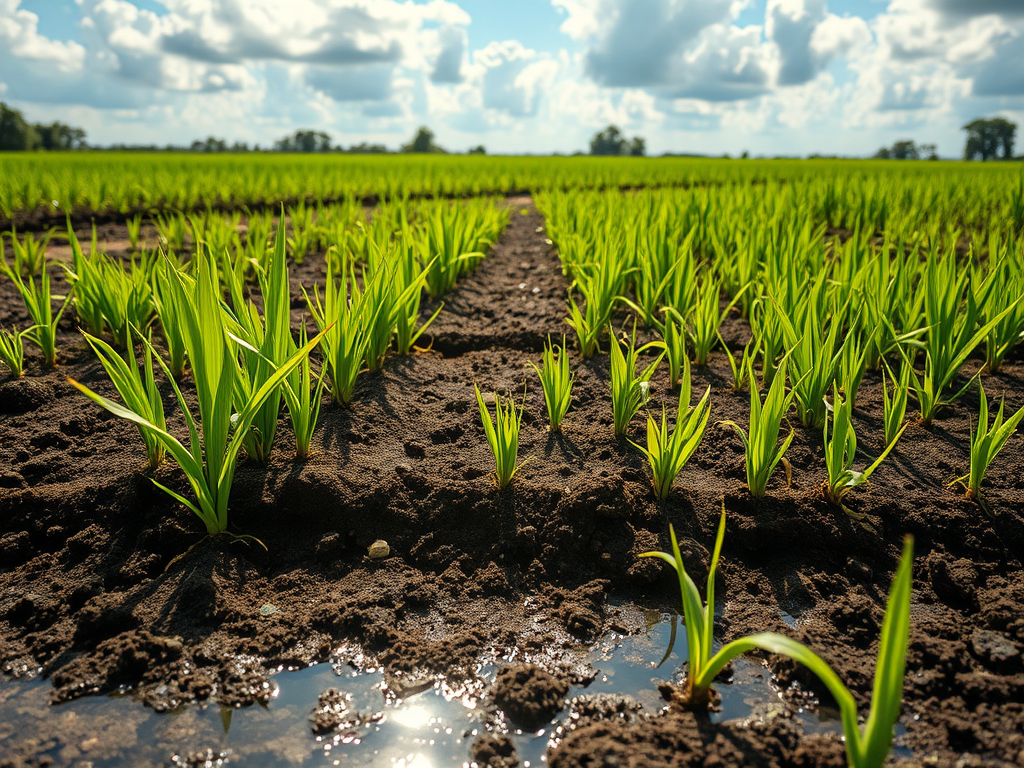
Acid mine drainage (AMD) often contaminates paddy fields, leading to excessive arsenic (As) and iron (Fe) levels in the soil, posing significant risks to human health and agricultural productivity. In their research published in Scientific Reports, Zhang et al., explored the potential of biocharBiochar is a carbon-rich material created from biomass decomposition in low-oxygen conditions. It has important applications in environmental remediation, soil improvement, agriculture, carbon sequestration, energy storage, and sustainable materials, promoting efficiency and reducing waste in various contexts while addressing climate change challenges. More to immobilize these elements and remediate contaminated paddy fields. The researchers applied biochar produced at varying pyrolysisPyrolysis is a thermochemical process that converts waste biomass into bio-char, bio-oil, and pyro-gas. It offers significant advantages in waste valorization, turning low-value materials into economically valuable resources. Its versatility allows for tailored products based on operational conditions, presenting itself as a cost-effective and efficient More temperatures (400, 550, and 700 °C) to soil and observed its effects under alternating anaerobic and aerobic conditions, simulating the fluctuating redox conditions typical of paddy fields.
The study found that biochar, especially when produced at lower pyrolysis temperatures, promoted the dissolution of arsenic-containing iron oxides in the soil. This dissolution process, aided by microorganisms, primarily from the Firmicutes phylum, led to the transformation of arsenic and its subsequent adsorption onto the biochar surface. The biochar effectively loaded dissolved iron, likely in the form of Fe3O4 and FeOOH, and adsorbed arsenic primarily as As(III).
Interestingly, the iron oxides on the biochar were more stable when the biochar was produced at 400 °C compared to higher temperatures. Over time, the arsenic content on the biochar increased, raising the As/Fe molar ratio to above that of the soil. This suggests that biochar can act as a sink for both iron and arsenic, effectively removing them from the soil solution and reducing their bioavailability. The authors suggest that the lower temperature biochar may be more effective due to its greater abundance of functional groups, which can enhance the binding of iron and arsenic. This study provides a foundation for further research into the long-term use of biochar to remediate AMD-contaminated paddy fields.
SOURCE: Zhang, C., Luo, J., Song, W., Chen, H., & Zhang, S. (2025). Influence of biochar on the partitioning of iron and arsenic from paddy soil contaminated by acid mine drainage. Scientific Reports, 15(1), 4852. https://doi.org/10.1038/s41598-025-89728-0




Leave a Reply