
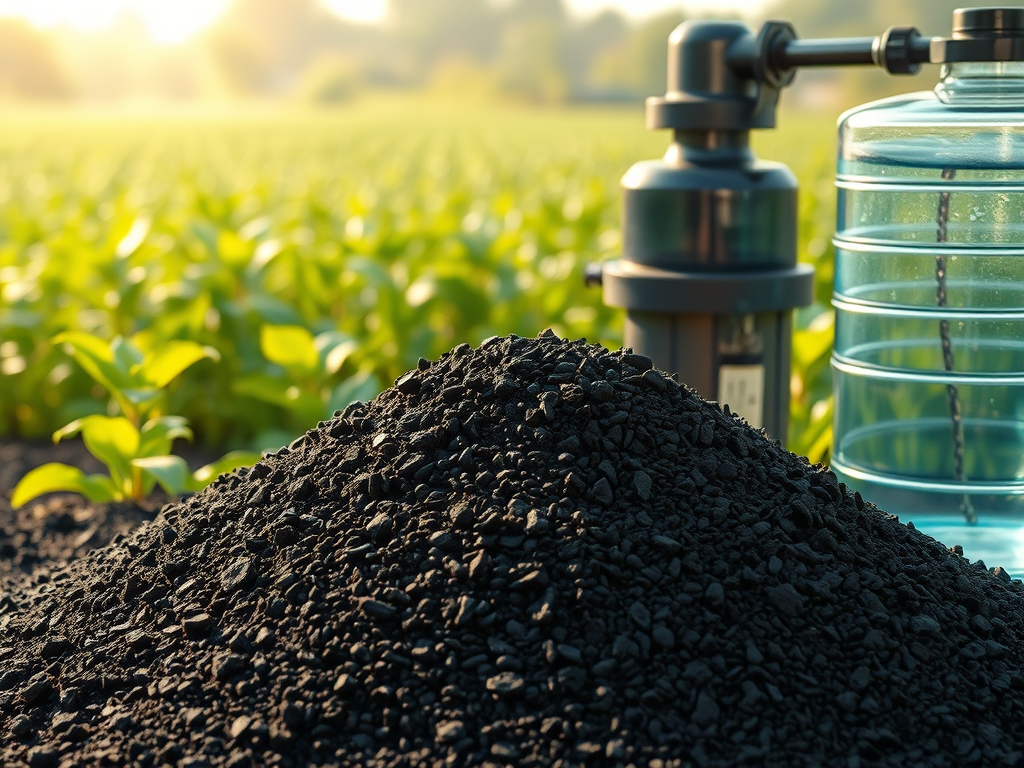
In a recent review published in Green Technologies and Sustainability, Amalina et al., delve into the multifaceted applications of biocharBiochar is a carbon-rich material created from biomass decomposition in low-oxygen conditions. It has important applications in environmental remediation, soil improvement, agriculture, carbon sequestration, energy storage, and sustainable materials, promoting efficiency and reducing waste in various contexts while addressing climate change challenges. More (BC), a carbon-rich material derived from biomassBiomass is a complex biological organic or non-organic solid product derived from living or recently living organism and available naturally. Various types of wastes such as animal manure, waste paper, sludge and many industrial wastes are also treated as biomass because like natural biomass these More pyrolysisPyrolysis is a thermochemical process that converts waste biomass into bio-char, bio-oil, and pyro-gas. It offers significant advantages in waste valorization, turning low-value materials into economically valuable resources. Its versatility allows for tailored products based on operational conditions, presenting itself as a cost-effective and efficient More. BC has garnered significant attention for its potential to address pressing environmental and agricultural challenges.
The authors highlight the diverse applications of BC in various sectors. In agriculture, BC serves as a soil amendmentA soil amendment is any material added to the soil to enhance its physical or chemical properties, improving its suitability for plant growth. Biochar is considered a soil amendment as it can improve soil structure, water retention, nutrient availability, and microbial activity. More, enhancing nutrient availability, water retention, and microbial activity. This, in turn, promotes soil health and improves crop productivity. BC also finds use in water treatment, effectively adsorbing pollutants like heavy metals and organic compounds. The porous nature of BC provides a large surface area for contaminants to bind, making it an efficient filtration material. Moreover, BC contributes to waste management by reducing the volume of waste destined for landfills. The pyrolysis process converts organic waste into valuable BC, mitigating the environmental impact of waste disposal. In the realm of renewable energy, BC can be used as a co-firing material in power plants or as a fuel source for bio-oil and syngasSyngas, or synthesis gas, is a fuel gas mixture consisting primarily of hydrogen and carbon monoxide. It is produced during gasification and can be used as a fuel source or as a feedstock for producing other chemicals and fuels. More production. This versatility makes BC a promising candidate for sustainable energy generation.
The review also discusses recent innovations in BC production, such as nano-BC and BC composites, which further expand its potential applications. Nano-BC, with its smaller particle size, exhibits enhanced properties compared to conventional BC, making it suitable for targeted applications. BC composites, on the other hand, combine BC with other materials to create synergistic effects, improving its performance and stability. The study emphasize the importance of quality and safety standards in BC production and application. The authors highlight the need for regulatory frameworks to ensure the safe and effective use of BC, minimizing any potential environmental risks.
In conclusion, biochar emerges as a versatile and sustainable solution to address a wide range of environmental and agricultural challenges. Its ability to improve soil health, remediate water pollution, manage waste, and contribute to renewable energy production makes it a valuable tool for a more sustainable future. As research and development continue, we can expect further advancements in BC technology, unlocking its full potential to drive positive environmental change.
SOURCE: Amalina, F., Krishnan, S., Zularisam, A. W., & Nasrullah, M. (2025). An extensive analysis and environmental sustainability applications of multifunctional biochar developments: Current trends and technological advances. Green Technologies and Sustainability, 3, 100174.https://doi.org/10.1016/j.grets.2025.100174





Leave a Reply