
Key Takeaways
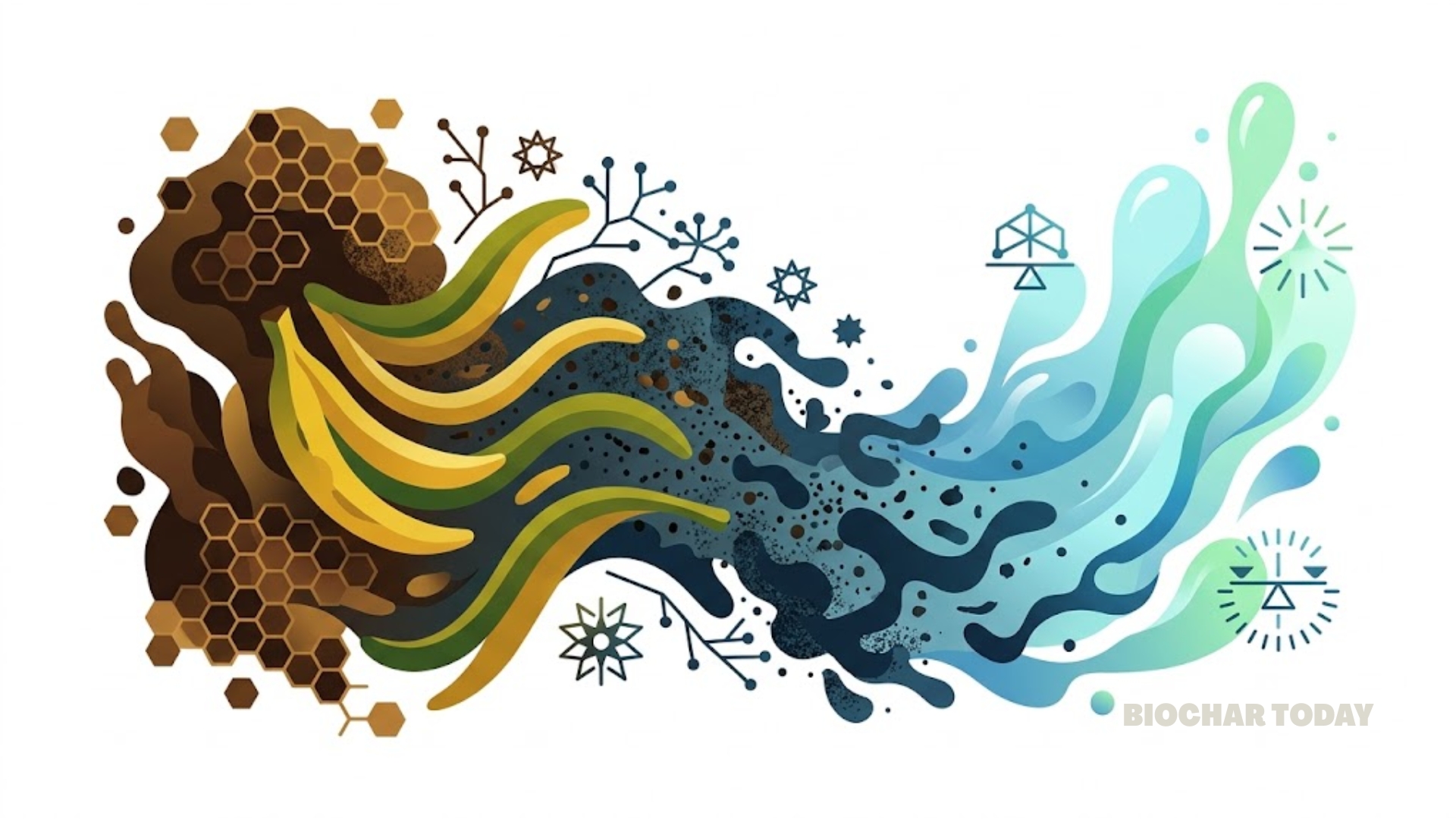
- Banana peel biocharBiochar is a carbon-rich material created from biomass decomposition in low-oxygen conditions. It has important applications in environmental remediation, soil improvement, agriculture, carbon sequestration, energy storage, and sustainable materials, promoting efficiency and reducing waste in various contexts while addressing climate change challenges. More is highly effective at clearing cloudy water and removing unpleasant smells.
- Combining biochar with termite nest material naturally balances the acidity of polluted river water.
- Using larger amounts of these natural materials creates a stronger buffering effect to stabilize water quality.
- These eco-friendly treatments offer a low-cost way for communities to clean up local waterways without harsh chemicals.
- Recycling food waste and natural materials into water filters supports global goals for clean water and sanitation.
In a recent publication in The International Review of Multidisciplinary Research, researchers Debbie G. Villacuatro, Angel Mary V. Florentino, Jhon Reynald B. Ajoc, John Caryl A. Sa-a, Niña Therese Avenido, Adrian M. Abarquez, Rhino Rienz L. Casas, and Edilyn C. Balcita explored innovative ways to restore the health of the Butuanon River. This waterway in Mandaue City, Cebu, has faced severe ecological challenges for decades, often being characterized as biologically dead due to heavy pollution from domestic and industrial waste. The study investigates the potential of two locally available, sustainable materials—termite nest microbes and biochar derived from banana peels—to act as bioremediation agents. By focusing on these natural alternatives, the research aligns with global sustainability goals that prioritize clean water and the reduction of hazardous chemical releases into the environment.
The findings reveal that both materials, whether used alone or in combination, have a measurable impact on the chemical and physical properties of contaminated water. One of the most significant results involves the stabilization of pHpH is a measure of how acidic or alkaline a substance is. A pH of 7 is neutral, while lower pH values indicate acidity and higher values indicate alkalinity. Biochars are normally alkaline and can influence soil pH, often increasing it, which can be beneficial More levels. The Butuanon River water samples initially showed varying levels of acidity, but the introduction of termite nest material and banana peel biochar consistently moved the pH toward a more alkaline state. Biochar alone was particularly effective in raising the pH, a result attributed to its natural ashAsh is the non-combustible inorganic residue that remains after organic matter, like wood or biomass, is completely burned. It consists mainly of minerals and is different from biochar, which is produced through incomplete combustion. Ash Ash is the residue that remains after the complete More content and the specific chemical groups formed on its surface during the heating process. When the researchers combined the termite nest powder with the biochar, they observed a synergistic effect where the two materials worked together to provide a stronger buffering capacity than either could achieve independently.
The quantitative data from the experiments showed a clear relationship between the amount of material used and the change in water chemistry. For example, a combined treatment using three grams of each material raised the average pH to approximately 9.08, compared to a lower average of 7.64 when only a small amount of termite nest material was applied. This dose-dependent response suggests that local communities can fine-tune the amount of natural treatment based on the specific needs of a local water source. While the researchers tested for heavy metals like lead, mercury, and chromium, these were not detected in the samples during the study period, likely due to seasonal dilution or the metals being trapped in river sediments rather than the flowing water itself. However, the treatments did show a capacity to influence other non-metal contaminants, such as sulfites and fluorides, further proving their versatility as cleaning agents.
Beyond chemical changes, the physical appearance and smell of the water improved significantly. Banana peel biochar emerged as the superior material for enhancing water clarity and removing odors. Because biochar is highly porous, it acts like a microscopic sponge, trapping suspended particles and organic molecules that cause cloudiness and foul smells. In the study’s sensory evaluations, water treated with biochar alone consistently received the highest ratings for clarity and was frequently noted to have no detectable odor after a twenty-four-hour contact period. This makes it an ideal candidate for simple, gravity-based filtration systems that do not require electricity or expensive infrastructure.
Interestingly, the study also noted that more is not always better when it comes to clarity. While increasing the dose of combined materials improved the pH balance, it also led to an increase in turbidity, or cloudiness. This occurred because the fine particles of the added termite nest and biochar remained suspended in the water at higher concentrations. This insight is crucial for practical applications, as it indicates that a balance must be struck between chemical neutralization and physical filtration. Effective water treatment strategies using these materials would likely require a settling phase or a secondary fine filter to ensure the final product is as clear as possible.
The implications of this research extend far beyond the laboratory. By demonstrating that agricultural waste like banana peels can be transformed into a valuable environmental tool, the study provides a blueprint for community-led ecological restoration. These nature-based solutions are not only affordable but also reduce the reliance on synthetic chemicals that can sometimes cause secondary pollution. For urban communities living near polluted rivers, these findings offer a sense of agency, showing that local knowledge and accessible resources can play a pivotal role in public health and environmental stewardship. This scientific investigation highlights the power of simple, sustainable innovations to address the complex challenges of urban water pollution.
Source: Villacuatro, D. G., Florentino, A. V., Ajoc, J. B., Sa-a, J. A., Avenido, N. T., Abarquez, A. M., Casas, R. L., & Balcita, E. C. (2026). Bioremediating Butuanon: Investigating the Potential of Termite Nest Microbes and Banana Peel Biochar in Improving Water Quality. The International Review of Multidisciplinary Research, 1(3), 369-385.



Leave a Reply