
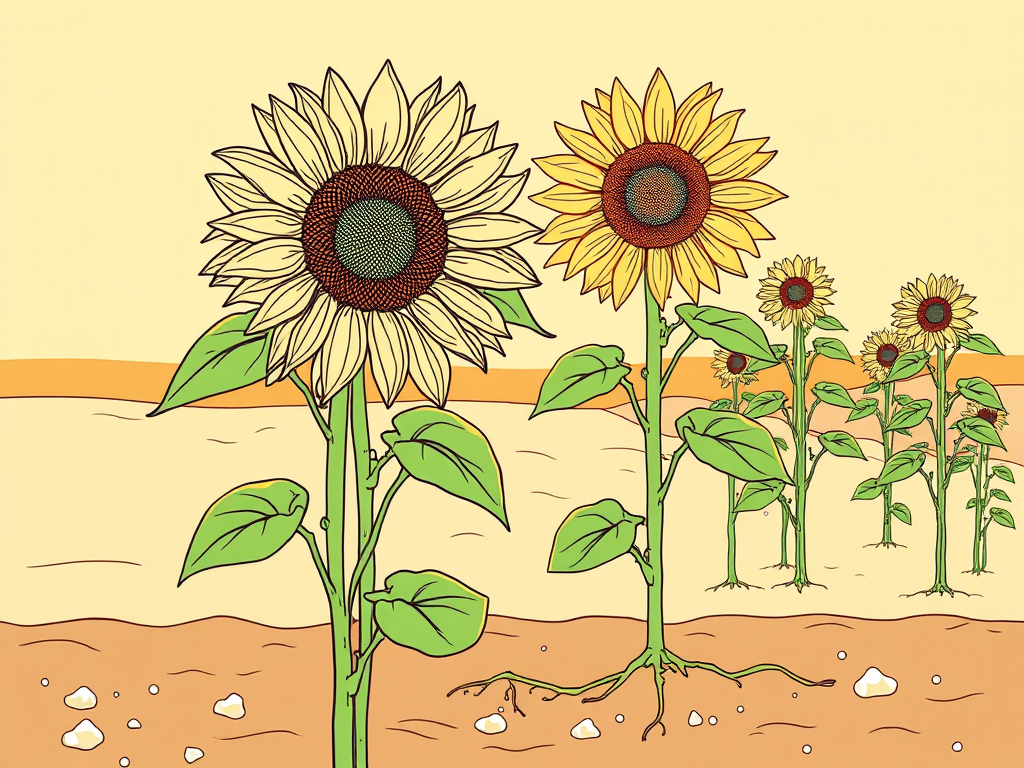
A recent study published in Scientific Reports by Tu et al. explores a method to alleviate salinity stress in sunflowers using nitrilotriacetic acid mixed biocharBiochar is a carbon-rich material created from biomass decomposition in low-oxygen conditions. It has important applications in environmental remediation, soil improvement, agriculture, carbon sequestration, energy storage, and sustainable materials, promoting efficiency and reducing waste in various contexts while addressing climate change challenges. More (NAT-BC) and Bacillus pumilus, a beneficial microorganism. The study highlights the potential of this combined application in improving sunflower growth under saline conditions, which is a growing concern in agriculture.
The authors found that the combined treatment of Bacillus pumilus and 0.75NAT-BC significantly improved various growth parameters in sunflowers subjected to salinity stress. Compared to the control group, the combined treatment resulted in substantial increases in plant height (103%), stem diameter (45%), head diameter (74%), stomatal conductance (60%), and protein content (11%). Furthermore, the combined treatment led to a significant enhancement in chlorophyll content, with chlorophyll a increasing by 19%, chlorophyll b by 35%, and total chlorophyll by 54%.
Salinity stress is a major challenge in agriculture, affecting over 800 million hectares of land worldwide, particularly in arid and semi-arid regions. High salt concentrations in the soil can disrupt plant growth and even lead to plant death by disturbing cellular ion balance. Salinity stress also induces the overproduction of reactive oxygen species (ROS), which can cause oxidative damage to cellular components and inhibit major physiological processes in plants.
The study demonstrates that the combined application of Bacillus pumilus and 0.75NAT-BC can effectively alleviate salinity stress in sunflowers. This treatment enhances chlorophyll content, which is identified as the most representative attribute in mitigating salinity stress. The findings suggest that growers can use this combined application to achieve better sunflower growth under salinity stress.
SOURCE: Tu, Q., Tang, S., & Huang, S. (2025). Mitigation of salinity stress via improving growth, chlorophyll contents and antioxidants defense in sunflower with Bacillus pumilus and biochar. Scientific Reports, 15(1), 9641.



Leave a Reply