
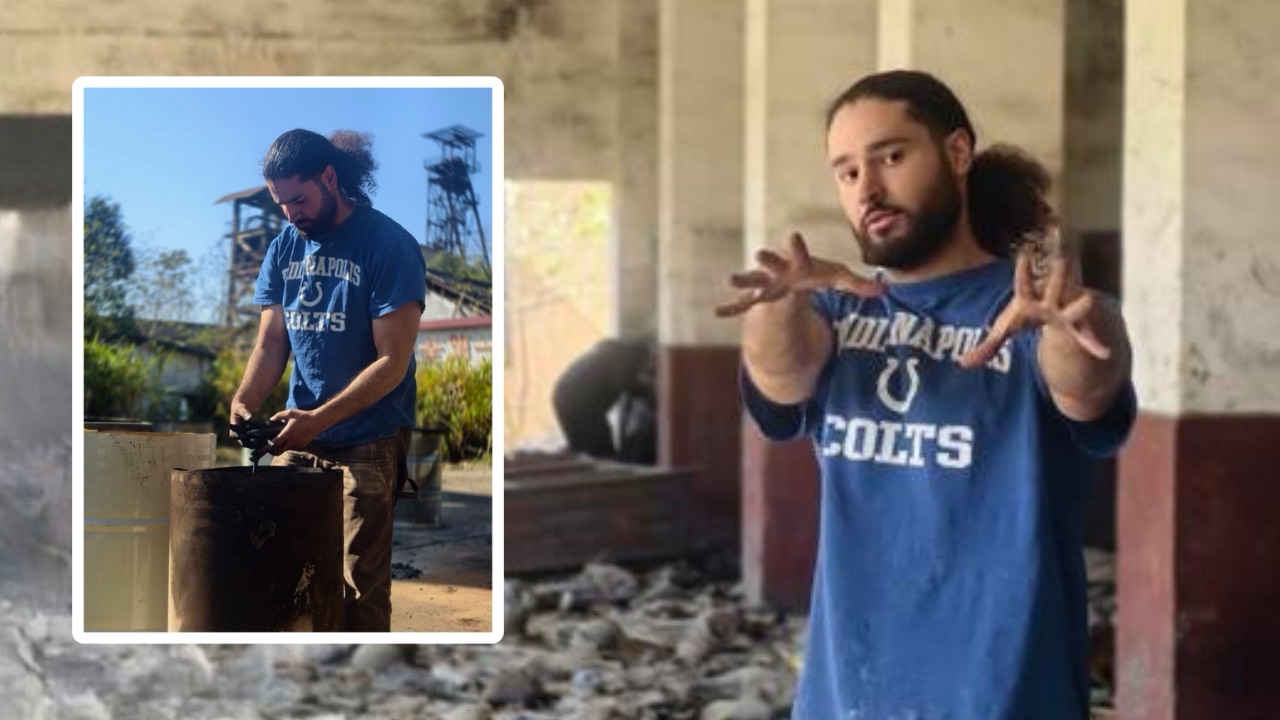
The Avignon Higher School of Art (ESAA) and Chinese counterparts have undertaken the revitalization of Meitanba, a former coal-mining town in Ningxiang, Hunan province, China. This initiative focuses on the Wumuchong International Art Zone, a project launched to transform the region’s industrial legacy into a sustainable cultural center. By integrating artistic vision with ecological engineering, the partnership aims to preserve the historical narrative of the site while addressing the environmental degradation caused by decades of mining activity.
The Meitanba restoration was challenged with managing the dual necessity of heritage preservation and environmental remediation. The site, marked by abandoned industrial structures and waste materials, required a strategy that could mitigate pollution without erasing the town’s history. Conventional restoration methods often strip away the industrial character or fail to address underlying soil and waste contamination, presenting a complex hurdle for the project planners who sought to maintain the authentic materiality of the mine.
To resolve this, the French delegation introduced biocharBiochar is a carbon-rich material created from biomass decomposition in low-oxygen conditions. It has important applications in environmental remediation, soil improvement, agriculture, carbon sequestration, energy storage, and sustainable materials, promoting efficiency and reducing waste in various contexts while addressing climate change challenges. More technology as a central component of the restoration framework. The team processes abandoned organic materials and waste found on-site, reducing local pollution by stabilizing volatile compounds and converting waste into stable carbon. The resulting biochar serves a twofold purpose: it acts as a soil amendmentA soil amendment is any material added to the soil to enhance its physical or chemical properties, improving its suitability for plant growth. Biochar is considered a soil amendment as it can improve soil structure, water retention, nutrient availability, and microbial activity. More to rehabilitate the land for agriculture and provides raw material for artistic endeavors. Notably, the project team also synthesized “Meitanba Black,” a pigment derived from recycled coal dust, further integrating the site’s resources into its new artistic identity.
The outcomes of this initiative are visible in the ongoing restoration of nine historical buildings, with a roadmap to rehabilitate two to three structures annually. The successful application of biochar technology has not only improved the local ecological footprint but also established the Wumuchong International Art Zone as a model for eco-friendly development. By attracting international artists for residencies, the project fosters a cross-cultural exchange that is deeply rooted in the physical and historical reality of the location. For the biochar industry, this project underscores the material’s versatility, demonstrating its value in cultural heritage projects where environmental remediation and creative application can proceed hand in hand.






Leave a Reply