
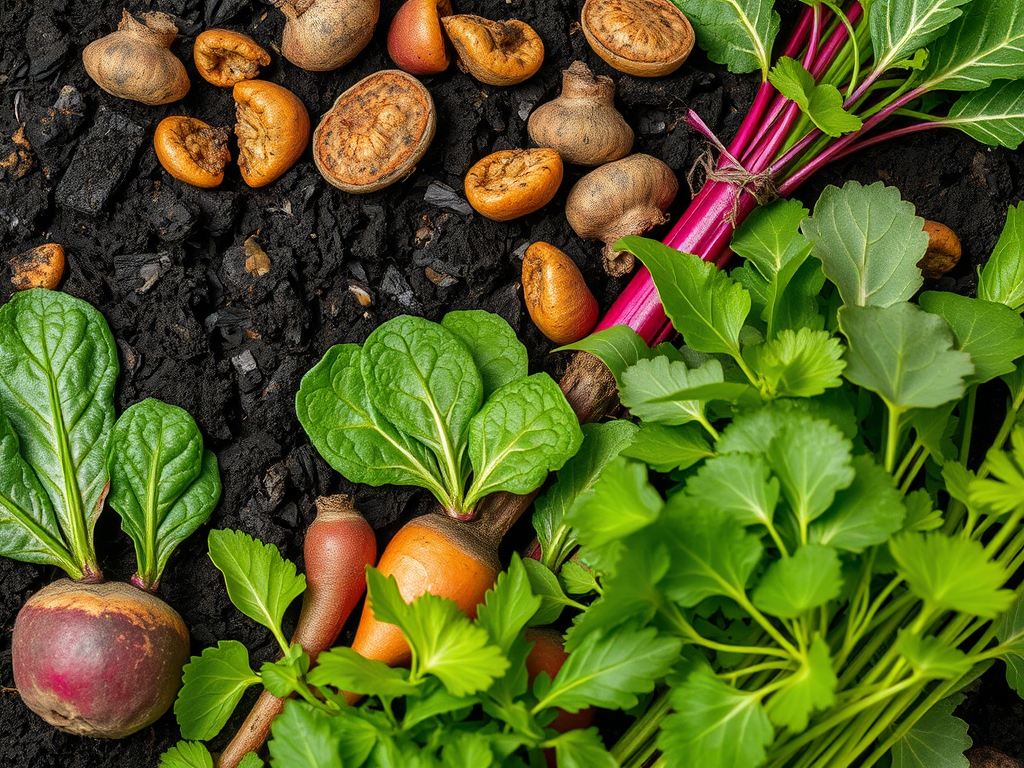
Hussain et al., investigated the potential of biocharBiochar is a carbon-rich material created from biomass decomposition in low-oxygen conditions. It has important applications in environmental remediation, soil improvement, agriculture, carbon sequestration, energy storage, and sustainable materials, promoting efficiency and reducing waste in various contexts while addressing climate change challenges. More derived from apricot shells to enhance vegetable production in Kargil, a region with extreme climatic conditions. Their findings, published in Scientific Reports, highlight the positive impact of biochar on the growth and yield of spinach, lettuce, root beet, and mustard.
Kargil, located in the Ladakh region of India, faces a unique challenge: the availability of fresh vegetables during the harsh winter months. The researchers addressed this issue by utilizing a readily available waste product – apricot seed shells – to create biochar, a charcoal-like material known to improve soil health and promote plant growth.
The study involved collecting and processing apricot shells, converting them into biochar through pyrolysisPyrolysis is a thermochemical process that converts waste biomass into bio-char, bio-oil, and pyro-gas. It offers significant advantages in waste valorization, turning low-value materials into economically valuable resources. Its versatility allows for tailored products based on operational conditions, presenting itself as a cost-effective and efficient More, and applying the biochar to soil in experimental jars. The growth of four common vegetables – spinach, lettuce, root beet, and mustard – was then monitored and compared to control plants grown without biochar. The results demonstrated a significant increase in the number and size of leaves for spinach, lettuce, and mustard grown with biochar. Spinach exhibited the most dramatic response, with the number of leaves increasing from 7 to 45 upon biochar application. These findings suggest that biochar can effectively enhance vegetable production, even in challenging environments like Kargil.
This research not only addresses the issue of vegetable availability in Kargil but also promotes sustainable waste management by utilizing apricot shells that would otherwise be discarded. The use of biochar aligns with environmentally friendly agricultural practices, offering a potential alternative to synthetic fertilizers.
Source: Hussain, S., Gajbhiye, P., Siddiqui, M. I. H., Sonawane, C., & Dobrotă, D. (2025). Comparative assessment of vegetable yield with and without biochar derived from locally sourced apricot shells. Scientific Reports, 15(1), 6825. https://doi.org/10.1038/s41598-025-88195-x


![Eucalyptus Wood Waste-Derived Biochar Achieves a Ninety-Eight Percent Removal Efficiency for Benzo[ghi]perylene in Vehicle-Wash Wastewater](https://biochartoday.com/wp-content/uploads/2026/10/SCIENCE-BLOGS-2026-2026-10-19T160523.703.jpg)

Leave a Reply