
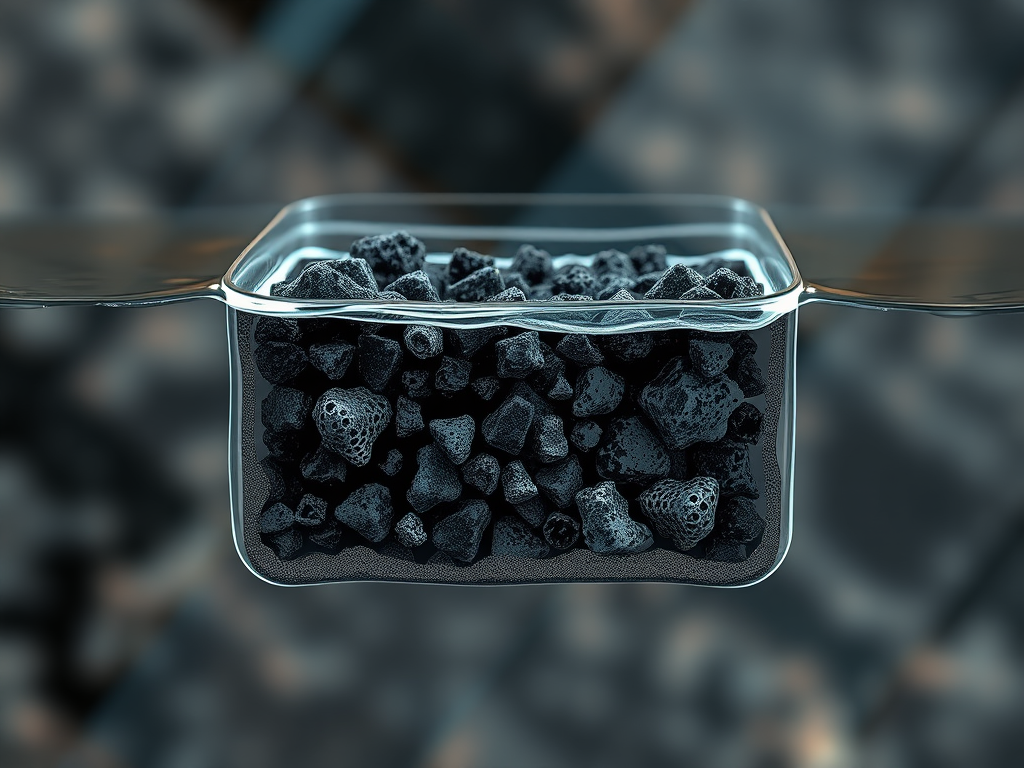
A recent study published in Polish Journal of Environmental Studies by Haihua Li and colleagues examines how biocharBiochar is a carbon-rich material created from biomass decomposition in low-oxygen conditions. It has important applications in environmental remediation, soil improvement, agriculture, carbon sequestration, energy storage, and sustainable materials, promoting efficiency and reducing waste in various contexts while addressing climate change challenges. More, produced from sesame straw and modified with apatite, can effectively remove Pb(II) from wastewater. By employing chlorapatite (BC-Cl) and hydroxyapatite (HBC) modifications, the research investigates adsorption efficiency, mechanisms, and influencing factors.
Biochar is widely recognized for its ability to adsorb pollutants, but its effectiveness in removing heavy metals is often limited by surface properties. To enhance adsorption capacity, the researchers modified biochar through co-impregnation with chlorapatite and hydroxyapatite. These modifications increased the number of active sites, improving lead removal efficiency.
The study’s findings reveal that BC-Cl exhibited the highest Pb(II) removal efficiency, achieving a 99.87% removal rate at an optimal pHpH is a measure of how acidic or alkaline a substance is. A pH of 7 is neutral, while lower pH values indicate acidity and higher values indicate alkalinity. Biochars are normally alkaline and can influence soil pH, often increasing it, which can be beneficial More of 5 and a dosage of 600 mg/L. The presence of phosphate groups in chlorapatite facilitated lead precipitation, enhancing removal efficiency. Several factors influenced adsorption performance. Characterization analyses confirmed successful apatite modification. The introduction of phosphate groups contributed to ion exchange and surface complexation, crucial mechanisms in Pb(II) removal. Compared to unmodified biochar, BC-Cl demonstrated superior performance, making it a promising material for real-world wastewater treatment.
While this study presents a viable method for lead removal, future research should focus on large-scale implementation and regeneration techniques to enhance cost-effectiveness. As industrial activities continue to release heavy metals into water sources, apatite-modified biochar offers a sustainable and efficient strategy for mitigating pollution.
Source: Li, H., Chen, Z., Yu, L., Xiao, B., & Jin, K. (2024). Study on the adsorption characteristics of Pb(II) in water by apatite-modified biochar. Polish Journal of Environmental Studies.




Leave a Reply