
Key Takeaways
- BiocharBiochar is a carbon-rich material created from biomass decomposition in low-oxygen conditions. It has important applications in environmental remediation, soil improvement, agriculture, carbon sequestration, energy storage, and sustainable materials, promoting efficiency and reducing waste in various contexts while addressing climate change challenges. More is a Water Filter: Biochar, made by heating agricultural or woody waste, acts as an environmentally friendly and highly porous water filter to remove toxic heavy metals like copper.
- Farm Waste is Best: Biochar made from agricultural waste (like potato stems or pineapple leaves) is significantly better at trapping copper, with performance metrics (up to 61.8 mg/g capacity) up to 40 times higher than simple wood biochar (1.5 mg/g capacity).
- Multiple Trapping Tricks: Biochar traps copper using four methods: physically attracting it (electrostatic), chemically bonding with it (complexation), swapping it for less harmful ions (ion exchange), and turning it into an insoluble solid (precipitation).
- Sustainable and Reusable: Compared to expensive industrial cleaners, biochar is cost-effective, made from waste materials, and can be chemically treated and reused for multiple cleaning cycles while maintaining high performance.
Water contamination by heavy metals, particularly copper (Cu), remains a critical global issue due to its industrial applications and potential toxicity. Traditional treatment methods, such as ion exchange and chemical precipitation, are often hindered by high operational costs, inefficiency at low pollutant concentrations, and the generation of toxic sludge. In recent years, biochar has emerged as a cost-effective and sustainable alternative for heavy metal remediation. A comprehensive review by Dilton Ashwin Mascarenhas, Gautham P. Jeppu, and S.V.S.R Krishna Bandaru in the KRONIKA JOURNAL in 2025 critically analyzes the current advancements and future potential of biochar for copper removal from aqueous solutions. The performance of biochar, measured by adsorption capacity (mg/g) and removal efficiency (%), is heavily dependent on the original feedstockFeedstock refers to the raw organic material used to produce biochar. This can include a wide range of materials, such as wood chips, agricultural residues, and animal manure. More material and the pyrolysisPyrolysis is a thermochemical process that converts waste biomass into bio-char, bio-oil, and pyro-gas. It offers significant advantages in waste valorization, turning low-value materials into economically valuable resources. Its versatility allows for tailored products based on operational conditions, presenting itself as a cost-effective and efficient More temperature. The review highlights a significant difference in copper adsorption performance between agricultural (agri) biochars and woody biochars.
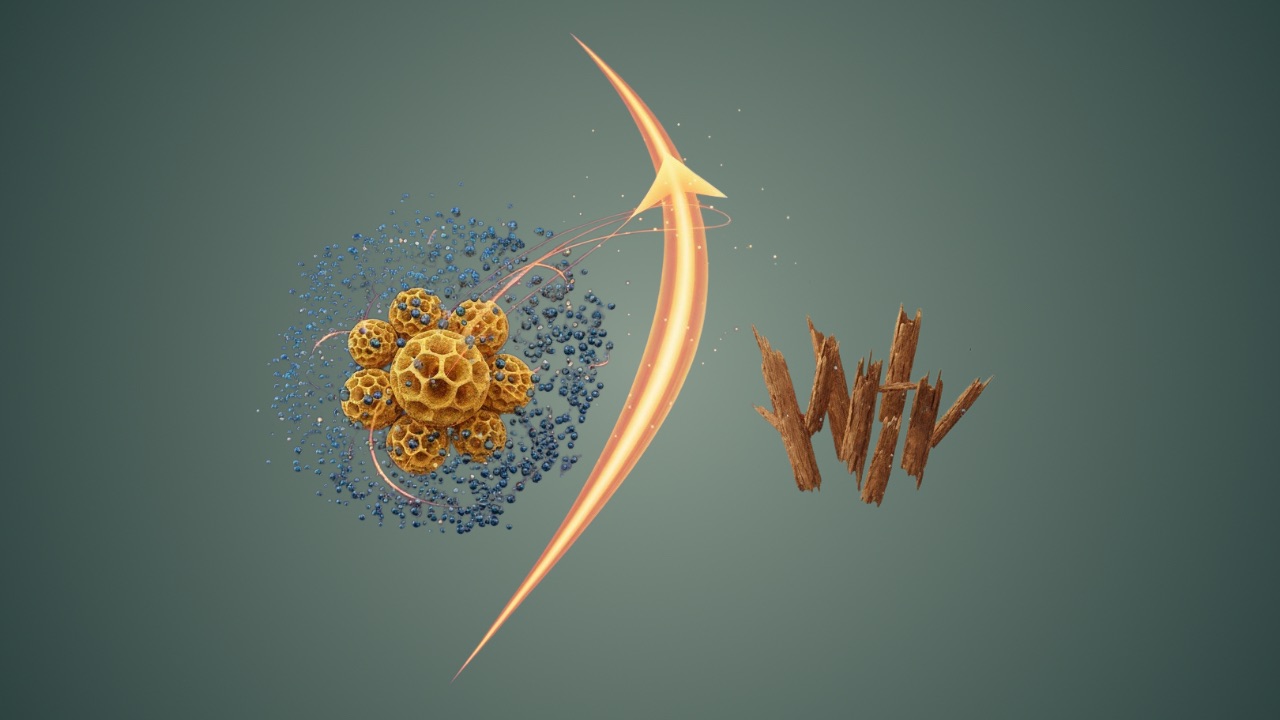
Agricultural biochars, produced from feedstocks such as potato stems, pineapple leaves, and corn straw, routinely exhibit higher maximum Cu(II) adsorption capacities. Capacities for these materials range from approximately 12.5 mg/g for corn straw to 61.8 mg/g for potato stem biochar and 60.7 mg/g for pineapple leaf biochar. In sharp contrast, unmodified woody biochars (e.g., hardwood and softwood) generally show much lower adsorption capabilities, with reported values of 6.8 mg/g for hardwood and 1.5–4.4 mg/g for softwood and Jarrah biochars. This demonstrates up to a 40-fold difference in capacity between the best agricultural and woody sources.
This superior performance is attributed to the physicochemical properties of agricultural biochars, which often possess greater porosityPorosity of biochar is a key factor in its effectiveness as a soil amendment and its ability to retain water and nutrients. Biochar’s porosity is influenced by feedstock type and pyrolysis temperature, and it plays a crucial role in microbial activity and overall soil health. Biochar More, larger specific surface areas, and more abundant surface functional groups (such as carboxyl and hydroxyl) essential for Cu(II) adsorption. Consequently, agricultural biochars consistently surpass woody biochars in terms of both adsorption capacity and removal efficiency for copper, making them a more economically viable choice for water cleanup applications. For example, agricultural biochars have demonstrated removal efficiencies exceeding 60%, with certain optimized materials achieving up to 87% even after multiple use cycles.
Biochar removes copper through several complementary mechanisms:-Ion Exchange: This is particularly effective at lower copper concentrations, where Cu2+ ions displace loosely bound cations (Ca2+, K+, Mg2+) from negatively charged sites on the biochar surface, primarily arising from oxygen-containing functional groups. Surface Complexation: At moderate to high concentrations, functional groups like carboxyl (-COOH), hydroxyl (-OH), amine (-NH2), and phosphate groups interact directly with Cu2+ to form strong, stable inner-sphere complexes. This is a chemisorption process that is more selective than simple electrostatic attraction. Electrostatic Attraction: When the water pHpH is a measure of how acidic or alkaline a substance is. A pH of 7 is neutral, while lower pH values indicate acidity and higher values indicate alkalinity. Biochars are normally alkaline and can influence soil pH, often increasing it, which can be beneficial More is above the biochar’s point of zero charge, the surface carries a negative charge, physically attracting the positively charged Cu2+ ions. This quick, reversible process is vital in the initial phase of adsorption. Precipitation Reactions: Under alkaline conditions, Cu2+ reacts with carbonate or hydroxyl groups on the biochar to form solid, less soluble compounds, such as copper hydroxide or copper carbonate, which can then be easily removed.
Biochar properties, like the amount of surface functional groups, are greatly influenced by the pyrolysis temperature. Low-temperature biochars (≤500∘C) maintain higher levels of oxygen-containing functional groups, favoring ion exchange and complexation, while high-temperature biochars (≥700∘C) have a higher surface area but rely more on mineral precipitation.
Optimized or modified biochars dramatically enhance copper removal efficiency, with some achieving adsorption capacities over 150 mg/g and removal efficiencies up to 100%. For instance, magnetic-biochar/alginate beads, a type of modification, showed adsorption capabilities up to 234.1 mg/g and demonstrated strong reusability over multiple cycles. Moreover, biochar is a sustainable alternative to conventional adsorbents. The maximum adsorption capacity of biochar (35–265 mg/g) is competitive with, or superior to, commercial adsorbents like activated carbonActivated carbon is a form of carbon that has been processed to create a vast network of tiny pores, increasing its surface area significantly. This extensive surface area makes activated carbon exceptionally effective at trapping and holding impurities, like a molecular sponge. It is commonly More (4–898 mg/g) and zeolite (163 mg/g). Biochar’s low production cost and regeneration potential further bolster its role as an economically benign solution for industrial wastewater management.
Source: Mascarenhas, D. A., Jeppu, G. P., & Bandaru, S. V. S. R. K. (2025). Biochar for copper removal from aqueous solutions: A comprehensive review. KRONIKA JOURNAL, 25(9), 12–47. Sources


Leave a Reply