
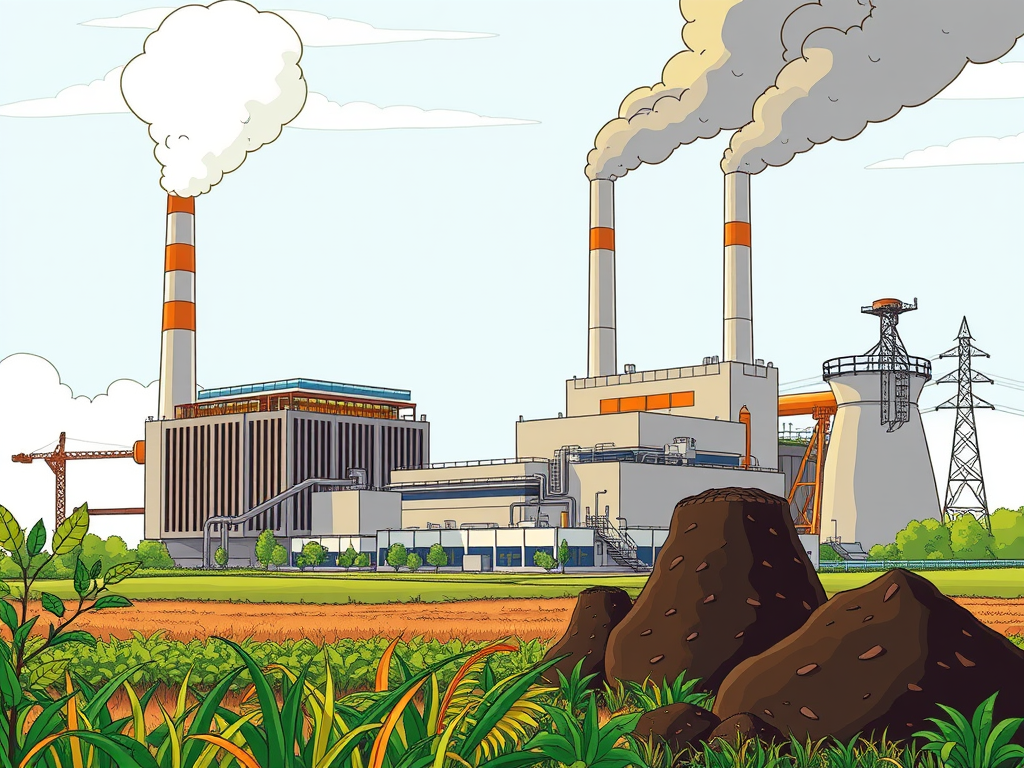
A significant shift is underway in India’s energy landscape, with implications that reach beyond its borders and into the burgeoning biocharBiochar is a carbon-rich material created from biomass decomposition in low-oxygen conditions. It has important applications in environmental remediation, soil improvement, agriculture, carbon sequestration, energy storage, and sustainable materials, promoting efficiency and reducing waste in various contexts while addressing climate change challenges. More industry. The Commission for Air Quality Management (CAQM) reports that 71 thermal power plants (TPPs) across India have now successfully adopted biomassBiomass is a complex biological organic or non-organic solid product derived from living or recently living organism and available naturally. Various types of wastes such as animal manure, waste paper, sludge and many industrial wastes are also treated as biomass because like natural biomass these More co-firing. This initiative, which began with a mandate for 11 power plants in the National Capital Region (NCR) to co-fire 5-10% biomass with coal, has rapidly expanded nationwide, signalling a strong commitment to clean energy and pollution reduction.
The numbers are impressive: biomass co-firing has more than doubled, from 11.7 lakh metric tonnes in FY24 to 21.49 lakh metric tonnes by mid-FY26. This has been a key factor in improving air quality, with 1,650 industrial units alleged to be using cleaner fuels in Delhi, leading to Delhi-NCR recording its second-best average air quality index (AQI) in six years. By utilizing agricultural residues, this policy not only curbs emissions but also provides a sustainable solution for stubble burning, a major source of air pollution.
For the biochar industry, this development is a powerful foundation. While the primary goal of co-firing is energy generation and pollution control, the massive infrastructure and supply chains being built to process and transport biomass pellets could be a huge boon for biochar producers. The increased demand for agricultural waste as a feedstockFeedstock refers to the raw organic material used to produce biochar. This can include a wide range of materials, such as wood chips, agricultural residues, and animal manure. More could lead to a more stable and competitive market, while the establishment of efficient pellet manufacturing facilities creates a blueprint for scaling up biochar production.
As governments and industries increasingly look for ways to sequester carbon and improve soil health, the bioenergy sector’s progress in creating robust biomass supply chains lays a critical foundation. It demonstrates a scalable model for how bio-based materials can be integrated into large-scale industrial processes, paving the way for biochar to become a more mainstream agricultural and environmental tool.
SOURCE: 71 Thermal Power Plants Across India Have Adopted Biomass Co-Firing: CAQM




Leave a Reply