
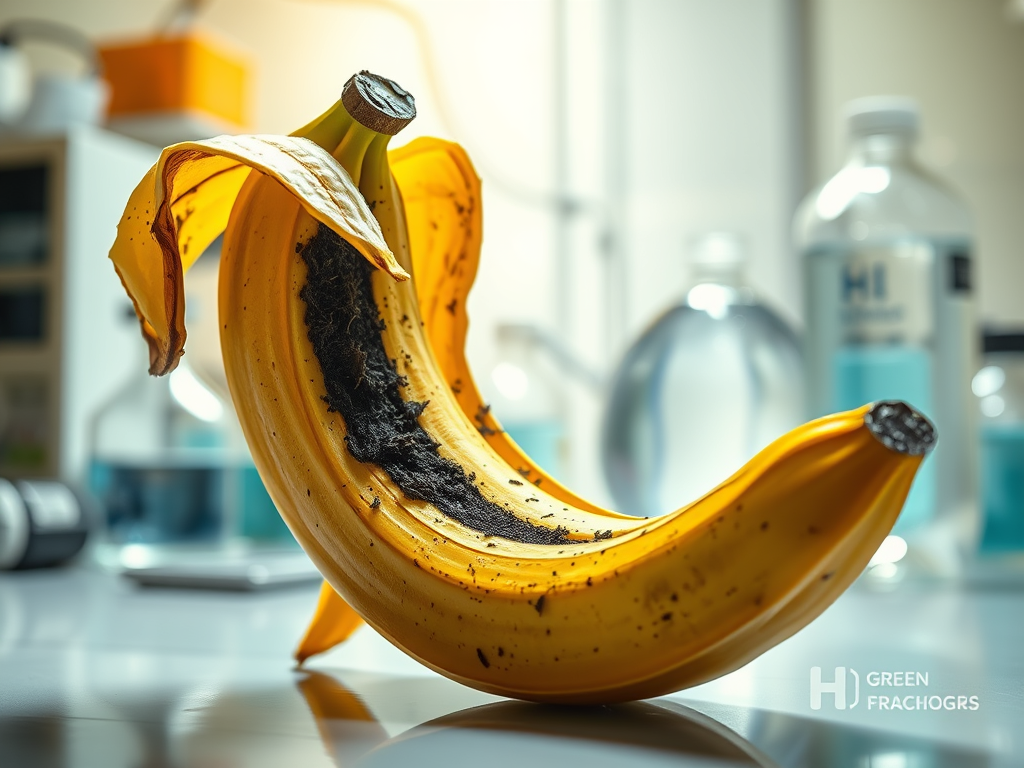
The global push for decarbonization and sustainable energy has brought green hydrogen production to the forefront of scientific research. Green hydrogen, produced through water splitting using renewable energy, offers a carbon-free alternative to fossil fuels. However, this process faces a major hurdle: the oxygen evolution reaction (OER), which is slow and requires a significant energy input. Conventional catalysts like IrO2 are effective but are costly, scarce, and environmentally damaging to produce. In a groundbreaking study published in the International Journal of Hydrogen Energy, Silvia Escudero-Curiel and her colleagues introduce a novel solution: a metal-free, sulfur- and nitrogen-doped biocharBiochar is a carbon-rich material created from biomass decomposition in low-oxygen conditions. It has important applications in environmental remediation, soil improvement, agriculture, carbon sequestration, energy storage, and sustainable materials, promoting efficiency and reducing waste in various contexts while addressing climate change challenges. More electrocatalyst derived from banana peels. Their research not only presents a highly efficient alternative to precious metals but also champions the use of agricultural waste in a circular economy model.
The research focused on valorizing banana peel, an abundant agricultural residue, into a biochar-based catalyst. The team developed an eco-electrocatalyst by doping banana peel biochar with thiourea, a nitrogen and sulfur source, using a green, one-pot synthesis method. The optimal catalyst, named 5%-S/N@BC, was found to significantly surpass the performance of commercial IrO2 and many other reported carbon-based electrodes. This catalyst achieved overpotentials of 290 mV at a current density of 10 mA cm−2, outperforming the 320 mV needed for commercial IrO2 to reach the same current density. The exceptional performance is attributed to the synergistic effect of nitrogen and sulfur co-doping, which creates structural defects and enhances electrical conductivity.
To understand why 5%-S/N@BC performed so well, the researchers conducted extensive characterization. Raman spectroscopy revealed that the doping process successfully introduced defects into the carbon structure, with the 5%-S/N@BC sample exhibiting the highest defect ratio (ID/IG) of 1.12. These defects are crucial for creating active sites that facilitate the OER. Scanning Electron Microscopy (SEM) images showed that the thiourea treatment led to a more porous material with a uniform distribution of pores, which enhances the electrochemical active surface area (ECSA). The 5%-S/N@BC catalyst achieved a maximum ECSA of 78.5 cm2, a significant increase compared to the raw banana peel and other biochar samples.
Electrochemical impedance spectroscopy (EIS) further confirmed the catalyst’s superiority. The 5%-S/N@BC exhibited the smallest semicircular radius on the Nyquist plot, indicating the lowest charge transfer resistance and fastest electron transfer. The Tafel slope, a measure of reaction kinetics, was 40.4 mV dec−1 for 5%-S/N@BC, a value superior to commercial IrO2 (76 mV dec−1) and RuO2 (59 mV dec−1). This demonstrates the rapid kinetics and high electrocatalytic activity of the banana peel-derived catalyst. A comparative test with a nitrogen-only doped sample (5%-N@BC) showed a significant drop in performance, proving the critical contribution of sulfur to the doping mechanism.The study also demonstrated the catalyst’s stability and bifunctional potential. The 5%-S/N@BC maintained its overpotential with less than a 2% increase over a continuous 30-hour period at 10 mA cm−2. The catalyst also proved to be effective for overall water splitting, requiring a low cell voltage of 1.58 V to reach 10 mA cm−2, which is more energy-efficient than other reported systems. While its performance in acidic environments was not as strong, this catalyst shows immense promise for large-scale hydrogen production, which is primarily carried out in alkaline media. This pioneering research sets a new standard for sustainable catalyst design by transforming an agricultural waste product into a high-performance, metal-free electrocatalyst for green energy applications.
Source: Escudero-Curiel, S., Díez, A.M., Pazos, M., Sanromán, A., 2025. Valorized S/N-doped banana peel biochar as a sustainable OER electrocatalyst for green energy applications. International Journal of Hydrogen Energy 163, 150728.


Leave a Reply