
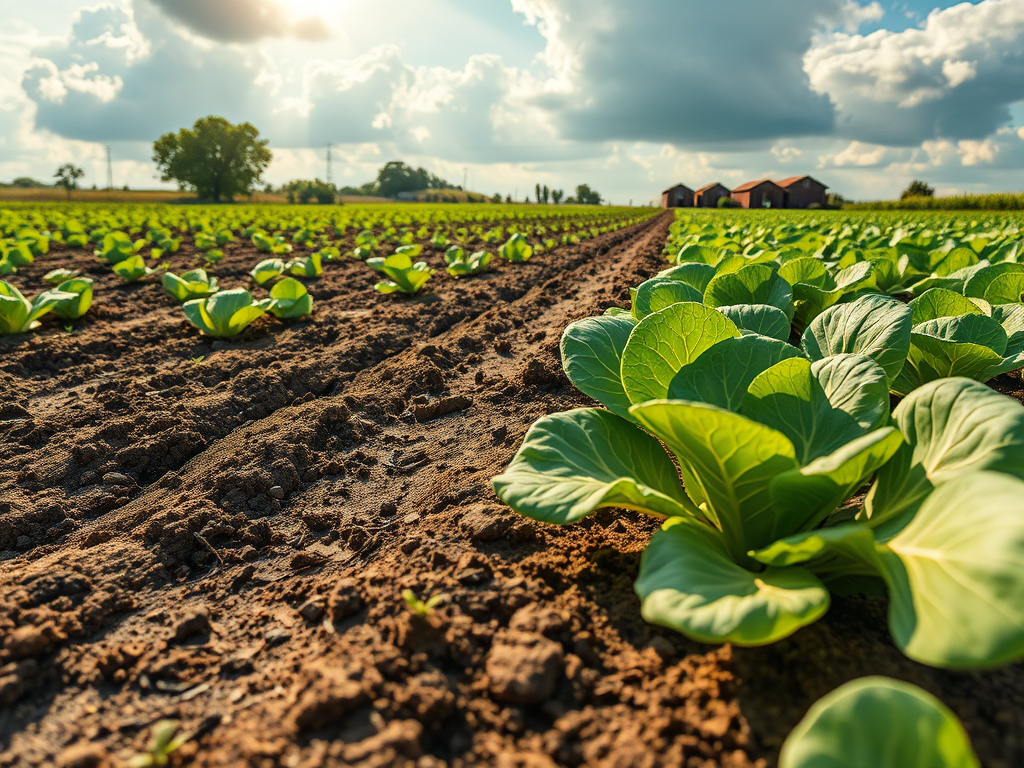
In a study published in Scientific Reports, a team of researchers led by Liyuan Mu and Hongyin Zhou investigated the effectiveness of modified biocharBiochar is a carbon-rich material created from biomass decomposition in low-oxygen conditions. It has important applications in environmental remediation, soil improvement, agriculture, carbon sequestration, energy storage, and sustainable materials, promoting efficiency and reducing waste in various contexts while addressing climate change challenges. More in remediating cadmium-contaminated soil. The research, which included a pot experiment with Chinese cabbage, compared unmodified biochar with biochar modified by potassium permanganate and phosphoric acid. The findings show that potassium permanganate-modified biochar is highly effective at reducing cadmium uptake in plants, offering a promising solution for areas affected by heavy metal pollution.
Heavy metal pollution, particularly from cadmium and lead, is a severe problem in agricultural soils, especially in mining-affected regions. China, as one of the world’s major mining countries, has a vast area affected by such contamination. This pollution poses significant risks to crop safety and the environment, and it is a major challenge for sustainable agriculture and human health.
Biochar is known for its ability to immobilize heavy metals through various mechanisms like adsorption, precipitation, and complexation. However, its effectiveness can vary depending on the raw material and the complexity of the contaminated environment. Modifying biochar with other materials is a key strategy to enhance its remediation capabilities. Previous studies have shown that biochar modified with potassium permanganate or phosphoric acid has good adsorption properties for cadmium.
The study evaluated four treatments: a control (CK), unmodified biochar (T1), potassium permanganate-modified biochar (T2), and phosphoric acid-modified biochar (T3). The researchers found that both T1 and T2 treatments significantly improved the soil pHpH is a measure of how acidic or alkaline a substance is. A pH of 7 is neutral, while lower pH values indicate acidity and higher values indicate alkalinity. Biochars are normally alkaline and can influence soil pH, often increasing it, which can be beneficial More and organic matter content in the contaminated soil. Specifically, the T2 treatment increased the soil pH from 6.3 to 6.7 and the organic matter content from 29.3 g/kg to 34.3 g/kg.
The most significant results were seen in the reduction of cadmium levels. Compared to the control group, the T2 treatment with potassium permanganate-modified biochar reduced the available cadmium content in the soil by 43.4%. It also had a dramatic effect on the Chinese cabbage itself, reducing the cadmium content in the edible parts by 66.4%. All treatments managed to keep the cadmium levels in the edible parts of the cabbage below the Chinese food safety standard limit of 0.2 mg/kg.
The study also looked at how biochar affected cadmium uptake and movement within the plant. The T2 treatment was the most effective, reducing the cadmium accumulation coefficient in the edible parts by 45.5% and in the roots by 40%. It also decreased the transport coefficient, which measures the movement of heavy metals from the roots to the edible parts, by 33.9%. These results indicate that potassium permanganate-modified biochar is not only effective at immobilizing cadmium in the soil but also at inhibiting its transfer into the plant.
The success of potassium permanganate-modified biochar can be attributed to its enhanced physical and chemical properties. The modification process creates a more complex pore structure and increases the specific surface area, which was measured at 114.01 m2/g for T2 compared to 92.86 m2/g for the unmodified biochar (T1). This modification also introduces more oxygen-containing functional groups and nano-scale manganese oxide particles, which can chemically adsorb and form stable complexes with cadmium ions. While phosphoric acid-modified biochar (T3) also showed a passivation effect, it was less effective, possibly because its binding sites are prone to competition from other ions in the soil.
The findings from this study provide a strong scientific basis for using modified biochar to safely produce vegetables in heavy metal-contaminated soils. While the study has some limitations, such as a lack of multi-gradient dose-effect data and long-term stability information, it highlights the potential of this technology. Future research will focus on optimizing application rates, conducting long-term studies, and evaluating the cost-effectiveness and scalability of this remediation method.
Source: Mu, L., Zhou, H., Lu, Z., Wang, J., Sun, S., Li, A., Zhang, N., & Bao, L. (2025). Passivation effect of modified biochar on cadmium in mining-contaminated soil. Scientific Reports, 15(30402). DOI: 10.1038/s41598-025-15860-6. Sources




Leave a Reply