
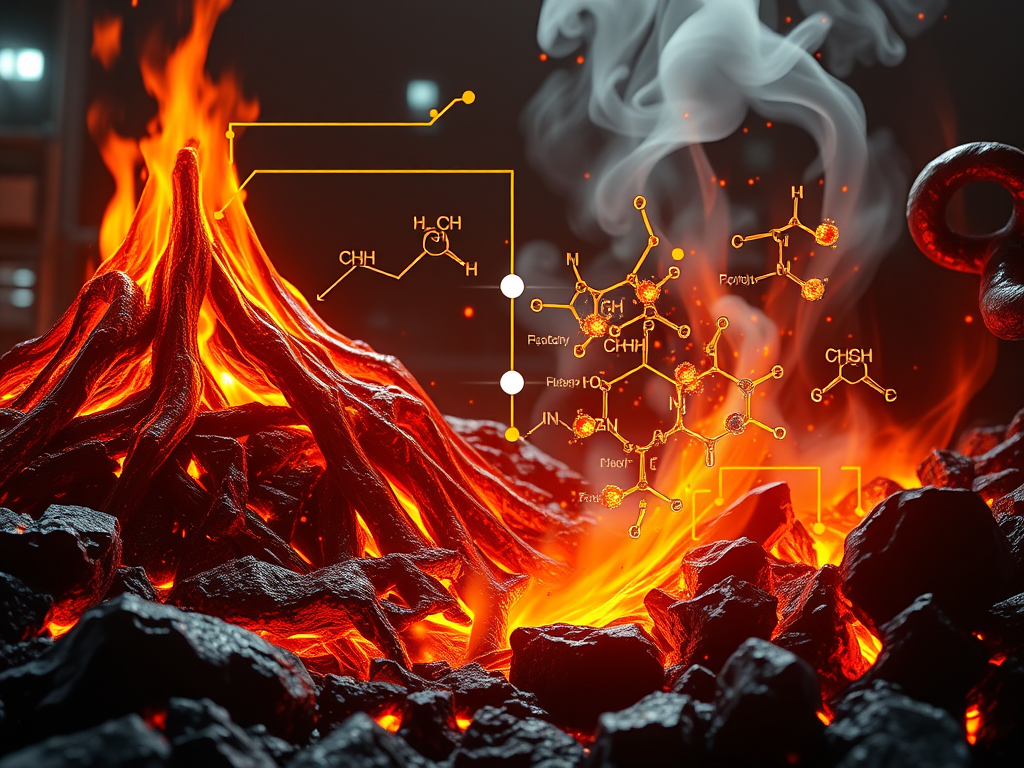
A critical review published in the journal BiocharBiochar is a carbon-rich material created from biomass decomposition in low-oxygen conditions. It has important applications in environmental remediation, soil improvement, agriculture, carbon sequestration, energy storage, and sustainable materials, promoting efficiency and reducing waste in various contexts while addressing climate change challenges. More by Yuxuan Sun, Jixiu Jia, Lili Huo, and others, provides a comprehensive analysis of the innovative strategy of converting bio-tar, a problematic byproduct of biomassBiomass is a complex biological organic or non-organic solid product derived from living or recently living organism and available naturally. Various types of wastes such as animal manure, waste paper, sludge and many industrial wastes are also treated as biomass because like natural biomass these More pyrolysisPyrolysis is a thermochemical process that converts waste biomass into bio-char, bio-oil, and pyro-gas. It offers significant advantages in waste valorization, turning low-value materials into economically valuable resources. Its versatility allows for tailored products based on operational conditions, presenting itself as a cost-effective and efficient More, into high-performance bio-carbon. The review establishes a theoretical and technical framework for this process, highlighting its potential to address the challenge of bio-tar formation while simultaneously developing advanced carbon materials. These findings offer a clear pathway for valorizing a renewable resource and are supported by a techno-economic assessment showing that processing 1 kg of bio-tar could yield a profit of up to USD 2.38.
Biomass pyrolysis is a key technology in renewable energy development, but the persistent formation of bio-tar remains a critical challenge. Bio-tar, a liquid byproduct, typically makes up 10% to 20% of the pyrolysis yield and is a complex mixture of aromatic and aliphatic compounds. Its composition leads to pipeline clogging during transport and its direct emission poses significant environmental and health risks. Current treatment strategies, including non-catalytic thermal cracking and catalytic reforming, have drawbacks such as high energy consumption and catalyst deactivation due to coking. The innovative solution of converting bio-tar into bio-carbon through polymerization presents a promising and sustainable pathway for technological advancement. This approach uses the condensed bio-tar as feedstockFeedstock refers to the raw organic material used to produce biochar. This can include a wide range of materials, such as wood chips, agricultural residues, and animal manure. More for thermal polymerization into bio-carbon, a material that exhibits superior application potential due to its higher carbon and lower ashAsh is the non-combustible inorganic residue that remains after organic matter, like wood or biomass, is completely burned. It consists mainly of minerals and is different from biochar, which is produced through incomplete combustion. Ash Ash is the residue that remains after the complete More content compared to conventional biochar.
The polymerization process is driven by key components within the bio-tar. Oxygenated compounds containing carbonyl groups and furan rings are identified as critical precursors, with their unsaturated oxygen-containing functional groups facilitating bond cleavage and recombination. For example, the study highlights that furfural, a common furan, is a highly effective polymerization agent. As the temperature of the pyrolysis reaction increases, bio-tar components gradually transform from unstable small-molecule compounds into more stable long-chain hydrocarbons and polycyclic aromatic hydrocarbons, eventually polymerizing into bio-carbon.
The properties and yield of the final bio-carbon can be significantly modulated by regulating the polymerization process through reaction conditions and additives. While higher temperatures can increase the carbon content and graphitization of bio-carbon, they also cause some components to escape, thereby reducing the overall yield. For instance, one study showed that increasing the reaction temperature from 200°C to 500°C decreased the bio-carbon yield by over 49%. Conversely, a lower heating rate promotes polymerization and can increase bio-carbon yield by more than 30%. To overcome the limitations of low yield and to improve the physicochemical characteristics of the resulting bio-carbon, researchers have developed modification strategies that involve introducing additives such as chemical activators and heteroatom dopants. These additives help improve the material’s pore structure and functional groups, which are essential for high-value applications. For example, one method using crab shells as a template and KOH as an activator produced porous bio-carbon with a high specific surface area of 2489.62 m2g−1.
Bio-carbon produced through this process has promising applications in several high-value fields. As an adsorbent, its rich pore structure and functional groups allow it to purify polluted water and soil. In one study, N/S dual-doped porous bio-carbon prepared from bio-tar achieved a CO2 adsorption performance of 2.21 mmol g−1 at 0°C. As an electrode material for energy storage, bio-carbon’s low ash content and highly-developed pore structure make it ideal for supercapacitors. One such material showed a specific capacitance of 351 F g−1 at a current density of 0.5 A g−1. Bio-carbon also serves as a fuel, with its low nitrogen and sulfur content significantly reducing harmful emissions. One process yielded a bio-coal with a mass energy density of 28.2 MJ kg−1, a combustion performance similar to commercial coal. This could result in an additional economic benefit of USD 2.4 billion by 2030, based on a projected 14% reduction in China’s coal consumption.
Source: Sun, Y., Jia, J., Huo, L., Zhang, X., Zhao, L., Liu, Z., Zhao, Y., & Yao, Z. (2025). Preparation of bio-carbon by polymerization of bio-tar: a critical review on mechanisms, processes, and applications. Biochar, 7(90), 1–19.


Leave a Reply