
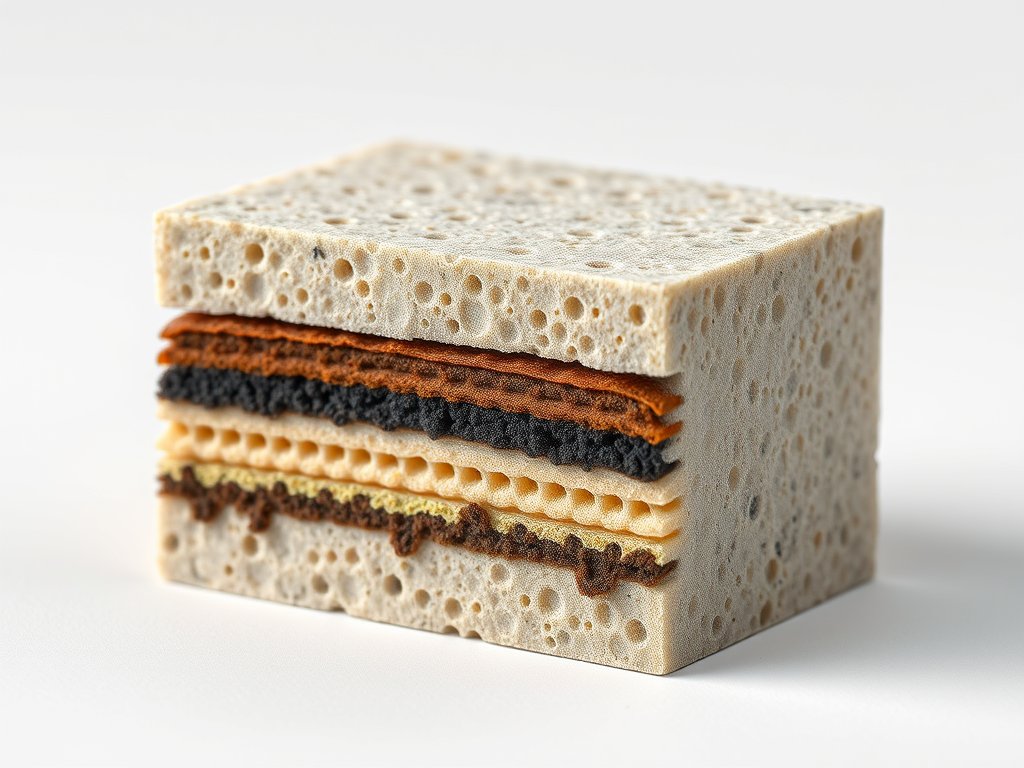
The rising tide of plastic waste and environmental pollution has driven a search for sustainable alternatives to traditional petroleum-based polymers. A promising solution lies in biopolymers, such as polyhydroxyalkanoate (PHA), which are naturally derived and fully biodegradable. A new study published in the journal Materials Advances by researchers Nectarios Vidakis, Nikolaos Michailidis, Dimitrios Kalderis, and their team explores how to improve the performance of PHA for modern manufacturing. By combining PHA with biocharBiochar is a carbon-rich material created from biomass decomposition in low-oxygen conditions. It has important applications in environmental remediation, soil improvement, agriculture, carbon sequestration, energy storage, and sustainable materials, promoting efficiency and reducing waste in various contexts while addressing climate change challenges. More derived from agricultural residues, the researchers have created an eco-friendly composite that not only retains its biodegradability but also demonstrates significantly improved mechanical and structural properties.
The research addresses several challenges associated with using PHA in additive manufacturing, specifically its inherent brittleness and potential printability issues. The team created six different composites with biochar concentrations ranging from 0.0 to 2.5 wt% and fabricated them into 3D-printed specimens using material extrusion (MEX) additive manufacturing. This approach allowed them to identify optimal biochar ratios that enhance the material’s performance. The findings suggest that with the right combination, these bio-originated composites could become a revolutionary replacement for environmentally harmful, industrially produced polymers in applications where sustainability is a key requirement.
The study’s most compelling results highlight how small amounts of biochar can drastically improve the composite’s mechanical strength and toughness. The PHA/0.5 wt% biochar composite showed enhanced performance in several key areas. Its tensile toughness increased by an impressive 17.7% compared to pure PHA, while its bending strength saw a 15.3% increase, reaching 32.8 MPa. The Charpy impact strength also improved by 1.9% at this concentration. These improvements are crucial for creating parts that are more resilient and durable in their final applications.
For other critical metrics, the PHA/1.0 wt% biochar composite proved to be the most effective. This specific formulation led to a 15.3% increase in tensile strength, achieving 22.1 MPa, and a substantial 25.4% increase in Young’s modulus, reaching 131.5 MPa. The Young’s modulus is a measure of stiffness, and this significant increase indicates that the biochar acts as an effective reinforcing agent, making the material stiffer and more rigid under tensile load.
Beyond mechanical properties, the research also yielded important insights into the structural quality of the 3D-printed parts. Micro-computed tomography (μ-CT) analysis showed that the PHA/1.0 wt% biochar composite achieved an 11.2% better dimensional accuracy and a 23.3% lower porosityPorosity of biochar is a key factor in its effectiveness as a soil amendment and its ability to retain water and nutrients. Biochar’s porosity is influenced by feedstock type and pyrolysis temperature, and it plays a crucial role in microbial activity and overall soil health. Biochar More compared to the pure PHA samples. The reduction in porosity is a significant finding, as it directly correlates with the overall quality of the 3D-printed structure. This improvement in structural integrity demonstrates that biochar not only reinforces the material but also enhances the 3D printing process itself by reducing the formation of voids.
The study also compared the PHA/biochar composites to other common 3D printing materials, such as polylactic acid (PLA), polypropylene (PP), and high-density polyethylene (HDPE), when reinforced with the same type of biochar. While the reinforcing effect was higher for some of the conventional, non-degradable polymers, the results for PHA were similar to those for PLA. This is a noteworthy outcome, as it proves that a naturally sourced biopolymer can achieve comparable performance to a widely used plastic. The research confirms that biochar acts as a powerful, eco-friendly reinforcing agent for polymers. The findings collectively suggest that the PHA/biochar composites with 0.5 and 1.0 wt% filler displayed the best overall performance and hold strong potential for a variety of applications, from packaging and agriculture to prototyping and environmental monitoring.
Source: Vidakis, N., Michailidis, N., Kalderis, D., Argyros, A., Gkagkanatsiou, K., Spyridaki, M., Valsamos, I., Papadakis, V., & Petousis, M. (2025). Biodegradable polyhydroxyalkanoate (PHA) composites with biochar ratios optimized for the additive manufacturing method of material extrusion: engineering, rheological, and morphological insights. Materials Advances, 10.1039/d5ma00266d.




Leave a Reply