
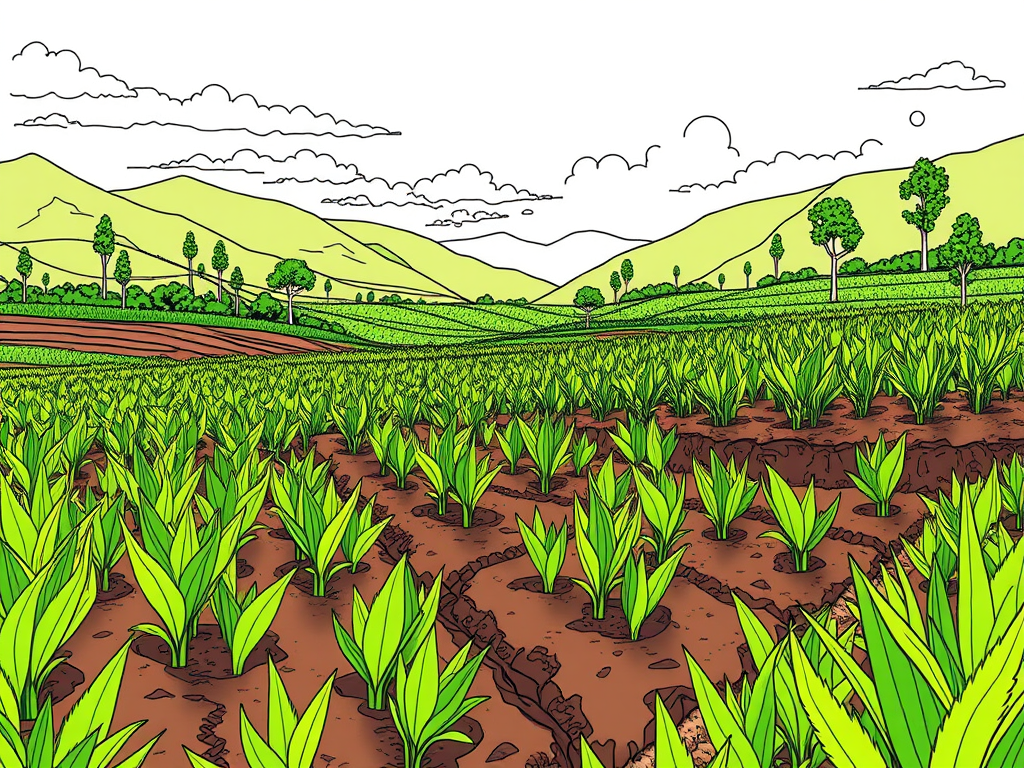
A study published in the journal Agronomy by Jia, Sun, Zhang, Yang, Pang, Siddique, and Qu explores the use of biocharBiochar is a carbon-rich material created from biomass decomposition in low-oxygen conditions. It has important applications in environmental remediation, soil improvement, agriculture, carbon sequestration, energy storage, and sustainable materials, promoting efficiency and reducing waste in various contexts while addressing climate change challenges. More derived from straw to reduce greenhouse gas (GHG) emissions from agricultural soils in arid regions of Northwest China. The research highlights the potential of biochar to improve soil health and promote more sustainable farming practices.
The study focused on a two-year field experiment where researchers tested different application rates of straw biochar (15, 30, and 45 tons per hectare) and compared them to a control group with no biochar. Biochar, produced by heating straw in a low-oxygen environment, was evaluated for its effects on soil fertility, GHG emissions, crop yields, carbon footprint, and overall carbon balance.
The research demonstrated several important effects of straw biochar on agricultural systems. Firstly, the application of biochar was found to influence the storage of soil organic carbon (SOCS). In the initial year of biochar use (2015), there was a notable increase in SOCS, particularly in the topsoil layer, suggesting a positive impact on carbon sequestration. However, the effects varied with soil depth and time, with deeper layers showing increased carbon storage in the subsequent year (2016). Furthermore, biochar application affected soil fertility.
The study also examined the impact of biochar on greenhouse gas (GHG) emissions from the soil. The application of biochar generally resulted in a reduction in carbon dioxide (CO2) and nitrous oxide (N2O) emissions. However, the highest rate of biochar application (45 tons per hectare) was associated with an increase in methane (CH4) emissions, suggesting that excessive biochar use may have unintended consequences for certain GHG fluxes.
Finally, the research assessed the overall carbon footprint (CF) and net ecosystem carbon budget (NECB) of the agricultural systems with biochar amendments. Biochar application contributed to a decrease in the carbon footprint, indicating a reduction in the total GHG emissions associated with crop production. The net ecosystem carbon budget was also positively influenced by biochar, primarily due to increased net primary production (NPP) and enhanced soil fertility, which supported greater plant growth and carbon absorption.
SOURCE: Jia, Y.; Sun, Y.; Zhang, D.; Yang, W.; Pang, J.; Siddique, K.H.M.; Qu, Z. Mitigation of Greenhouse Gas Emissions Using Straw Biochar in Arid Regions of Northwest China: Evidence from Field Experiments. Agronomy 2025, 15, 1007.




Leave a Reply