
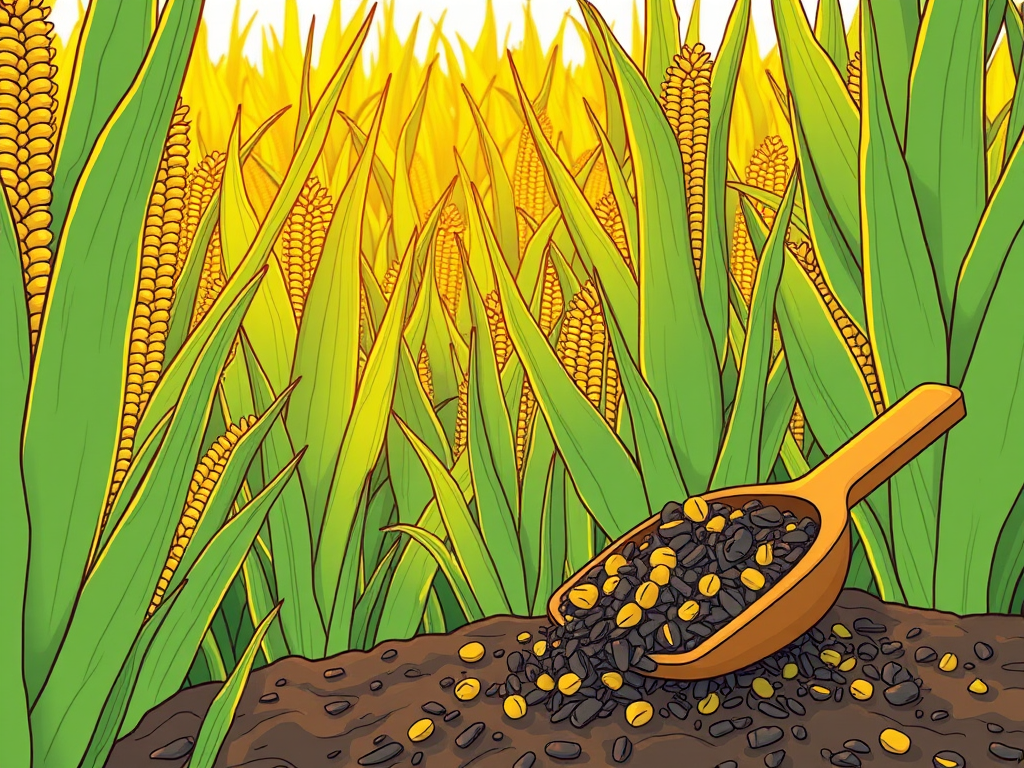
In a recent study published in the journal Science of the Total Environment, Gulli et al., explored the impact of biocharBiochar is a carbon-rich material created from biomass decomposition in low-oxygen conditions. It has important applications in environmental remediation, soil improvement, agriculture, carbon sequestration, energy storage, and sustainable materials, promoting efficiency and reducing waste in various contexts while addressing climate change challenges. More and synthetic microbial communities (SynComs) on maize quality and sustainability. The study highlights that combining biochar with SynComs—carefully selected groups of beneficial microorganisms—offers a promising strategy for more sustainable maize cultivation.
The researchers conducted a two-year field trial, building on earlier pot experiments, to examine how biochar and SynComs affect maize plants, soil health, and the nutritional quality of the maize kernels. SynComs, composed of plant growth-promoting microorganisms (PGPMs), were applied in conjunction with biochar derived from residual biomassBiomass is a complex biological organic or non-organic solid product derived from living or recently living organism and available naturally. Various types of wastes such as animal manure, waste paper, sludge and many industrial wastes are also treated as biomass because like natural biomass these More. The goal was to explore an environmentally friendly alternative to conventional inorganic fertilizers.
One of the key findings is that the application of SynComs did not disrupt the native soil microbial communities, suggesting a low risk of negative ecological effects. Moreover, the co-application of SynComs and biochar improved maize plant physiology, resulting in higher chlorophyll content, as well as increased ear and kernel weight. The benefits extended to the nutritional profile of the maize, with the combined application enriching health-beneficial and anti-stress metabolites in the kernels. Specifically, biochar was applied at a rate of 2 tons per hectare.
These results indicate that biochar, when used with SynComs, can help maintain yield while enhancing quality. This suggests a promising shift towards sustainable agricultural practices that not only reduce reliance on chemical fertilizers but also improve the nutritional value of crops.
SOURCE: Gulli, M., Cangioli, L., Frusciante, S., Graziano, S., Caldara, M., Fiore, A., Klonowski, A. M., Maestri, E., Brunori, A., Mengoni, A., Pihlanto, A., Diretto, G., Marmiroli, N., & Bevivino, A. (2025). The relevance of biochar and co-applied SynComs on maize quality and sustainability: Evidence from field experiments. Science of the Total Environment, 968, 178872.



Leave a Reply