

BiocharBiochar is a carbon-rich material created from biomass decomposition in low-oxygen conditions. It has important applications in environmental remediation, soil improvement, agriculture, carbon sequestration, energy storage, and sustainable materials, promoting efficiency and reducing waste in various contexts while addressing climate change challenges. More research had steadily evolved from simple demonstrations of carbon sequestration toward a deeper understanding of biochar as a deliberately engineered material. Rather than asking whether biochar worked, current research had focused on how and why its properties formed, and how those properties could be controlled to suit specific environmental applications. My work had been rooted in this shift, with an emphasis on realistic waste systems and careful material characterization.
The research had focused on organic waste streams that were chemically diverse and operationally challenging. These were not idealized, clean biomasses. They were heterogeneous, mineral rich, and variable by nature. Studying such materials had been essential for translating biochar science from controlled laboratory settings to real world waste management and circular economy contexts.
A central concept in the work had been co-pyrolysis. Instead of converting a single feedstockFeedstock refers to the raw organic material used to produce biochar. This can include a wide range of materials, such as wood chips, agricultural residues, and animal manure. More, different waste streams were physically blended prior to thermal treatment. This approach reflected how wastes were often handled in practice and allowed one material to offset the limitations of another. Blending altered thermal degradation behavior, char yield, ashAsh is the non-combustible inorganic residue that remains after organic matter, like wood or biomass, is completely burned. It consists mainly of minerals and is different from biochar, which is produced through incomplete combustion. Ash Ash is the residue that remains after the complete More content, and surface chemistry, often in ways that could not be predicted by studying individual feedstocks alone. These findings highlighted that biochar properties were not simply additive. They emerged from interactions during heating.
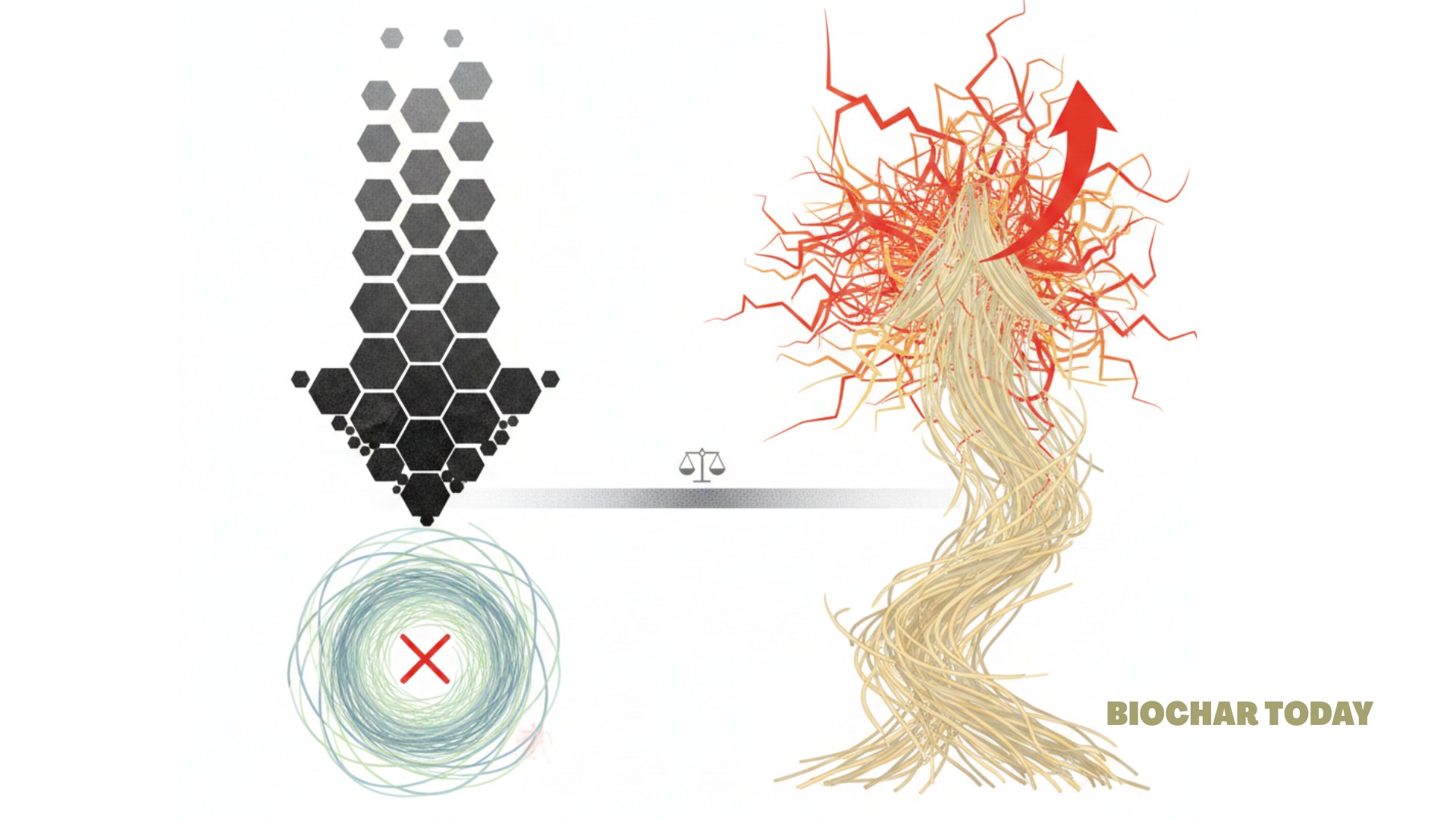
Process temperature had remained a key controlling parameter, but it had not acted in isolation. Lower temperatures had favored the retention of oxygen containing functional groups and more reactive carbon fractions. Higher temperatures had driven aromatization, structural ordering, and mineral concentration. However, the extent of these changes depended strongly on the starting composition of the blended material. This reinforced an important message for the field: biochar could not be classified meaningfully by temperature alone without considering feedstock chemistry.
Another significant aspect of the research was the behavior of contaminants. Waste-derived biochars could contain undesirable organic compounds and trace elements if processing conditions were poorly controlled. Rather than treating this as a side issue, the work integrated the contaminant assessment directly into the characterization workflow. Advanced analytical tools were used to link formation pathways to operating conditions, allowing risks to be discussed alongside performance. This approach supported more responsible and transparent biochar development.
From an application standpoint, the biochars produced have shown potential across multiple domains, including soil improvement, environmental remediation, and resource recovery. At the same time, the research emphasized that no single biochar was universally suitable. Properties that were beneficial in one application could be problematic in another. This reinforced the need for application-specific design rather than one-size-fits-all all solutions.
At a broader level, the work reflected where the biochar field was heading. Biochar was increasingly viewed as a family of materials rather than a single product. Waste-derived biochar, in particular, demanded rigorous science, careful risk evaluation, and realistic deployment strategies. The value of such biochars lies not only in waste diversion or carbon storage, but in how intelligently they were designed and assessed.
As interest in large-scale biochar systems continued to grow, research that combined process understanding, material chemistry, and environmental responsibility became increasingly important. The lessons from co-pyrolysis and waste-focused studies suggested that smarter design choices could expand biochar’s benefits while managing its risks. That balance defined the next phase of biochar research and application.

Leave a Reply