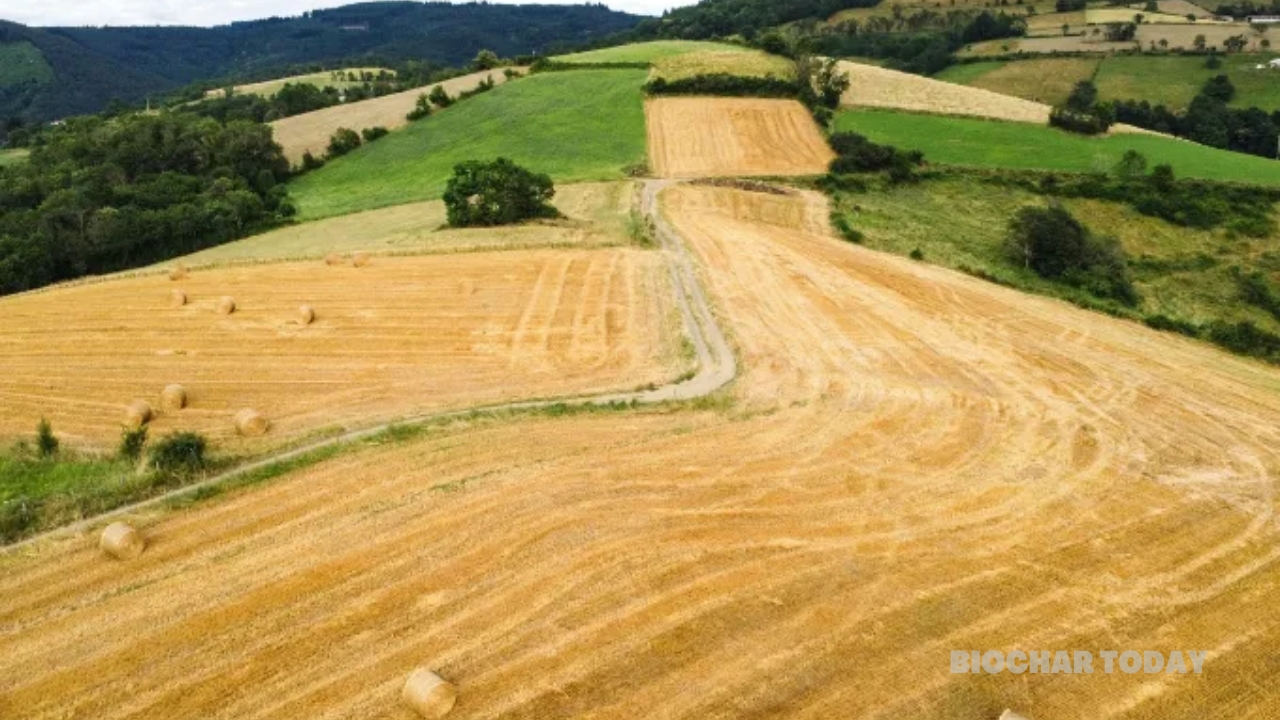
Agriculture residue refers to the plant matter left over after harvesting crops, such as stalks, straw, husks, and leaves. These residues, often considered waste products, can be valuable resources for producing biochar.

Why it matters
- Sustainability: Using agricultural residue, such as corn stalks, rice husks, or bagasse, to produce biochar turns a waste product into a valuable resource. This aligns with circular economy principles by repurposing materials that might otherwise be burned or left to decompose, which can release greenhouse gases.
2. Abundance and Low Cost: Agricultural residue is a plentiful and inexpensive source of biomass. This makes it an economically viable and scalable feedstock for biochar production, which is a key factor in making biochar-derived activated carbon a cost-effective alternative to activated carbon made from traditional, non-renewable materials like coal.
3. Carbon Sequestration: The process of converting agricultural waste into biochar traps carbon in a stable form. This keeps the carbon from being released into the atmosphere, effectively making biochar production a form of carbon sequestration. Using this carbon-rich biochar to create activated carbon further locks in the carbon, contributing to a more sustainable and potentially carbon-negative product.
4. Unique Properties: The type of agricultural residue used and the pyrolysis conditions determine the final properties of the biochar, such as its surface area and pore structure. These properties can be fine-tuned to create a biochar that, once activated, is optimized for specific applications, whether for water purification, soil amendment, or energy storage.
Recommended Reading
Patel, M. R., & Panwar, N. L. (2023). Biochar from agricultural crop residues: Environmental, production, and life cycle assessment overview. Resources, Conservation & Recycling Advances, 19, 200173.https://doi.org/10.1016/j.rcradv.2023.200173
Seo, J. Y., Tokmurzin, D., Lee, D., Lee, S. H., Seo, M. W., & Park, Y. K. (2022). Production of biochar from crop residues and its application for biofuel production processes–an overview. Bioresource Technology, 361, 127740.https://doi.org/10.1016/j.biortech.2022.127740
Khawkomol, S., Neamchan, R., Thongsamer, T., Vinitnantharat, S., Panpradit, B., Sohsalam, P., … & Mrozik, W. (2021). Potential of biochar derived from agricultural residues for sustainable management. Sustainability, 13(15), 8147.https://doi.org/10.3390/su13158147